

SoftBank's Masayoshi Son Explored a $1 Trillion SK Hynix Buyout That Would Have Been the Biggest Deal Ever
Masayoshi Son's reported plan would have been the largest acquisition ever, but SoftBank says it is no longer under consideration.
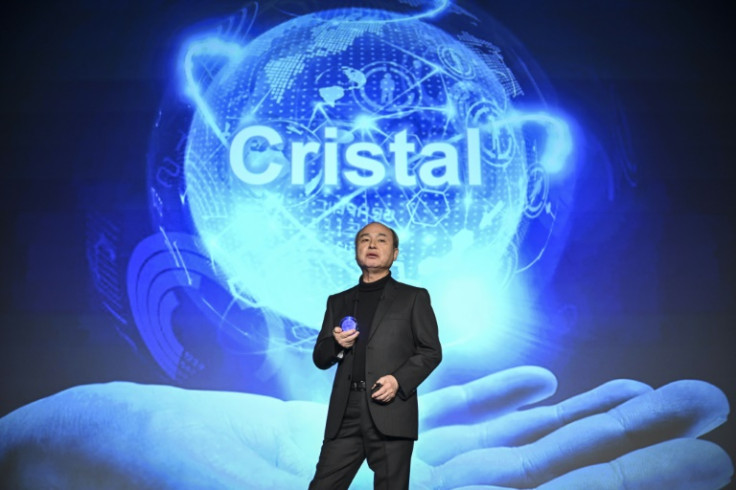
TOKYO — SoftBank Group founder Masayoshi Son asked Wall Street banks about financing a takeover of South Korean memory chipmaker SK Hynix for about $1 trillion, a media report said. That would have been the largest acquisition in history. SoftBank says it has since dropped the idea.
The Information reported on Friday that Son recently approached Wall Street institutions about financing a possible trillion-dollar "buyout" of South Korean memory chip company SK Hynix, citing people familiar with the matter.
SoftBank indicated the idea is no longer being pursued. The Information quoted a SoftBank spokesperson: "SoftBank explores many opportunities, and this one is no longer under active consideration." When Reuters asked for comment, a SoftBank spokesperson referred to the statement SoftBank had given The Information.
SK Hynix said it had no knowledge of the matter described in the report. SK Hynix also said any foreign acquisition of the company would require prior government approval under Korean law.
The price would have been huge. SK hynix was worth 777.5 trillion won ($577 billion) at Friday's close. A $1 trillion deal would imply a premium of about 73%. SoftBank is far smaller than the company it considered buying. At Friday's closes, SK hynix was worth about $580.4 billion and SoftBank Group about $108.7 billion, so $1 trillion is about 9.2 times SoftBank's own market value.
The report did not say how the buyout would be executed or whether SK hynix or its largest shareholder, SK Square, was formally approached.
Any deal would have faced major obstacles. SK Square, the investment holding company of SK Group, is the largest shareholder with 20.67%, about 146.1 million shares. Foreign investors collectively hold 49.41% of SK hynix shares. SK Hynix is also one of South Korea's most important companies, so Seoul has the final say on any change in ownership.
Why SK Hynix
The target shows how central memory chips have become to the artificial intelligence boom. SK hynix is the world's leading supplier of high-bandwidth memory (HBM) chips for AI and a critical supplier to Nvidia and other AI chip developers. HBM lets processors handle the large data volumes AI computing requires.
For Son, SK hynix could fill a major gap in SoftBank's AI portfolio, which spans chip design (Arm), computing infrastructure, and AI software. Owning the top memory maker would put SoftBank in nearly every layer of the hardware behind AI.
The idea fits Son's long record of very large bets. Son announced a $500 billion AI infrastructure plan in January 2025 from the White House. He is also one of OpenAI's biggest backers: Son has invested about 10 trillion yen.
Financial strain
The report comes at a hard time for SoftBank's finances. SoftBank reported a 768 billion yen ($6.5 billion) net loss for April–September, versus a 2.924 trillion yen profit a year earlier. July–September alone was a 1.1153 trillion yen loss, its first quarterly deficit since October–December 2024.
Advance payments for U.S. data center power facilities were booked as roughly 600 billion yen in losses. Vision Fund investment profits fell to 341.2 billion yen. The loan-to-value ratio rose to 15.9% at end-September, against an established threshold below 25%. That ratio is a key measure of SoftBank's debt.
SoftBank has also run into regulators on other deals. China's NDRC refused approval for the $5.375 billion acquisition of ABB's robotics division, citing data security concerns. Meanwhile, SoftBank planned a record 1 trillion yen retail bond to fund AI investments.
A complicated proposition
Paying $1 trillion would likely require borrowing on a scale no single takeover has attempted, plus partners willing to share the risk. Aju Press calls the buyout extraordinarily complex, given the deal's scale, SK hynix's dispersed shareholding, and financing and regulatory hurdles.
Even though it was abandoned, the idea shows how important memory chips have become in the AI race, and how far Son will go to compete in it. For now, SoftBank says the matter is closed.
© Copyright 2026 IBTimes AU. All rights reserved.