

Six Flags' X2 Roller Coaster Tied to Two Deaths and Dozens of Brain Injuries Over Nearly Two Decades
Investigation reveals a troubling history of injuries linked to the X2 roller coaster at Six Flags Magic Mountain.
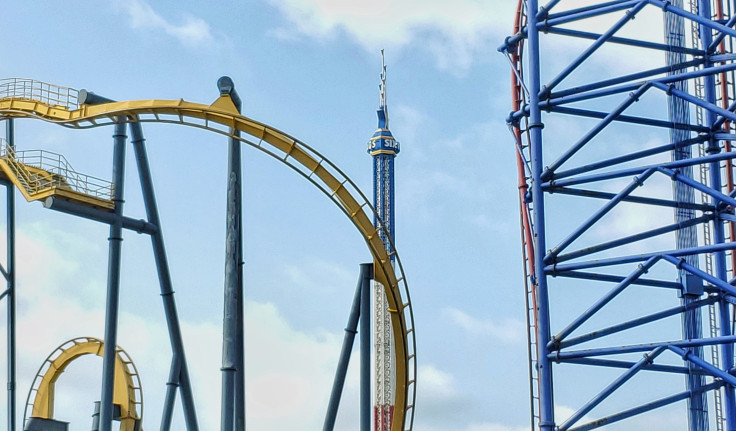
VALENCIA, Calif. — A CNN investigation has found that X2, the marquee thrill ride at Six Flags Magic Mountain, has been linked to more than a dozen serious injuries and hospitalizations over nearly two decades, including two deaths and multiple cases of traumatic brain injury, raising new questions about why the ride remained operational despite years of documented harm.
The park closed the roller coaster the evening of July 12, according to a Six Flags spokesperson, nearly a full day after the most recent reported injury. Park officials have not disclosed what prompted the closure, and the ride remains shut down.
Two women hospitalized in the same week
The investigation's findings come after surgeons at a Southern California hospital treated two women within days of each other in July for severe brain hemorrhages consistent with high-speed collisions, despite neither woman having been involved in a crash or fall. Both had ridden X2, known for its rotating seats, near-vertical drops and unpredictable movements during a roughly two-minute ride that reaches speeds close to 80 miles per hour.
Three neurosurgeons who treated the two women wrote in an email reviewed by CNN that the injuries were the result of "a traumatic rapid acceleration-deceleration event experienced while on the X2 ride."
A ride unlike any other
X2's defining feature is its so-called fourth-dimensional design, in which riders' seats rotate a full 360 degrees around the track independently of the train's motion. Only two similar roller coasters exist elsewhere in the world — one in China and another in Japan, the latter of which closed temporarily last year following a fatal injury involving a park worker conducting an inspection.
Lyndia Wu, a mechanical engineering professor at the University of British Columbia who studies the effects of roller coasters on the brain, said the overall risk of traumatic brain injury from coasters is generally considered low, though much of the underlying research is dated. She said rides like X2 may warrant further scrutiny. "I personally don't think head injury should be an expected risk from going on a roller coaster ride," Wu said.
A pattern stretching back years
Court records reviewed by CNN show a recurring pattern of serious injuries tied to the ride dating back more than a decade. In September 2014, then-17-year-old Selena O'Neill was diagnosed with a subdural hematoma after riding X2, an injury doctors directly attributed to the coaster. Internal Six Flags records later obtained by her attorney showed at least five other riders had gone to the hospital complaining of head pain before her injury.
In February 2020, Sheila Katerelos, then 50, was hospitalized for five days and diagnosed with a traumatic brain injury and multiple subdural hematomas after riding X2, according to court records. A year later, in 2021, Lucy Alvarez, a 46-year-old phlebotomist, was diagnosed with a traumatic subdural hematoma after riding the coaster; her attorney said the injury derailed her nursing studies and left her with lasting memory loss, balance issues and chronic migraines.
A fatal injury in 2022
The pattern turned deadly in June 2022, when 22-year-old recent college graduate Christopher Hawley rode X2 with his cousin and brother. According to court records, the three hit their heads multiple times against their seats during the ride. Hawley collapsed and lost consciousness shortly after exiting, and was rushed to a nearby hospital, where surgeons found bleeding severe enough to push his brain toward one side of his skull. He died less than 10 hours later.
The medical examiner ruled his death was caused by blunt head trauma from "a park ride accident," according to the coroner's report. An expert hired by Hawley's family found that Six Flags' internal records showed at least 70 prior complaints of head and neck injuries from X2 riders in the three years before his death. Hawley's parents sued the theme park in 2023; the case had been scheduled for trial in September but was settled this week, according to court records.
Hawley's was the second death linked to the ride. In 2010, 28-year-old Hilda Farias died after riding X2; medical experts at the time suspected an underlying brain abnormality had ruptured due to the ride's intensity. A lawsuit filed by her family was settled for an undisclosed amount.
Regulatory oversight questioned
Following Hawley's death, state officials ordered Six Flags to immediately shut down X2 for inspection. The park was allowed to reopen within days, though records reviewed during a deposition of the park's maintenance director indicate state inspectors were unaware that a wheel on one of the train cars had been replaced beforehand. Inspectors relied on safety data supplied by Six Flags showing the ride met state safety standards — standards developed by a committee that includes ride manufacturers and theme park operators.
Brian Avery, a University of Florida professor specializing in ride safety and risk management who has served as an expert witness for both riders and theme parks but has not worked on an X2 case, said repeated brain injuries linked to a single ride "constitute a clear safety signal" warranting a comprehensive review.
Two more women hospitalized this July
The most recent cases involve 40-year-old Pamela Guillen, who lost consciousness after riding X2 with her daughter on July 12 and was rushed into emergency surgery for a severe subdural hematoma and brain compression. She spent weeks recovering and said she still experiences headaches, brain fog and requires medication to prevent seizures. "I'm very lucky to be alive," Guillen said.
Six days later, 25-year-old Naomi Greer-Wilkinson lost consciousness after riding the same coaster and underwent emergency brain surgery. Her mother, Artemis Greer, said her daughter "should have never ever in a million years even had the option to get on that ride." Greer-Wilkinson remains in a coma more than a month later, according to her family.
Six Flags' response
Six Flags has declined to answer detailed questions from CNN about the ride's history, saying only that it "remains closed at this time." In court filings, attorneys for the park have argued that posted signage warns riders of inherent risks and that the physical forces involved do not exceed what a "normal" rider can safely withstand. The California Division of Occupational Safety and Health, which oversees amusement ride operations, said an inspection into X2 remains ongoing but did not respond to questions about the ride's injury history.
© Copyright 2026 IBTimes AU. All rights reserved.