PlayStation 6 Rumors Heat Up: 2027 Launch Still Possible Despite RAM Shortage and Delay Fears
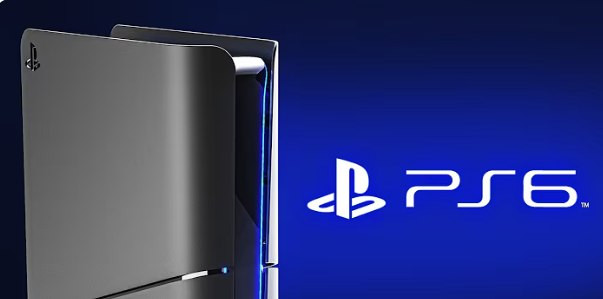
LOS ANGELES — As the PlayStation 5 continues its strong sales run and the PS5 Pro pushes high-end performance, speculation about Sony's next-generation console, the PlayStation 6, is intensifying in April 2026, with insiders divided over whether the PS6 will arrive in late 2027 or slip to 2028 or even 2029 due to a global memory chip shortage driven by artificial intelligence demand.
Sony has not officially confirmed development of the PlayStation 6, but leaks and analyst reports suggest the company is deep into planning for a console that could feature dramatic leaps in power, AI-driven graphics and possibly a trio of models including a dedicated handheld. PlayStation lead architect Mark Cerny hinted at the timeline in an October 2025 video with AMD, describing advanced machine-learning technologies as "still very early days" but expressing excitement about bringing them to "a future console in a few years' time."
That comment has fueled debate. While some leakers maintain a holiday 2027 target, recent reports from Bloomberg and analysts like David Gibson of MST International point to potential delays. The ongoing DRAM shortage, exacerbated by AI data centers competing for memory chips, has raised production costs and forced Sony to consider extending the PS5 lifecycle longer than previous generations.
Prediction markets reflect the uncertainty. On Kalshi, as of early April 2026, only about 25% of bettors believed the PS6 would be announced before 2027, with the majority expecting a later reveal. Despite the skepticism, several well-known insiders continue to push for a 2027 window. YouTuber Moore's Law Is Dead has reiterated that internal documents show manufacturing readiness in Q2 2027, aligning with a late 2027 or early 2028 launch. AMD insider KeplerL2 has echoed similar timelines on forums, claiming the chipset is nearly complete.
The rumored hardware specifications paint an ambitious picture. The PS6 is expected to use a custom AMD chip based on Zen 6 CPU architecture paired with an RDNA 5 GPU. Performance estimates range from 34 to 40 teraflops or more — roughly triple the rendering power of the base PS5. Leaks suggest up to 30GB or even 32GB of GDDR7 memory with significantly higher bandwidth, potentially enabling native 4K at 120 frames per second or advanced ray tracing and path tracing without heavy reliance on upscaling.
AI is set to play a central role. Successors to the PlayStation Spectral Super Resolution (PSSR) technology could include hardware-level neural arrays for frame generation, upscaling and even in-game assistance. Cerny has emphasized that the biggest generational jump may come from ray tracing and AI enhancements rather than raw horsepower alone. Full backward compatibility with both PS4 and PS5 games is widely expected, a feature that would help ease the transition for the massive existing user base.
Pricing remains a hot topic amid inflation and component costs. Some leaks suggest a base model could launch around $499 to $599, similar to the PS5, while a more powerful variant or "Pro" edition might approach $749 or higher. A budget "Lite" or digital-only version could start as low as $350 to $400. One recent report from Moore's Law Is Dead claimed the standard PS6 might land at a relatively reasonable $749, though rising memory prices could push that figure upward if delays occur.
Adding to the excitement — and complexity — are rumors that Sony plans to launch not one but three PlayStation 6 devices. Alongside the main console, insiders point to a slimmer or Lite variant and a dedicated native handheld, codenamed "Project Canis." This handheld would reportedly offer full backward compatibility with PS4 and PS5 titles, running them natively rather than through streaming, and could compete directly with Nintendo's Switch and other portable devices. Leaks suggest it would launch alongside the primary PS6 models, potentially in 2027 or 2028.
The multi-model approach would mirror strategies seen with the PS5 lineup but expand into the handheld space, where Sony has not competed directly since the ill-fated PlayStation Vita. A powerful portable PlayStation could unify the ecosystem, allowing players to continue console games on the go with minimal compromises.
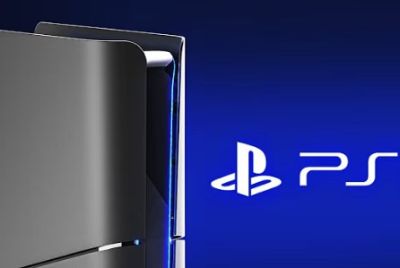
Development appears well underway despite the silence from Sony. Reports indicate dev kits could surface later in 2026, giving third-party studios time to prepare next-generation titles. The focus on AI and efficiency is expected to help mitigate some power and thermal challenges, with Sony aiming for a more compact design than the current PS5.
The RAM shortage remains the biggest wildcard. AI-driven demand has tightened supply chains, increasing costs for GDDR7 and other high-bandwidth memory. Sony benefited from earlier inventory for the PS5, but scaling production for a new console could prove costly. Some analysts argue that delaying to 2028 or 2029 would allow component prices to stabilize and give the PS5 more runway, especially with the Pro model still relatively new.
Sony's strategy with the PS5 has already broken from the traditional seven-year cycle by releasing a mid-generation upgrade. Extending that approach could maximize profits from the current generation while the company refines PS6 technology. However, prolonged waits risk losing momentum to competitors, including Microsoft's next Xbox, rumored under the codename Project Helix with its own 2027 or 2028 ambitions.
Gamers are already voicing opinions online. Forums and social media show divided camps: some urge Sony to stick to 2027 to maintain momentum, while others prefer waiting for mature hardware that justifies a premium price. The prospect of a handheld has generated particular enthusiasm, with many hoping it could revive portable PlayStation gaming in a meaningful way.
Backward compatibility would be a major selling point. Full support for PS4 and PS5 libraries would ensure millions of existing games remain playable, reducing the "library reset" feeling that has accompanied past generational shifts. Enhanced features, such as AI upscaling for older titles, could make legacy games look and perform better on the new hardware.
As with any unannounced product, all details remain speculative. Sony typically reveals next-generation consoles with a polished event, showcasing hardware and key first-party titles. No official announcement window has been shared, and the company continues to focus on PS5 software support, including major exclusives still in development.
The PlayStation 6 rumors underscore the challenges facing the console industry in an era of skyrocketing component costs and rapid technological change. AI is no longer just a buzzword for graphics — it is becoming central to rendering, gameplay systems and even development tools. Sony's emphasis on machine learning, as hinted by Cerny, suggests the PS6 could deliver experiences that feel truly next-generation rather than incremental.
Whether the console lands in 2027, 2028 or later, expectations are high. Fans hope for significant jumps in visual fidelity, faster load times, more immersive audio and innovative features that leverage the rumored hardware. The inclusion of a handheld could expand the audience dramatically, bringing console-quality gaming to new scenarios.
For now, the PlayStation community must wait for concrete news. In the meantime, the PS5 and PS5 Pro continue to receive strong support, with a robust lineup of games keeping players engaged. Sony has a history of delivering polished hardware when it finally unveils a new console, and the PlayStation 6 appears poised to continue that tradition — whenever it ultimately arrives.
Industry watchers will monitor supply chain updates, AMD partnership developments and any subtle comments from executives for further clues. Until then, the PS6 remains one of gaming's most anticipated mysteries, with rumors suggesting it could redefine what a home console can do in an increasingly AI-powered world.
© Copyright 2026 IBTimes AU. All rights reserved.
- Recommended For You