(VIDEO) Ivan Ljubicic Calls Novak Djokovic Toughest but Says Roger Federer, Rafael Nadal Had Greater Impact
Ivan Ljubicic, the former world No. 3 and longtime coach to Roger Federer, has described Novak Djokovic as the most difficult opponent he ever faced on court but argued that Federer and Rafael Nadal exerted a larger influence on the sport's evolution and popularity.
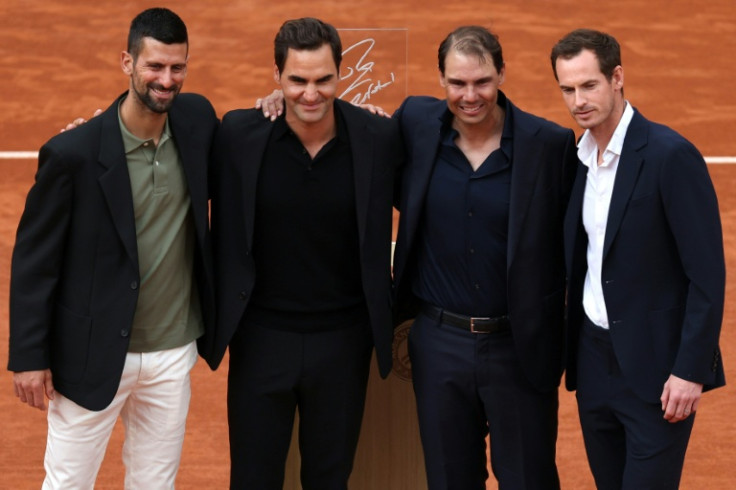
In a recent appearance on Greg Rusedski's "Off Court" podcast, the Croatian tennis veteran reflected on his career matchups against the "Big Three" and weighed into the enduring greatest-of-all-time debate without crowning a single winner. Ljubicic, who retired in 2012 and coached Federer from 2016 to 2022, spoke candidly about the unique challenges each presented and the broader legacy they left on tennis.
"Novak, the last time I played him was, I believe, in 2010," Ljubicic recalled. "When Novak was on, it was maybe the most difficult for me, because me having a big serve and relying a lot on free points with my serve... So that was really suffocating."
Head-to-head records underscore his point. Ljubicic finished 2-7 against Djokovic, 2-7 against Nadal and 3-13 against Federer — a tally reflecting the dominance of the trio even against a top-tier player who reached a career-high ranking of No. 3 in 2006.
Despite acknowledging Djokovic's statistical supremacy — the Serb holds a record 24 Grand Slam singles titles as of early 2026, surpassing Federer's 20 and Nadal's 22 — Ljubicic shifted focus to intangible contributions when assessing overall greatness.
"They are different. It's very difficult to say who is the best," he said. "Of course, Novak won the most, it's clear. But for me, the impact that Roger had on the game, and Rafa, in different moments — it's huge. Maybe bigger than Novak."
Ljubicic highlighted Federer's role in transforming tennis into a global spectacle. The Swiss maestro's elegant style, one-handed backhand and charisma drew millions to the sport during the 2000s, expanding audiences far beyond traditional markets. Nadal's relentless intensity, topspin-heavy game and clay-court mastery redefined physical limits and inspired a generation of power baseliners.
"But the impact on the game I feel like Roger definitely had, at least for me, was tremendous and still is," Ljubicic added, emphasizing how Federer's influence endures through aesthetics, fan engagement and commercial growth.
The comments arrive amid an ongoing GOAT conversation that has intensified since Djokovic overtook Federer and Nadal in major titles. Djokovic's Australian Open victories in recent years, combined with his consistency across surfaces and age-defying longevity, have led many analysts to crown him the statistical king. Yet Ljubicic cautioned against reducing the debate to trophies alone.
"What is the GOAT? If we go by the results, obviously Novak is the one who won the most," he said. "But the impact on the game... I believe Roger has had a significant impact."
The former coach avoided a definitive verdict, insisting the question remains subjective. "We always come back to the same question: who is the best of all time?" he noted. "But what makes a true GOAT?"
Ljubicic's perspective carries weight given his proximity to the era's defining rivalry. As Federer's coach during the Swiss star's late-career resurgence — including the 2017 Australian Open title after a six-year Grand Slam drought — Ljubicic helped refine Federer's backhand and adapt to the modern power game dominated by Djokovic and Nadal.
In separate recent remarks, Ljubicic downplayed his own role in Federer's 2017 revival, crediting the player's adjustments more than coaching tweaks. Yet his insights into the Big Three remain among the most informed from someone who competed against them and worked intimately with one.
The tennis landscape has evolved since Ljubicic's playing days. Djokovic, now in his late 30s, continues to chase records while younger stars like Carlos Alcaraz, Jannik Sinner and others emerge. Federer retired in 2022, and Nadal has battled injuries, limiting his appearances in 2024 and 2025. Still, the trio's combined 66 Grand Slam titles (as of 2026) represent an unprecedented era unlikely to be matched soon.
Fans and pundits remain divided. Some prioritize Djokovic's head-to-head dominance over Federer (27-23) and Nadal (30-29), along with his Masters titles and weeks at No. 1. Others point to Federer's cultural transcendence or Nadal's unparalleled French Open record (14 titles).
Ljubicic's measured take — praising Djokovic's on-court prowess while elevating Federer and Nadal's off-court legacy — reflects a common thread in recent discussions. Impact, he suggested, encompasses more than wins: it includes inspiring participation, elevating the sport's profile and reshaping playing styles.
As tennis enters a post-Big Three phase, voices like Ljubicic's help frame the historical context. Whether Djokovic's records ultimately render the debate "meaningless," as some have predicted, or whether Federer and Nadal's transformative roles endure in memory, remains open.
For now, Ljubicic's words offer a nuanced view from inside the era: Djokovic the toughest foe, but Federer and Nadal the bigger game-changers.
© Copyright 2026 IBTimes AU. All rights reserved.
- Recommended For You