Coca-Cola Shares Surge Over 6% After Beating Q2 Expectations and Raising Full-Year Outlook
Coca-Cola's strong Q2 performance driven by global growth and FIFA World Cup marketing
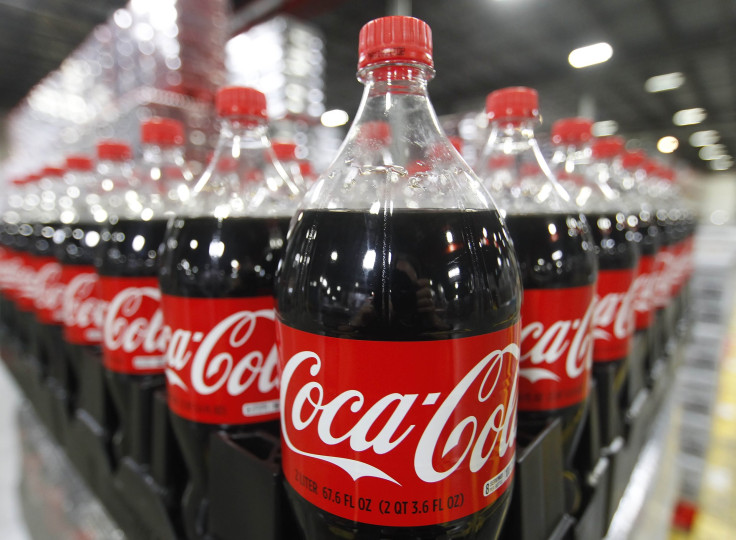
ATLANTA — Shares of The Coca-Cola Co. jumped more than 6% in morning trading Tuesday after the beverage giant reported second-quarter results that exceeded Wall Street expectations and raised its full-year guidance, fueled by strong global volume growth and marketing tied to the FIFA World Cup.
Coca-Cola stock rose $5.67, or 6.74%, to $89.74 as of 11:09 a.m. EDT, hitting a fresh 52-week high during the session. The move came after the company posted net revenues of $13.4 billion, up 7% from a year earlier, and organic revenues (a non-GAAP measure) grew 6%. Adjusted earnings per share rose 11% to 97 cents, beating the consensus estimate of 93 cents. Reported earnings per share climbed 16% to $1.03.
Global unit case volume increased 5%, led by gains in India, China, the United States and Brazil. Trademark Coca-Cola volume grew 5%, while Coca-Cola Zero Sugar posted 16% growth. Operating income rose 9% to $4.7 billion, with the operating margin expanding to 34.9% from 34.1% a year ago. Comparable operating margin improved to 35.6%.
"We delivered another strong quarter by staying close to the changing needs of our consumers and customers," said Henrique Braun, chief executive officer of The Coca-Cola Company. The company said it continued to gain value share in total nonalcoholic ready-to-drink beverages.
Concentrate sales rose 4%, trailing unit case volume by one point due to the timing of shipments. Price/mix contributed 2% to organic revenue growth. Asia Pacific was the fastest-growing region by volume, up 8%.
Coca-Cola raised its full-year 2026 outlook. It now expects organic revenue growth of approximately 5%, at the high end of its prior 4% to 5% range. Comparable currency-neutral earnings per share growth excluding acquisitions and divestitures is projected at 7% to 8%, up from 6% to 7%. Overall comparable EPS growth is expected at 9% to 10%, compared with the previous 8% to 9% range, incorporating an approximate 3% currency tailwind and a 1% headwind from acquisitions and divestitures. Free cash flow is forecast at about $12.4 billion.
Year-to-date through the first six months, net operating revenues grew 9% to $25.9 billion. Cash flow from operations reached $7.5 billion, and free cash flow totaled $6.9 billion. The company ended the period with $12.9 billion in cash and cash equivalents and $37.0 billion in long-term debt.
The strong results were supported by brand activations around the FIFA World Cup 2026, which management described as a powerful marketing catalyst that helped drive Trademark Coca-Cola volume and consumer engagement. Innovation and revenue management initiatives also contributed, with the company balancing volume growth and premiumization efforts.
Coca-Cola Zero Sugar's double-digit performance highlighted ongoing success in the zero-sugar segment, while the broader portfolio benefited from local market activations and tailored product offerings. The company gained value share overall, though it noted some regional variations, including share dynamics in Asia Pacific where gains in Japan and China were offset by pressure in India.
Investors reacted positively to the combination of top- and bottom-line beats, margin expansion and the upward revision to guidance. The stock had already advanced earlier in the year and entered the earnings report near multi-month highs. The sharp rise on Tuesday pushed shares into new 52-week territory, reflecting confidence in the company's ability to navigate a dynamic consumer landscape while generating robust cash flow.
Braun, who has emphasized staying attuned to evolving consumer preferences, pointed to the company's disciplined approach in identifying and scaling local brands that can become larger growth engines. Outgoing leadership had previously noted that three-quarters of Coca-Cola's billion-dollar brands sit outside its legacy soft-drink business, with examples such as the Mexico-based dairy brand Santa Clara reaching that threshold through targeted investment.
The results extend a streak of quarters in which Coca-Cola has topped analyst estimates. Management continues to focus on affordability, innovation and digital execution while managing input costs and currency impacts. The underlying effective tax rate is expected to remain at 19.9%.
Analysts and investors will monitor upcoming volume trends, the sustained impact of World Cup-related promotions and the contribution from emerging brands as the company progresses through the second half of the year. With a market capitalization near $385 billion following the surge, Coca-Cola remains one of the largest consumer staples companies, known for its global distribution network and portfolio of more than 200 brands.
The quarterly performance underscored the resilience of demand for sparkling soft drinks and other nonalcoholic beverages in key markets, even as consumers navigate economic pressures in some regions. Pricing actions and favorable product mix helped offset any softness, while concentrate sales timing differences were described as temporary.
Coca-Cola's shares have delivered solid total returns over the past year, supported by consistent dividend growth and share repurchases alongside operational execution. The latest guidance raise reinforces expectations for continued mid-single-digit organic revenue growth and high-single to low-double-digit earnings expansion on a comparable basis.
Trading volume was elevated as the market digested the report and the accompanying conference call. The stock's advance stood out amid broader market conditions, highlighting investor preference for defensive names with clear growth catalysts and strong free-cash-flow generation.
Looking ahead, Coca-Cola plans to continue investing in marketing, innovation and system capabilities while returning capital to shareholders. The raised free-cash-flow target of approximately $12.4 billion provides additional flexibility for dividends, buybacks and strategic initiatives. The company's long track record of navigating consumer shifts and competitive dynamics positions it to capitalize on opportunities in both developed and emerging markets through the remainder of 2026 and beyond.
© Copyright 2026 IBTimes AU. All rights reserved.
- Recommended For You