

Is the Stock Market Open Today on Columbus Day 2026? But Bond Market Is Closed as Wall Street Trades
The NYSE and Nasdaq are operating normally, while the US bond market, Federal Reserve and most banks observe the federal holiday.
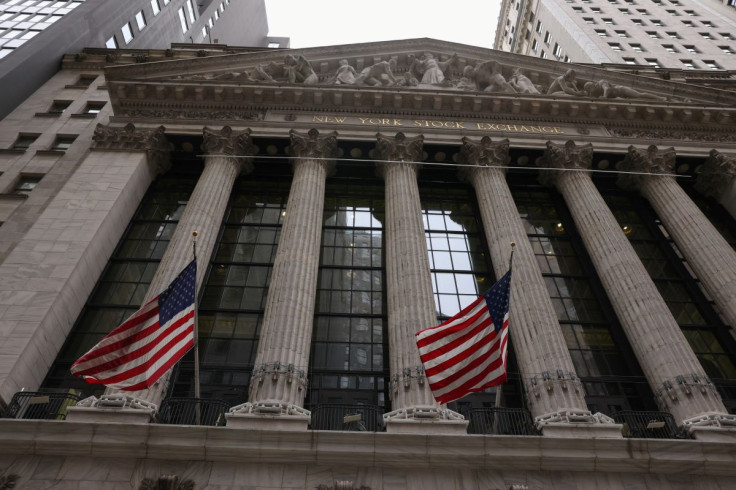
NEW YORK — Yes, the U.S. stock market is open on Columbus Day.
The New York Stock Exchange and Nasdaq are operating on their regular schedule Monday, Oct. 12, 2026, even though the day is a federal holiday observed as Columbus Day and, in many places, Indigenous Peoples' Day. Regular trading runs from 9:30 a.m. to 4 p.m. Eastern time.
The U.S. bond market, however, is closed in observance of the holiday, following the recommendation of the Securities Industry and Financial Markets Association, the industry group that sets trading schedules for fixed-income markets.
Why stocks trade but bonds don't
Columbus Day is one of a handful of federal holidays on which stock exchanges remain open while other parts of the financial system shut down.
The Federal Reserve observes the holiday, and most banks are closed. Because the bond market relies heavily on banks and the Federal Reserve for trading and settlement, SIFMA recommends a full closure for U.S. bond trading on Columbus Day.
The NYSE and Nasdaq set their own holiday calendars and do not close for Columbus Day. Veterans Day, which falls on Nov. 11, follows the same pattern, with stock markets open and bond markets closed.
Futures little changed ahead of the open
Stock index futures were mostly flat Monday morning after a strong week on Wall Street.
Futures tied to the Dow Jones Industrial Average and the S&P 500 rose about 0.1% early Monday, while contracts for the Nasdaq-100 slipped about 0.1%.
The muted moves follow a winning week for U.S. stocks. On Friday, the Dow rose 423.31 points, or 0.8%, to close at 51,654.95. The S&P 500 gained 46.18 points, or 0.6%, to 7,811.54, and the Nasdaq Composite added 172.83 points, or 0.6%, to 27,366.17. Both the S&P 500 and the Nasdaq closed at record highs.
For the week, the Dow gained 0.9%, the S&P 500 rose 1.2% and the Nasdaq added 0.6%.
Bull market turns four
Monday marks the fourth anniversary of the current bull market, which began in October 2022. The S&P 500 has gained roughly 13.5% so far this year, adding about $9 trillion in market value, with much of the advance driven by technology stocks.
Many strategists expect stocks to keep climbing, but they have flagged risks including concerns about an artificial intelligence bubble, elevated Treasury yields and geopolitical uncertainty, particularly in the Middle East.
A quiet Monday before a busy week
With no major U.S. economic reports scheduled for Monday, trading could be relatively light. Holiday sessions often see lower volume, as some investors take the day off and bond markets are closed.
But the rest of the week is packed with potential market-moving events.
Third-quarter earnings season gets underway in earnest on Tuesday, when several of the nation's largest banks are scheduled to report results. Investors will be looking for clues about the health of consumers, lending activity and the broader economy.
Analysts expect S&P 500 companies to report a 25% jump in third-quarter profits compared with a year earlier, which would be among the strongest growth rates on record, according to data compiled by Bloomberg Intelligence.
On Wednesday, the government is scheduled to release the September consumer price index, a closely watched measure of inflation. The report could influence expectations for the Federal Reserve's next moves on interest rates.
Oil and geopolitics in focus
Investors are also watching energy markets. Oil prices have been volatile amid attacks on Saudi Arabia's main airport in Riyadh by Yemen's Houthi rebels, tensions involving Iran and a powerful hurricane threatening oil production along the U.S. Gulf Coast.
U.S. benchmark crude traded around $92.50 a barrel early Monday, while Brent crude, the international standard, hovered above $100 a barrel. Higher energy prices can weigh on consumers and add to inflation pressures, which could affect the outlook for interest rates.
What else is open and closed
Beyond the stock market, much of daily life continues as usual on Columbus Day. Most retailers, grocery stores and restaurants are open.
However, the U.S. Postal Service is closed, with no regular mail delivery. Most bank branches are also closed, though online banking and ATMs remain available, and some banks, including Chase and TD Bank, plan to keep branches open. Federal government offices and courts are closed.
Upcoming market holidays
After Columbus Day, the next U.S. market holiday is Thanksgiving, on Thursday, Nov. 26, when both stock and bond markets will be closed. Stock markets will also close early on the day after Thanksgiving, Friday, Nov. 27.
Investors should check the NYSE and Nasdaq holiday calendars for full details on upcoming closures and early-close days.
© Copyright 2026 IBTimes AU. All rights reserved.