US Deploys Iran-Inspired 'Lucas' Drone as Cheap New Weapon in Ongoing Conflict
The United States has turned the tables on Iran by deploying a low-cost attack drone reverse-engineered from captured Iranian Shahed technology, a weapon now proving devastatingly effective in the escalating conflict and marking a pragmatic shift in American military strategy toward affordable, mass-produced unmanned systems.
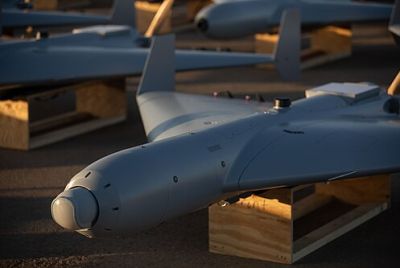
The drone, known as LUCAS (Low-cost Uncrewed Combat Attack System), has been described by former defense officials as the "Toyota Corolla of drones" — reliable, inexpensive to build and easy to manufacture at scale, unlike the high-end, costly platforms that have long defined U.S. military aviation. Developed by the U.S. military itself with input from Arizona-based SpektreWorks, LUCAS draws directly from Iran's Shahed-136 "kamikaze" or one-way attack drone design, which Russia has also used extensively in Ukraine.

Pentagon officials confirmed the system's operational use against Iranian targets beginning in late February 2026, with expanded deployment in March and April as strikes intensified. The drone's first combat employment came on Feb. 28, according to U.S. Central Command, targeting Iranian military assets in a campaign that has included both precision strikes and broader pressure on Tehran's capabilities.
At an estimated unit cost of $25,000 to $55,000 — a fraction of traditional cruise missiles that can exceed $1 million — LUCAS allows the U.S. to overwhelm Iranian air defenses with swarms rather than relying solely on expensive, limited-inventory munitions. Its delta-wing design, rear propeller and roughly 500-mile range mirror key features of the Shahed-136, but U.S. engineers incorporated improvements including better guidance systems, satellite communications for mid-flight adjustments and enhanced reliability.
The origins trace back several years. U.S. forces and allies recovered intact or partially damaged Shahed drones from conflicts in Ukraine and the Middle East. Analysts dissected the simple, rugged technology — plywood construction in early Iranian versions, basic GPS and inertial navigation, and a small warhead — and adapted it for American needs. What began partly as a training tool to help counter Iranian-style threats evolved into a battlefield asset once the current conflict erupted.
Defense experts say the approach represents a rare instance of the U.S. military directly reverse-engineering an adversary's proven weapon rather than pursuing entirely new, gold-plated technology. "We took their design, made it better, and sent it right back at them," one former senior official told The Wall Street Journal in a report published Wednesday. The strategy echoes lessons from Ukraine, where cheap drones have reshaped warfare by enabling attritional tactics against superior defenses.
LUCAS can be launched from ground catapults, rocket-assisted systems, vehicles or even ship decks, as demonstrated in a December 2025 test from the USS Santa Barbara in the Persian Gulf. Its expendable nature means operators can deploy dozens or hundreds without the same logistical burden or political sensitivity associated with losing piloted aircraft or high-value missiles.
Iranian media have claimed several LUCAS drones were shot down, including footage purporting to show wreckage on Qeshm Island near the Strait of Hormuz. U.S. officials have not disputed losses but emphasize the drone's low cost makes such attrition acceptable and strategically advantageous. Swarming tactics allow saturation of defended areas, forcing adversaries to expend expensive interceptors on cheap targets — a cost-imbalance Iran itself has long exploited.
The deployment signals a broader Pentagon pivot toward "affordable mass" in unmanned systems. For years, U.S. drone development emphasized sophisticated, stealthy platforms like the Reaper or high-end loitering munitions. Venture-backed startups produced advanced but often glitchy and expensive options that struggled with scalability. LUCAS, developed internally rather than through Silicon Valley, prioritizes simplicity, reliability and rapid production.
Military analysts say the program reflects hard-learned realities from recent conflicts. In Ukraine, Russian forces adapted Iranian Shahed designs into the Geran-2, launching thousands against Ukrainian infrastructure. The U.S. observed the effectiveness of these low-cost systems and moved quickly to create its own version when tensions with Iran escalated in late 2025 and early 2026.
Production details remain classified, but sources indicate multiple U.S. facilities can now manufacture LUCAS at rates far exceeding traditional munitions. The design's modular nature allows for rapid upgrades, including improved payloads, electronic warfare resistance or enhanced autonomy.
The irony is not lost on observers. Iran pioneered affordable long-range one-way attack drones as an asymmetric tool against technologically superior foes. Now the U.S., with its vast industrial base, is applying the same philosophy back against Tehran, potentially at even greater scale and with superior command-and-control links.
Critics within the defense community argue the reliance on reverse-engineered technology highlights past shortcomings in U.S. drone innovation. Others see it as pragmatic adaptation — using what works rather than insisting on American exceptionalism in every design element.
The LUCAS program has drawn bipartisan support in Congress, with lawmakers praising its potential to reduce risk to American personnel and stretch defense budgets further amid multiple global commitments. Funding for expanded unmanned systems has increased in recent supplemental requests tied to the Iran operations.
As the conflict continues, LUCAS joins a growing arsenal of American drones, including more advanced Reapers and collaborative combat aircraft concepts. Its role, however, appears uniquely suited to the current campaign's demands for persistent pressure on Iranian targets while conserving higher-end weapons for critical strikes.
Iran has responded with its own drone and missile barrages, though U.S. and allied defenses have intercepted many. The back-and-forth has underscored how inexpensive unmanned systems are democratizing long-range strike capabilities, forcing even major powers to rethink air defense strategies.
Defense Secretary officials have declined to provide specific numbers of LUCAS drones deployed or success rates, citing operational security. They describe the system as one tool among many in a layered approach that includes manned aircraft, naval assets and precision-guided munitions.
Looking ahead, the success of LUCAS could accelerate similar programs for other platforms, including naval drones and ground-based systems. The Pentagon has signaled interest in "arsenal ships" or other vessels capable of carrying hundreds of low-cost drones for massed strikes.
For now, the humble LUCAS drone — born from captured Iranian technology and refined with American engineering — has emerged as an unlikely star in a high-stakes conflict. Cheap, effective and produced in numbers that traditional weapons cannot match, it embodies a new chapter in modern warfare where quantity, affordability and adaptability may prove as decisive as cutting-edge technology.
The development also carries a broader message: in an era of proliferating drone technology, even the world's most advanced military must sometimes borrow from its adversaries to maintain the edge.
© Copyright 2026 IBTimes AU. All rights reserved.
- Recommended For You