Palantir's AI Powers US Strikes in Iran War, Speeding 'Kill Chain' in First Major AI-Driven Conflict
WASHINGTON — As U.S. and Israeli forces have unleashed more than 11,000 strikes on Iranian targets since late February 2026, Palantir Technologies' artificial intelligence systems have emerged as a central tool in the Pentagon's targeting operations, compressing what military planners call the "kill chain" from days to minutes and enabling a tempo of attacks unprecedented in modern warfare.

The company's Maven Smart System, an evolution of the Pentagon's long-running Project Maven initiative, integrates vast streams of satellite imagery, drone footage, signals intelligence and other classified data to identify, prioritize and recommend strike packages against Iranian military sites, nuclear facilities and leadership targets. Palantir executives have described the ongoing campaign as the first large-scale conflict substantially enhanced by AI, a claim that has drawn both praise for operational efficiency and sharp criticism over risks to civilians.
Since the joint U.S.-Israeli operation dubbed "Epic Fury" began on Feb. 28, the system has helped generate recommendations for hundreds of targets in the opening 24 hours alone, with the pace sustaining thousands more in subsequent weeks. U.S. Central Command has confirmed extensive airstrikes, though it has not detailed the precise role of commercial AI platforms. Palantir officials maintain that final decisions on strikes rest solely with military commanders, not the software.
"This is not our role to decide life or death," Louis Mosley, Palantir's UK and Europe head, told the BBC in a recent interview. "AI platforms like Maven have been instrumental to the management of the conflict, but responsibility always remains with the military organization."
From Project Maven to Battlefield Backbone
Project Maven originated in 2017 as an effort to use AI to analyze drone video footage in counterterrorism operations. Palantir became the primary contractor, building the Maven Smart System to fuse disparate intelligence sources into actionable insights. By 2025, the platform had expanded across U.S. military branches and even NATO, incorporating large language models such as Anthropic's Claude for more sophisticated analysis and scenario simulation.
In the Iran campaign, Maven aggregates trillions of data points — from overhead reconnaissance showing movements of Islamic Revolutionary Guard Corps units to intercepted communications and power consumption patterns at suspected facilities. The system then classifies potential targets, suggests optimal weapons and sequencing, and generates heat maps for commanders. Palantir's Artificial Intelligence Platform (AIP) allows operators to query the data in natural language, simulating thousands of attack scenarios far faster than human analysts could.
Palantir CTO Shyam Sankar told Bloomberg TV in March that the war would be remembered as "the first major conflict where artificial intelligence played a central role." He highlighted how AI enabled planning in a fraction of the time required in prior operations, allowing the U.S. Joint Force to accomplish more than twice as much per day of strikes while relying on significantly fewer human analysts.
Pentagon officials have echoed the efficiency gains. Deputy Secretary of Defense Steve Feinberg noted in a March memo that Maven would become an official "program of record," solidifying its place as a core system for the U.S. military by the end of fiscal 2026. Demonstrations at Palantir events have shown the platform's ability to support real-time targeting across the Department of Defense.
CEO Alex Karp has been outspoken about the technology's role, telling CNBC that Palantir's tools give the U.S. and its allies a critical edge in the Middle East by linking combat data and enabling rapid coordination. He alluded to reports describing Maven as the "core backbone" of operations, including potential coordination with Arab and non-Arab partners.
Precision Claims vs. Civilian Toll
Supporters argue the AI-driven approach reduces collateral damage by improving target discrimination. In one reported sequence, the system helped prioritize strikes that blunted Iran's ability to retaliate effectively in the early days. Palantir executives point to the high volume of strikes — over 1,000 in the first day and thousands more since — as evidence of a transformed battlefield where data fusion outpaces traditional methods.
Yet the campaign has not been without tragedy. Early in the operation, a U.S. strike hit a girls' elementary school in Minab, southern Iran, killing more than 165 people, mostly children. The Pentagon is investigating whether Maven or associated AI tools contributed to the misidentification of the site, which had been publicly known as an active school for years. Critics, including human rights groups, question how a visible civilian location entered the targeting pipeline.
Accuracy concerns persist. Reports indicate Maven's overall target classification hovers around 60%, lower than experienced human analysts at 84%. While the system excels at volume and speed, its limitations in complex environments — such as distinguishing military from civilian infrastructure amid urban density or deception tactics — have fueled debate over "speeding up the kill chain" at the potential cost of safeguards.
Iran has labeled Palantir and other U.S. tech firms, including Google, Microsoft and Nvidia, as "legitimate targets" for retaliation, citing their role in military operations. The Islamic Revolutionary Guard Corps has threatened broader actions against American economic and technological interests linked to the conflict.
Broader Integration and Ethical Questions
Palantir's involvement extends beyond targeting. Its Gotham platform, long used for intelligence fusion in Iraq and Afghanistan, helps create unified operational pictures. The AIP layer brings generative AI capabilities, allowing commanders to ask questions like "What is the lowest-risk window for striking this facility?" or to model ally coordination in real time.
The company has partnerships with hardware firms like Anduril for edge computing, enabling AI processing closer to the battlefield. NATO acquired a version of Maven in 2025, and the system is deployed across U.S. services, including CENTCOM overseeing Iran operations.
Defense analysts describe a shift toward software as the new "digital artillery." Where traditional warfare relied on exquisite hardware like B-2 bombers or Patriot missiles, the Iran campaign highlights how data platforms can multiply force effectiveness. Sankar has warned separately that in a high-intensity fight against a peer like China, the U.S. might exhaust certain munitions in days — underscoring the appeal of AI-optimized operations.
Ethical and oversight questions loom large. Palantir executives have faced scrutiny over potential conflicts of interest, with some reports noting the firm's prior analytical work on Iranian nuclear issues and public advocacy by leaders for stronger action against Tehran. The company insists it provides tools, not policy.
Human rights organizations and some lawmakers have called for greater transparency in how AI recommendations are reviewed before strikes. The Pentagon maintains human oversight in the loop, but the accelerated pace raises concerns about meaningful review when hundreds of targets are processed daily.
Israel has employed similar AI targeting tools in operations against Iran, as well as in Gaza and Lebanon, adding another layer to the technology's proliferation in regional conflicts.
Stock Surge and Future Implications
The conflict has provided a high-profile validation for Palantir, whose stock has benefited from heightened defense spending and AI demand. Commercial growth remains strong in non-military sectors, but government contracts — already a major revenue driver — appear poised for expansion as Maven solidifies its status.
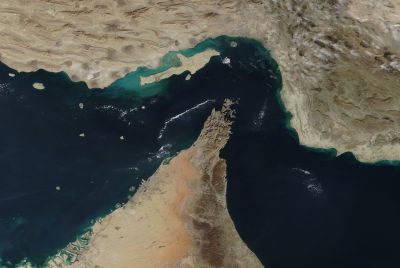
As the war enters a new phase with fragile ceasefire talks and ongoing tensions over the Strait of Hormuz, attention is turning to lessons from this "first AI war." Proponents see a future where AI reduces risk to U.S. forces and enables precise, overwhelming responses. Skeptics warn of an arms race in autonomous systems, lowered thresholds for conflict, and accountability gaps when algorithms influence lethal decisions.
For now, in command centers from Tampa to Tel Aviv, operators continue to rely on Palantir's platforms to make sense of the fog of war — fusing data at machine speed while commanders bear the ultimate responsibility for where the bombs fall.
© Copyright 2026 IBTimes AU. All rights reserved.
- Recommended For You