

New Supercomputer Runs Suggest the Early Milky Way Was Thousands of Smaller Galaxies, Some of Them Starless
The three-year MEGATRON project models the galaxy's first billions of years, including star formation, chemical enrichment and dark, gas-filled systems that later merged into its spiral disc.
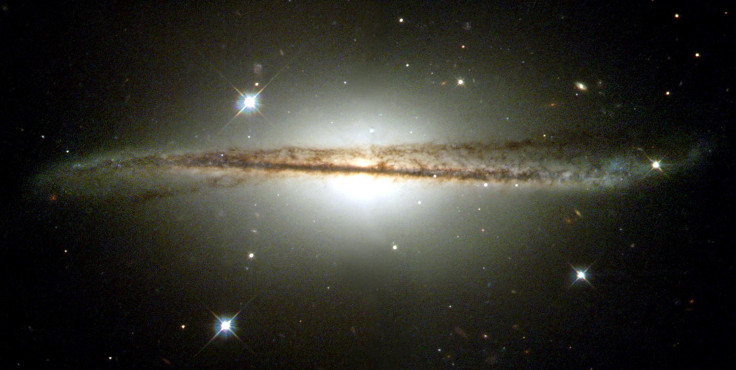
CHICAGO — The neighborhood that became the Milky Way may have started as thousands of smaller galaxies, some bursting with stars and some shining with no stars at all, according to a set of simulations that took three years to run.
Harley Katz, an assistant professor of astronomy and astrophysics at the University of Chicago, led the project, named MEGATRON. Six papers are published in The Open Journal of Astrophysics. The model follows the first several billion years of a galaxy like ours, from about 180 million years after the Big Bang through roughly two billion years of evolution.
"What does the Milky Way look like at what we call cosmic dawn?" Katz said. "For the first time, we can directly predict what the early Milky Way would have looked like to telescopes like Hubble or the James Webb Space Telescope."
The method is the standard one for a past that cannot be visited. "Essentially, we put in all of the physics we think is relevant—gravity, hydrodynamics, radiation, chemistry, etc.—and then let it evolve and see if it reproduces what we actually see when we look around us today," Katz said. The team built the runs to take in what the James Webb Space Telescope has been finding, then compare the output with those readings.
Run backward, the model shows a web of large and small systems that later merge into the spiral disk. "We follow thousands of subsystems in the model and directly compute what they all would have looked like with our most powerful space telescopes, which is many orders of magnitude more than what had been simulated before," Katz said. "Within those you see an incredible diversity. Some of them are bursting out in star formation, others are dead, others are in the process of dying."
The visualization is a cycle. Hot gas, shown in purple, cools and collapses. Stars form. Ultraviolet light from those stars, in white, and glowing oxygen, in yellow, heat the gas again. "The very big bursts are catastrophic star formation events, typically caused by instabilities or when a galaxy merges," Katz said.
One result is a class of "galaxies" with no stars that still shine. Some may once have had stars that exploded or collapsed into black holes. Others may only ever have held gas. They would not look like the star fields astronomers usually mean by a galaxy. In the model they are still part of the material that ends up in the Milky Way.
A second result concerns iron in the faintest dwarf galaxies. In the Milky Way, smaller and fainter systems generally have less iron. In the very faintest, the amount of iron looks flat, independent of mass. Earlier simulations did not reproduce that. MEGATRON points to Population III stars, the first generation, made only of hydrogen and helium. When they explode they can throw off more iron than later supernovae. A galaxy with enough gravity keeps the iron. A galaxy that is too small loses it to space. None of these stars has been seen directly. Another paper in the set is the first to show how they would form in a Milky Way-like environment and where any survivors would be most likely to sit.
The runs also track individual chemical elements from individual stars, tied to gravity, chemistry, radiation and stellar processes. "What's unique about our simulation is that it's the first time we have modeled the enrichment of individual chemical elements from individual stars after the Big Bang, coupled to detailed models for gravity, chemistry, radiation and stellar processes," Katz said.
Two of the papers drop the usual shortcut that chemistry sits in equilibrium. Real galaxies do not. Adding that non-equilibrium physics slowed the computation and changed the result, especially in the gas flowing around galaxies, the circumgalactic medium. At a later snapshot, about 12 billion years ago, the model already shows a rotating disk, heavy elements, dust, and bands of stars north and south left by a large collision.
"Looking at these results, it's very clear that the physics happening right after the Big Bang has a direct impact on what we see today in the local universe," Katz said. "But there are also things we're not getting right, which is interesting too—what are the parts we're still missing? That can lead you into new directions and new questions."
The papers do not claim the simulation is the Milky Way's biography. They claim it is the most detailed model yet of how a galaxy like it could have been assembled, and a prediction of what cosmic dawn would have looked like to Hubble and Webb. The mismatches are part of the output. A model that only confirms what telescopes already see does not say what to look for next.
© Copyright 2026 IBTimes AU. All rights reserved.