Luka Doncic Injury Update: How Serious Is It Compared to Past Injuries as Lakers Star Seeks Europe Treatment
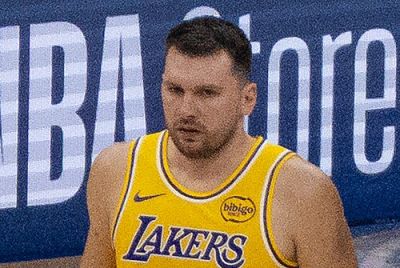
LOS ANGELES — Los Angeles Lakers superstar Luka Doncic suffered a Grade 2 left hamstring strain in early April, sidelining him for the remainder of the 2025-26 regular season and casting uncertainty over his availability for the NBA playoffs, where the team already secured a postseason berth.

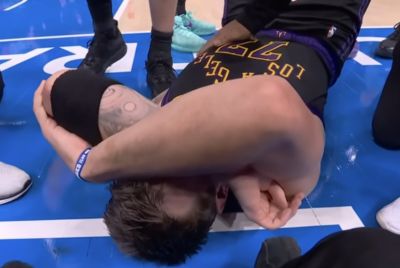
The injury occurred during the Lakers' 139-96 loss to the Oklahoma City Thunder on April 2, when Doncic pulled up limping on a drive in the third quarter. An MRI the following day confirmed the Grade 2 strain, prompting the team to rule him out for the final stretch of the regular season. As of mid-April 2026, he has traveled to Spain for specialized medical treatment, including an injection procedure, in hopes of expediting his recovery and potentially returning during the playoffs.
A Grade 2 hamstring strain involves a partial tear of the muscle fibers, accompanied by moderate pain, swelling and loss of function. Recovery timelines typically range from three to six weeks, with an average around four to five weeks depending on the athlete's age, conditioning and rehabilitation protocol. For a player like the 27-year-old Doncic, whose game relies heavily on explosive deceleration, quick changes of direction and stop-start movements, the injury poses particular challenges because scar tissue from previous strains can increase re-injury risk.
This marks the second left hamstring issue for Doncic this season. He previously missed four games around the All-Star break with a milder strain or tweak to the same leg. Experts note that recurring hamstring problems in the same area often heal more slowly due to residual scar tissue, which is less elastic than original muscle. Sports injury analysts have pointed out that NBA hamstring strains have averaged about 22 days of missed time in recent seasons, longer than historical norms in some cases.
Compared to other common NBA injuries, a Grade 2 hamstring strain sits in the moderate-to-severe category for soft-tissue damage. It is generally less immediately devastating than a Grade 3 tear, which can sideline players for months and sometimes require surgery, or an ACL rupture that typically ends a season and demands nine to 12 months of rehabilitation. Ankle sprains, one of the most frequent basketball injuries, often allow returns within one to three weeks for mild cases but can linger if high-grade.
Hamstring strains differ from knee or shoulder injuries in their tendency to recur. Players with a history of hamstring issues, like Doncic, face elevated risk because the muscle group is prone to tightness under fatigue. In Doncic's case, the non-contact nature of the April 2 injury — occurring on a deceleration move — aligns with classic hamstring strain mechanics. He had shown signs of discomfort earlier in the game, grabbing at the leg, yet was cleared to continue after halftime evaluation.
The timing could hardly be worse for the Lakers. Doncic was enjoying one of the finest seasons of his career, leading the NBA in scoring at approximately 33.5 points per game while adding strong rebounding and assist numbers. His absence forced the team to lean more heavily on LeBron James and supporting cast members as they navigated the final regular-season games and prepared for playoff positioning.
Doncic's agent, Bill Duffy, confirmed the decision to seek specialized care in Europe after consultations with Lakers medical staff and Doncic's personal team. Reports indicate he underwent an injection procedure aimed at promoting faster healing. While such treatments can sometimes accelerate recovery by reducing inflammation or stimulating tissue repair, medical experts caution that rushing back from a hamstring strain risks a more serious re-tear that could extend the timeline significantly or affect long-term performance.
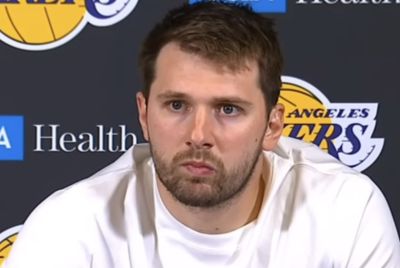
Lakers coach JJ Redick has provided measured updates, noting that Doncic is attacking rehabilitation aggressively and remains in good spirits. However, the team has emphasized caution. Playoffs begin in mid-to-late April, meaning a standard three-to-six-week recovery could cause Doncic to miss the first round entirely and potentially part or all of the second round. Some optimistic projections suggest a possible return around early May if treatment progresses exceptionally well, but conservative estimates point to a longer absence to ensure full strength.
This injury adds to Doncic's history of durability questions, though he has generally proven resilient. Earlier in his career with the Dallas Mavericks, he dealt with various lower-body niggles, but nothing as disruptive as this season's repeated hamstring concerns. The recurrence in the same leg raises questions about underlying factors such as workload management, conditioning protocols or biomechanical tendencies in his playing style, which features significant pounding on the legs during drives and defensive slides.
For the Lakers, the setback complicates playoff aspirations. Even without Doncic, the team has shown resilience in spots, but his unique playmaking and scoring gravity are difficult to replace. If he returns mid-postseason, the challenge will be integrating him seamlessly without rust or compensatory movement patterns that could lead to further injury.
Broader NBA context shows hamstring strains remain a persistent issue league-wide, often linked to the sport's high-intensity, stop-and-go demands. Prevention strategies include targeted strengthening, flexibility work, load monitoring and proper warm-ups, areas where teams continue investing heavily in sports science.
Doncic's situation has drawn widespread attention from fans and analysts. Social media buzzed with concern over the potential impact on his MVP candidacy — he played 64 games, just short of the 65-game threshold some awards require, though the league has shown flexibility in past cases. Discussions also focused on the psychological toll of missing time during a championship push.
As Doncic continues treatment abroad, the Lakers proceed with cautious optimism. Medical teams will monitor progress closely through imaging and functional testing before clearing any return. The goal remains a healthy, explosive Doncic capable of performing at his elite level rather than a rushed comeback that jeopardizes both short-term playoff success and long-term health.
For now, the Grade 2 hamstring strain represents a significant but not season-ending blow in isolation. Its seriousness stems from the timing, the recurrence on the same leg, and the demands of Doncic's game. Compared to more catastrophic injuries like ACL tears or fractures, it offers a clearer path back to the court within weeks rather than months. Yet in the high-stakes world of NBA playoffs, even a few missed games can alter a team's trajectory.
The coming weeks will determine whether specialized European treatment can compress the timeline enough for Doncic to contribute meaningfully. Lakers fans, teammates and the broader basketball world will watch closely as the Slovenian star works toward a return, hoping the latest hamstring setback proves only a temporary hurdle in an otherwise stellar season.
© Copyright 2026 IBTimes AU. All rights reserved.
- Recommended For You