Goodman Group Shares Climb 0.65% to $28.00 as Data Centre Boom Fuels AI Infrastructure Play on ASX
SYDNEY — Goodman Group (ASX: GMG) shares rose 0.65 percent to close at $28.00 in intraday trading Friday, extending a recent rebound as investors continue to reward the property giant's aggressive pivot toward data centres amid surging global demand for artificial intelligence infrastructure.

The stock, which trades as a stapled security in the real estate sector, gained 0.18 points in early to mid-session action on the Australian Securities Exchange. Volume remained healthy as the broader S&P/ASX 200 index traded modestly lower, highlighting Goodman's relative resilience and its status as a favoured growth name in a market sensitive to interest rates and geopolitical energy risks.
Goodman Group, a leading owner, developer and manager of high-quality logistics warehouses and data centres in major global cities, has positioned itself at the heart of two powerful structural trends: e-commerce-driven supply chain optimisation and the explosive growth in computing power required for AI, cloud services and digital transformation.
In its first-half fiscal 2026 results released in February, the company reported an operating profit of A$1.2 billion, underpinned by a robust development pipeline and rising assets under management. External assets under management reached A$75.2 billion at Dec. 31, while the total portfolio stood at A$87.4 billion with occupancy holding steady near 96 percent.
Chief Executive Greg Goodman told analysts the group is "building into strong demand for metro locations across both logistics and data centres." Large-scale logistics customers are investing in automation and consolidation for efficiency, while data centre clients seek low-latency, high-connectivity facilities to support unprecedented capital expenditure in the sector.
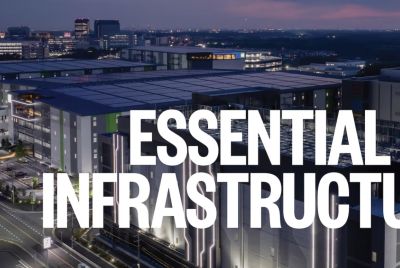
The standout element in Goodman's strategy is its data centre push. Development work in progress reached A$14.4 billion in the first half, with data centres accounting for 73 percent of that total. The company's global power bank has grown to 6.0 gigawatts across 16 major metropolitan markets, with 3.6 GW of secured power. Management expects data centre projects providing 0.5 GW to enter the work-in-progress pipeline by the end of fiscal 2026, potentially lifting total developments under way to around A$18 billion.
Partnerships with deep-pocketed institutional investors have accelerated the expansion. Goodman struck a landmark A$14 billion data centre development partnership in Continental Europe with the Canada Pension Plan Investment Board and a A$2 billion logistics partnership in North America. These alliances provide both capital and validation for Goodman's ability to deliver complex, power-intensive projects on tight timelines — a critical edge when power, land and construction capacity are constrained in key markets.
Recent operational momentum includes a new partnership with DataBank to open a landmark data centre in Los Angeles, further expanding Goodman's footprint in high-demand U.S. markets and demonstrating its capacity to convert land holdings into income-producing digital infrastructure.
Analysts have largely maintained positive outlooks. Macquarie reiterated a buy rating earlier in April, while Morningstar holds a fair value estimate around A$29 per security. The stock trades at a forward price-to-earnings multiple in the high teens, reflecting expectations of sustained earnings growth even as near-term transactional and development income can fluctuate with project timing.
Goodman has guided for 9 percent growth in operating earnings per security for full-year fiscal 2026, subject to stable market conditions. That target comes despite an 8 percent year-on-year dip in first-half operating profit per security to 59 cents, caused largely by lower transactional and performance fees plus the timing of certain development earnings. Like-for-like net property income growth of 4.2 percent provided a solid underlying base.
The company's balance sheet remains strong, with significant liquidity to fund construction starts. Over the past 18 months, Goodman has raised A$7.2 billion in third-party equity, enabling it to retain more ownership in high-quality assets while monetising developments strategically.
Shares have shown volatility in 2026. After hitting a 52-week low near A$24.56 in late March amid broader pressure on growth stocks from elevated interest rates and global uncertainty, the stock has recovered smartly. It climbed as high as A$28.56 on April 8 before Friday's modest advance. Year-to-date performance remains mixed, but the longer-term trajectory — up more than 50 percent over three years — underscores investor confidence in Goodman's secular tailwinds.
Market watchers note that Goodman's business model has evolved. Traditionally focused on developing logistics facilities and then selling down stakes to institutional partners, the group is increasingly retaining more exposure to completed data centres to capture recurring rental income and management fees. This shift supports more predictable earnings while still allowing capital recycling for new projects.
The AI megatrend has transformed perceptions of the stock. Once viewed primarily as an industrial and logistics play tied to retail and manufacturing cycles, Goodman is now widely regarded as Australia's premier listed proxy for data centre and digital infrastructure growth. Hyperscale operators and enterprise customers continue to engage across multiple sites, with commitments expected throughout 2026.
Challenges remain. Higher-for-longer interest rates have weighed on valuation multiples across the real estate sector, and foreign exchange movements shaved A$33 million from first-half operating income. Development timelines can slip due to regulatory approvals, grid connection delays or construction cost pressures. Power availability, in particular, has become a gating factor in many markets, though Goodman's early accumulation of powered sites gives it a competitive advantage.
Broader economic conditions in Australia and key international markets will influence near-term performance. Any sustained decline in oil prices or successful de-escalation of Middle East tensions could support lower inflation expectations and potential rate relief from central banks, benefiting rate-sensitive sectors including property. Conversely, renewed energy shocks could delay capital expenditure plans among data centre tenants.
Goodman's dividend policy provides a modest but growing yield. The company distributed 30 cents per security for the full year in its guidance, equating to a trailing yield around 1.1 percent at current prices. While not a high-yield play, the combination of earnings growth and capital appreciation has appealed to superannuation funds and long-term investors seeking exposure to the digital economy.
Trading on Friday occurred against a mixed backdrop for Australian equities, with the benchmark ASX 200 easing slightly on oil price dynamics and caution ahead of key economic data. Goodman's outperformance in that environment reflects its defensive growth characteristics — essential infrastructure demand tends to be less cyclical than traditional commercial real estate.
Looking ahead, investors will watch for updates on data centre pre-commitments, progress on the European and North American partnerships, and any fresh capital raisings or asset monetisations. The next full set of results is scheduled for August 2026, when management is expected to provide greater visibility on the conversion of its power bank and land holdings into operational capacity.
For now, Goodman Group continues to trade as a premium name on the ASX, commanding attention from both domestic and international investors chasing exposure to the infrastructure backbone of artificial intelligence and modern supply chains. At A$28.00, the stock sits well off its 2026 lows but remains below the 52-week high of A$37.31 reached in 2025, leaving room for further upside if execution on the data centre pipeline meets or exceeds expectations.
The company's ability to navigate power constraints, secure capital partnerships and deliver projects on time will determine whether it can sustain its position as a standout performer in the Australian share market. As global data demand shows no signs of slowing, Goodman's strategic land bank, development expertise and institutional relationships position it to capture a meaningful share of what many analysts describe as a multi-decade opportunity in digital infrastructure.
© Copyright 2026 IBTimes AU. All rights reserved.
- Recommended For You