

Bill Gates Warns AI Could Erase Jobs Permanently, Proposes Robot Tax And 'Human Reserved' Work In New Essay
Gates outlines strategies to mitigate AI's impact on employment, urging proactive governance and human-reserved roles.
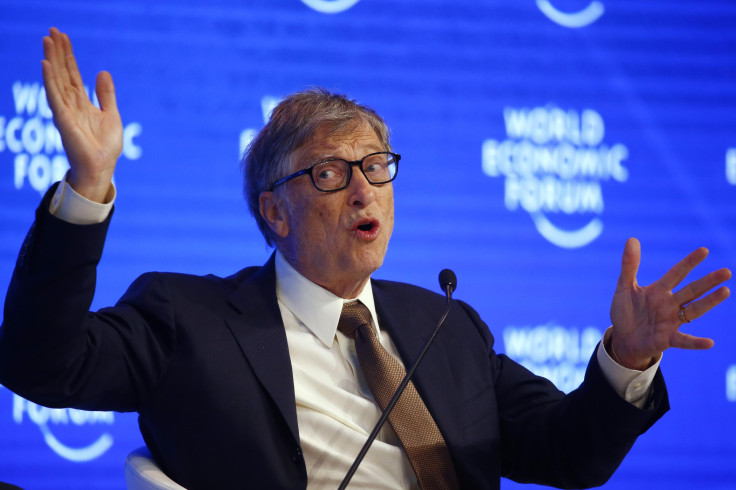
SEATTLE — Microsoft co-founder Bill Gates has issued a stark warning about artificial intelligence's potential to permanently eliminate large numbers of jobs, calling on governments to prepare now for widespread labor disruption rather than waiting for the market to sort out the fallout on its own.
In a nearly 5,900-word essay titled "The turbulent AI era is here," published last month on his personal website, Gates Notes, Gates argued that AI differs fundamentally from earlier labor-saving technologies because it threatens to substitute for the very cognitive work that historically created new jobs as older ones disappeared, such as when workers moved away from farms and factories over the past century.
"We have to think now about how to reduce job losses so that everyone can share in the prosperity that AI creates," Gates wrote in the essay.
Gates identified sales, customer support, software engineering and paralegal work among the white-collar occupations most likely to face early disruption from AI systems, alongside tasks such as assessing loan applications, analyzing data and triaging patients. He expressed particular concern for younger workers entering a labor market with fewer entry-level openings than previous generations encountered.
"I worry about my grandkids, as robots increasingly take on entry-level functions," Gates wrote, according to CNBC's account of the essay. "It's hard to move up the ladder when there is no bottom step to help you get on that ladder."
Beyond white-collar work, Gates said he expects increasingly capable robots to begin competing for physical tasks in construction and hospitality by the end of the decade, extending AI's disruptive potential well beyond office-based cognitive work. He acknowledged that public skepticism about robotics may currently be shaped by viral videos of robots performing clumsily, but argued that underlying capability is advancing faster than casual observers might assume.
To address the coming disruption, Gates outlined three central proposals in his essay. The first calls for new governance institutions, both domestic and international, capable of coordinating AI policy across employment, education, taxation, health, security and energy simultaneously, rather than leaving individual government agencies to manage separate pieces of the transition independently. Gates has pointed to elements of nuclear inspection regimes, international aviation regulation and environmental treaties as potential models for the kind of international cooperation he believes will ultimately be necessary, while acknowledging that building such a framework would take years and require difficult cooperation among major world powers.
Gates's second proposal, which he calls "Human Reserved," suggests that societies should deliberately set aside certain jobs or tasks for humans even in cases where machines become technically capable of performing them. Gates has compared the concept to a nature reserve, land that could technically be developed but is deliberately left alone because the long-term cost of development would outweigh any short-term benefit.
Gates cited caregiving as a clear example of work he believes should remain human-reserved, drawing directly on his own family's experience. His father received round-the-clock care before dying of Alzheimer's disease in 2020, an experience Gates said shaped his thinking on the issue significantly.
"Something in the care they gave my dad was irreplaceably human," Gates wrote. "No robot could or should have done it."
Gates offered a similar example involving the delivery of difficult medical news, arguing that certain moments carry human significance beyond pure technical efficiency.
"There's no technical reason why it couldn't," Gates wrote regarding the prospect of a robot delivering a terminal diagnosis. "Yet it shouldn't."
Gates has acknowledged significant unresolved questions surrounding how a Human Reserved system would actually function in practice, including who would decide which jobs qualify for protection and how authorities would prevent companies from circumventing such restrictions. According to reporting from GeekWire, Gates said these details "will need to be worked out in public," and revealed he has been actively discussing potential implementation approaches with Anthropic's Claude chatbot, including exploring ways to reserve as much as 40% of overall work for humans through measures such as shorter workdays and earlier retirement to help redistribute remaining employment.
Gates's third major proposal involves shifting a portion of the tax burden away from human labor and toward automation, specifically by taxing AI computing usage, sometimes referred to as tokens, along with robots themselves.
"I believe we should tax AI tokens and robots," Gates wrote, according to HR Executive's coverage of the essay.
Gates argued that the current tax structure creates a built-in incentive favoring automation over human employment, since employers pay payroll taxes when hiring workers but can typically write off the cost of a robot as an immediate business expense. He said a targeted tax on AI and robotic labor could help modestly slow the pace of substitution while generating revenue to fund worker retraining programs and a stronger social safety net, though he specified that such a tax should not impede AI applications that make medicine and education more affordable.
Gates was careful throughout the essay to frame his proposals as starting points for public debate rather than fully developed policy plans. He did not specify a tax rate, a taxable unit, or a collection mechanism for his proposed automation tax, and acknowledged that measuring AI usage across cloud services, internally developed models and mixed human-machine workflows would present significant practical challenges.
Independent labor market research offers a narrower and more preliminary picture than Gates's broader forecast. A Stanford Digital Economy Lab paper, revised Aug. 12, analyzed ADP payroll records covering millions of U.S. workers through June and found that employment among workers ages 22 to 25 in AI-exposed occupations ran 19% below where it would have been expected to track based on less-exposed peers, while experienced workers in the same fields showed no comparable employment gap. The researchers characterized their findings as early descriptive indicators rather than definitive proof of AI-driven job losses, noting that the divergence occurred primarily through reduced hiring rather than increased layoffs, and that similar effects appeared less pronounced in broader national survey data.
Critics of Gates's automation tax proposal have raised concerns about potential unintended economic consequences. Robert Seamans, an associate professor of management at New York University, has argued that existing empirical evidence suggests robots generally boost productivity growth, meaning a tax specifically targeting robotic automation could inadvertently limit broader productivity gains at a time when many economies are already grappling with sluggish growth.
Gates has characterized the overall stakes of the current moment in stark terms, describing the odds of a net negative outcome from the ongoing AI transition as "very high" absent meaningful policy intervention. As of early September, his proposals remain firmly in the realm of public debate rather than enacted policy, with the central open questions being whether governments will translate his ideas into concrete legislative proposals, and whether broader employment data in the months ahead will eventually confirm the kind of structural labor market disruption Gates has warned is coming.
© Copyright 2026 IBTimes AU. All rights reserved.