Where To Watch Northern Lights Tonight? Geomagnetic Storm Could Bring Aurora as Far South as Illinois
FAIRBANKS, Alaska — Skywatchers across much of the northern United States and Canada have a prime opportunity to witness the northern lights, or aurora borealis, tonight into early Friday morning as a powerful geomagnetic storm impacts Earth, according to the National Oceanic and Atmospheric Administration's Space Weather Prediction Center.
The SWPC issued a G2 (moderate) geomagnetic storm watch for March 19 (UTC), which corresponds to late March 18 and early March 19 local time in North America. Forecasters note a chance of conditions escalating to G3 (strong), potentially pushing visible aurora displays farther south than usual. Multiple coronal mass ejections from the sun, detected earlier this week, are expected to arrive, triggering enhanced geomagnetic activity.
The storm's effects could begin as early as 11 p.m. EDT on March 18 (0300 GMT March 19), with peak moderate G2 conditions most likely between 2 a.m. and 8 a.m. EDT (0600-1200 GMT). The Kp index, a measure of global geomagnetic activity on a scale of 0 to 9, is forecasted to reach around 6 or higher during the peak, expanding the auroral oval southward.
Under these conditions, the aurora viewline — the southernmost boundary for visibility — stretches across states including Alaska, Washington, Oregon, Idaho, Montana, North Dakota, South Dakota, Minnesota, Wisconsin, Michigan, New York, Vermont, New Hampshire and Maine. If G3 levels materialize, sightings become possible low on the northern horizon from northern parts of Illinois, Iowa, Nebraska, Indiana, Ohio, Pennsylvania, Massachusetts, Connecticut and Rhode Island — a rare treat for mid-latitude observers.
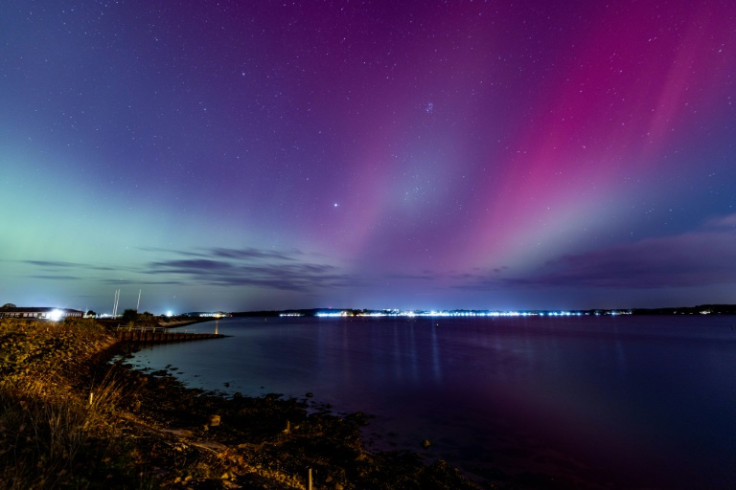
In stronger displays, the lights may appear as faint green glows or low horizon bands, sometimes more vivid through long-exposure cameras than to the naked eye. Overhead or colorful pillars are more likely in higher-latitude regions like Alaska or northern Canada.
The best viewing windows fall between 10 p.m. and 2 a.m. local time, though activity can persist or shift. Clear, dark skies away from light pollution are essential. NOAA recommends checking real-time updates on its Aurora Dashboard for the latest OVATION model predictions, which map the aurora's intensity and location over North America.
Prime locations for tonight include:
- **Alaska**: Fairbanks and Utqiaġvik offer overhead displays under moderate activity. The Geophysical Institute at the University of Alaska Fairbanks provides live all-sky cameras for remote monitoring.
- **Northern U.S. states**: Head to rural areas or state parks with northern views. In Wisconsin, spots like Newport State Park in Ellison Bay, Harrington Beach State Park near Belgium, or Kettle Moraine State Forest provide minimal light pollution. Similar dark-sky sites in Michigan's Upper Peninsula, Minnesota's Boundary Waters, or Maine's Acadia National Park (away from town lights) boost chances.
- **Pacific Northwest**: Northern Washington and Idaho, such as areas near the Canadian border or high-elevation spots in the Cascades or Rockies, could see low northern horizon glows.
- **Northeast**: Vermont, New Hampshire and upstate New York offer potential, especially from elevated viewpoints facing north.
Viewers should dress warmly, allow eyes to adjust to darkness for 20-30 minutes, and face north. Apps like Aurora Forecast or spaceweatherlive.com provide alerts, while NOAA's 30-minute aurora forecast offers short-term predictions.
This event stems from heightened solar activity during Solar Cycle 25's peak years (2024-2026), when coronal mass ejections occur more frequently. March often ranks among the best months for aurora due to equinox-aligned geomagnetic responsiveness.
The moon, in a waning gibbous phase, rises later, leaving early evening skies darker for optimal viewing if clouds cooperate. Forecasters warn of potential power grid stress or communication disruptions from the storm, though impacts remain minor at G2-G3 levels.
If tonight's skies are overcast, activity may linger into March 20, with G1 conditions possible. Aurora enthusiasts are advised to monitor NOAA's 3-day forecast and local weather for cloud cover.
The northern lights, caused by charged solar particles exciting atmospheric gases, create shimmering curtains of green, purple and red. Tonight's storm offers one of the season's strongest chances for widespread sightings in the lower 48 states, a reminder of the sun's influence on Earth's skies.
© Copyright 2026 IBTimes AU. All rights reserved.
- MOST POPULAR IN Science