

Middle East Airports Status: Riyadh Closed After Attacks as Dubai, Doha, Abu Dhabi and Jeddah Stay Open
Dubai, Abu Dhabi, Doha and Jeddah airports remain open, but passengers face cancellations, delays and rerouted services amid heightened regional tensions.
DUBAI, United Arab Emirates — Air travel across the Middle East remained heavily disrupted Monday after a series of deadly attacks shut down Saudi Arabia's main international airport in Riyadh. Airlines canceled hundreds of flights, and governments warned travelers to stay away.
Other major hubs in the region, including Dubai, Abu Dhabi, Doha and Jeddah, remained open, though passengers faced cancellations, delays and rerouted flights.
Here is the latest on five of the region's most important airports.
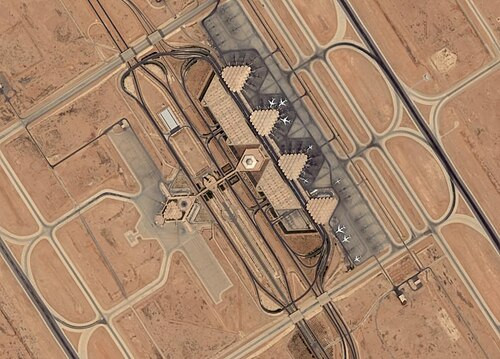
1. King Khalid International Airport, Riyadh: Suspended
Operations at King Khalid International Airport in the Saudi capital remained suspended after an attack Saturday that killed at least 12 people, including one American, and injured 309 others, according to Saudi officials.
Saudi Arabia's General Authority of Civil Aviation said operations were halted pending an assessment of the damage. As of Sunday, authorities had given no indication of when the airport would reopen, and flights were being canceled or diverted elsewhere.
The airport has been targeted repeatedly in recent days. Saudi officials said earlier attacks on airports in Riyadh and the southwestern city of Abha killed three people and injured 36 on Oct. 6 and 7. Yemen's Iran-aligned Houthi rebels claimed responsibility for several of the strikes.
The Houthis have repeatedly warned airlines against operating in Saudi airspace, which they describe as a theater for their military operations. They renewed that warning on Sunday.
Hans Grundberg, the United Nations special envoy for Yemen, called Saturday's strike a "dangerous escalation" that threatens regional security.
The United States, Britain, Germany, Australia and Canada have all warned their citizens to avoid the airport. Australia's travel advisory service told travelers "do not travel to King Khalid International Airport in Riyadh."
According to flight-tracking site FlightAware, at least 291 flights at the airport were canceled in a single 24-hour period. Gulf Business reported that nearly 1,500 flights had been canceled across Saudi Arabia amid the attacks.
Several airlines have suspended Riyadh services. Lufthansa Group has halted flights through Oct. 16. Air India, Pakistan International Airlines and others have also suspended service, and regional carriers including flydubai and Etihad Airways have canceled flights to the Saudi capital.
2. King Abdulaziz International Airport, Jeddah: Open with disruptions
Jeddah's King Abdulaziz International Airport, the main gateway for pilgrims traveling to Mecca and Medina, remained open. However, travelers faced cancellations as airlines scaled back services to Saudi Arabia.
Etihad Airways listed cancellations on some flights between Abu Dhabi and Jeddah through Tuesday. Saudi budget carriers flyadeal and flynas have also reported significant numbers of cancellations and delays across their networks.
Europe's aviation safety regulator has issued a conflict zone bulletin covering Saudi airspace, valid through Nov. 16, though it credits Saudi authorities with managing the airspace effectively.
3. Dubai International Airport: Open
Dubai International Airport, one of the world's busiest hubs for international travel, was open and operating, and UAE airspace remained open to commercial flights.
Emirates was flying its network, though the airline canceled several flights to the Saudi city of Dammam on Sunday. Flydubai was operating a reduced schedule, with some flights taking longer because of rerouting around restricted airspace.
Several European airlines continue to suspend Dubai service. KLM has halted flights through Oct. 24, and Air France suspended Dubai flights through Oct. 13. Lufthansa plans to resume flights to Dubai from Munich and Frankfurt in late October.
4. Zayed International Airport, Abu Dhabi: Open
Zayed International Airport in Abu Dhabi was open and operational, including for passengers transiting through the hub.
Etihad Airways, the UAE capital's flagship carrier, was operating but had canceled selected flights to Riyadh, Jeddah and Dammam through Tuesday. Passengers were advised to check flight status before traveling.
The UAE lifted wartime air traffic restrictions in early May, after airspace closures linked to the conflict with Iran earlier this year.
5. Hamad International Airport, Doha: Open
Hamad International Airport in Qatar's capital was open and operational, with Qatar Airways and dozens of foreign carriers operating flights.
Qatar Airways has gradually restored its regional network after earlier disruptions and has resumed flights to Dubai, Sharjah and Abu Dhabi. The airline has reported relatively low cancellation rates in recent days, though delays remain common across the region.
Broader disruption
The attacks on Saudi airports have added to months of turmoil in Middle Eastern aviation linked to the war involving Iran. Iranian airspace remains closed, forcing airlines to reroute flights and adding time and fuel costs.
The latest escalation comes as Saudi-backed Yemeni government forces press an offensive against the Houthis, and after Saudi Arabia was accused of striking the airport in the Houthi-held Yemeni capital, Sanaa.
Advice for travelers
Travelers with flights to, from or through the region are urged to check with their airlines before heading to the airport, as schedules can change at short notice. Many carriers are offering free rebooking or refunds for affected flights.
Passengers should also monitor government travel advisories, as conditions may shift quickly depending on developments in the conflict.
© Copyright 2026 IBTimes AU. All rights reserved.