

Top Doctors Issue New Flu And COVID Vaccine Guidance For Fall, Aiming To Cut Through Federal Confusion
Medical societies step in to provide clear vaccination guidance as federal recommendations remain uncertain.
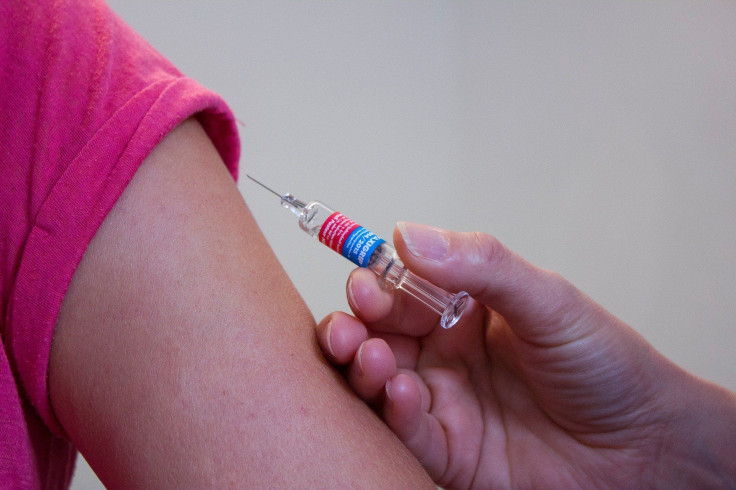
Leading U.S. medical organizations banded together Wednesday to issue new flu and COVID-19 vaccination guidelines for the fall, an effort doctors say is aimed at cutting through confusion caused by shifting federal vaccine policy under the Trump administration.
Flu vaccinations are already underway across the country, and COVID-19 shots are beginning to arrive at pharmacies and clinics after the Food and Drug Administration approved updated versions of both vaccines last week. Winter also brings the added risk of respiratory syncytial virus, or RSV, rounding out three major vaccine-preventable illnesses that health officials typically address heading into the colder months.
Guidance on who should receive which vaccines and when has traditionally come from the Centers for Disease Control and Prevention, working with its independent panel of vaccine advisers. But despite no new scientific evidence emerging to justify a shift, Trump administration health officials began pulling back last year on several longstanding vaccine recommendations covering fall virus protection and routine childhood immunizations. The CDC's advisory panel, which shapes vaccine policy at the state level and influences insurance coverage decisions, remains entangled in an ongoing court battle. The CDC did not respond to questions about new fall guidance, though its website has suggested doctors continue following last year's flu recommendations.
Into that vacuum have stepped four of the nation's leading medical societies: the American Academy of Pediatrics, the American Academy of Family Physicians, the American College of Obstetricians and Gynecologists, and the Infectious Diseases Society of America. Each organization released its own vaccination guidelines this week tailored to the patient populations it represents.
Dr. Sandra Fryhofer of the American Medical Association said the coordinated effort reflects growing frustration among physicians over the shifting federal messaging.
"There's been a lot of confusion and chaos regarding vaccine recommendations," Fryhofer said.
Fryhofer said the groups are posting their recommendations, along with supporting evidence on vaccine safety and effectiveness, on their websites to give the public reliable information despite the uncertainty at the federal level.
"The public has clear, consistent, science-based guidance even while the federal process is in flux," Fryhofer said.
On flu vaccination, the medical societies broadly agree that nearly everyone age 6 months and older should get a shot. The virus poses particular danger to adults 65 and older, pregnant women, young children, and people of any age with chronic health conditions such as asthma, diabetes, heart disease or weakened immune systems. The past two flu seasons were unusually severe, with elevated numbers of pediatric deaths, the vast majority occurring among children who had not been vaccinated.
While flu vaccines do not block all infections, they significantly reduce the likelihood of severe illness. According to an analysis published Wednesday in the medical journal JAMA by the Vaccine Integrity Project, a public health research group based at the University of Minnesota, flu vaccination reduced hospitalizations among older adults by 31%.
This year's flu shot lineup includes several new options. Three "enhanced" flu vaccines have been designed specifically to offer stronger protection for seniors. The American Academy of Family Physicians is urging older patients to choose one of these enhanced formulations when possible.
Dr. Sarah Nosal of the American Academy of Family Physicians said patients should not delay getting vaccinated if their preferred enhanced option isn't immediately available, encouraging them to take whichever appropriate vaccine they can access.
Also new this year is the first flu vaccine built on mRNA technology, the same platform that underpinned the rapid development of COVID-19 vaccines. Moderna's new shot, mFlusiva, is available for people ages 50 and older. One study found the vaccine was 27% more effective at preventing symptomatic illness among adults ages 50 to 64 compared with a standard flu shot. The FDA recently approved the option, and the company has said doses should begin reaching select pharmacies soon. For those averse to needles, a nasal spray version called FluMist remains available for people ages 2 to 49 who meet certain health criteria.
COVID-19 vaccine guidance has grown more complicated at the federal level, with the FDA this year again formally approving the shots only for higher-risk groups — adults 65 and older, and younger people with at least one qualifying health condition. Despite that narrower federal approval, the family physicians' group is recommending that all adults consider getting a COVID-19 vaccination, with particular emphasis on seniors and those with underlying risk factors. Nosal said adults 65 and older should plan for a fall dose followed by a second dose roughly six months later, since protection tends to wane over time.
The American Academy of Pediatrics is recommending a COVID-19 vaccine for all children between 6 months and 23 months old, along with older children who have high-risk health conditions. The group also said it supports vaccination for any child whose parent wants their kid vaccinated, regardless of underlying risk factors.
For pregnant patients, obstetricians emphasized that extensive real-world data has found no evidence linking COVID-19 vaccination during pregnancy to an increased risk of miscarriage or other complications.
Dr. Christina Davidson of the American College of Obstetricians and Gynecologists encouraged pregnant patients to move forward with vaccination given the safety data collected across millions of administered doses, saying simply that patients should go ahead and get the vaccine.
Depending on age and eligibility, patients can choose from mRNA-based COVID-19 vaccines made by Moderna or Pfizer, or a non-mRNA alternative developed by Novavax and Sanofi. As with flu vaccines, COVID-19 shots are considerably more effective at preventing severe illness than at blocking mild infections entirely. The Vaccine Integrity Project found that last fall's COVID-19 vaccines reduced hospitalization risk among seniors by 53% and significantly cut emergency room visits among very young children.
Side effects for both flu and COVID-19 vaccines tend to be mild and short-lived, including soreness at the injection site, fatigue, headache, muscle aches and low-grade fever. Such side effects occurred somewhat more frequently with the new mFlusiva shot compared with standard flu vaccines, according to available data.
Vaccines remain widely accessible through pediatricians' offices, community clinics, and especially retail pharmacies, though access rules vary somewhat by state, particularly for COVID-19 shots. Walgreens, for instance, has said it offers COVID-19 vaccinations without a prescription in every state except Arizona and Oregon, though the minimum age for pediatric doses varies depending on state regulations, with some states permitting vaccination for children as young as 3.
Medicare continues to cover fall vaccinations, and most private health insurers have indicated they plan to maintain coverage for both flu and COVID-19 shots through at least 2027.
On timing, physicians generally recommend getting a flu shot in October, ahead of the virus's typical November surge. COVID-19 activity, by contrast, tends to rise in late summer, which is happening currently, and again following the winter holidays. Fryhofer said it's reasonable to time a COVID-19 vaccination a few weeks ahead of a specific event, such as travel or a family gathering, that patients would not want disrupted by illness.
RSV rounds out the fall vaccination conversation. While typically a cold-like nuisance for most healthy people, the virus can become severe or even life-threatening for infants and older adults. Family physicians recommend a one-time RSV vaccination for adults 75 and older, adults ages 50 to 74 who face elevated risk, and younger people with weakened immune systems. The vaccine is also recommended during late pregnancy to help protect infants born during RSV season. Separately, pediatricians recommend a preventive antibody treatment for infants whose mothers were not vaccinated during pregnancy, along with certain other high-risk infants.
© Copyright 2026 IBTimes AU. All rights reserved.