Jordan Intercepts Iranian Missiles as US and Saudi Arabia Strike Iran-Backed Militias Across Iraqi Soil
Jordan's military intercepts missiles from Iran, escalating regional conflict

Jordan's air defenses shot down five missiles launched from Iran early Wednesday, the country's military said, hours after the United States said it had intercepted an Iranian missile barrage targeting American forces in the Middle East, shattering a brief pause in the region's escalating conflict.
The Jordanian military confirmed the missiles had been intercepted and destroyed. Iran's state-run IRNA news agency carried a statement from the paramilitary Revolutionary Guard saying its Aerospace Force had fired ballistic missiles at the Muwaffaq Salti Air Base in Jordan and at the headquarters of the U.S. military's Central Command in the country.
The strikes came just hours after U.S. Central Command said its forces "remain vigilant and at a high state of readiness," adding that American troops had worked alongside Saudi Arabian forces to strike sites in Iraq used by Tehran-backed militias to launch recent attacks. In announcing those strikes, the U.S. warned that any further attacks on American troops or on Saudi Arabia's energy infrastructure would risk additional military action.
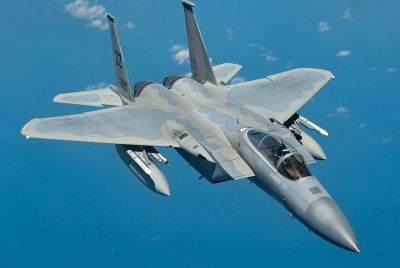
U.S. Central Command said American and Saudi fighter aircraft had struck multiple logistics and weapons sites across eastern Iraq in response to more than 30 drone attacks in the preceding 72 hours that it attributed to Iran's Revolutionary Guard. The command said the Revolutionary Guard and its affiliated groups "must cease these attacks to avoid further U.S. military response."
The Saudi Defense Ministry acknowledged the strikes in a social media post, stating that the kingdom does not seek escalation but will respond to any aggression it faces. Iraqi Prime Minister Ali al-Zaidi called an emergency meeting of the country's National Security Council on Wednesday to address the strikes on Iraqi territory.
The Popular Mobilization Forces, a coalition of primarily Shiite, Iran-backed armed groups nominally under Iraqi military command, said at least 20 of its fighters were killed and 32 others wounded in the overnight strikes on its positions in several parts of the country. The coalition, which formed to fight the Islamic State group after it seized large areas of Iraq in 2014, was designated an independent military formation within Iraq's armed forces in 2016, though its member militias have continued to operate with significant autonomy, and some have carried out attacks on U.S. facilities in the years since.
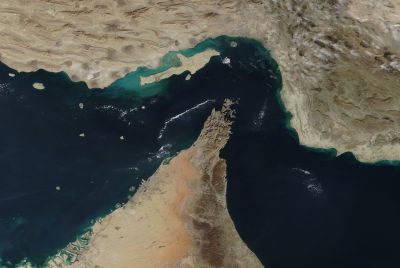
The overnight fighting shattered roughly three days of relative calm between the United States and Iran, which had followed weeks of escalation centered on the Strait of Hormuz, the narrow Persian Gulf waterway through which about 20% of the world's traded oil normally passes.
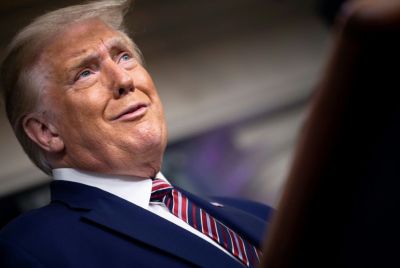
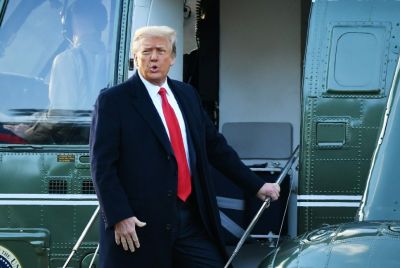
The renewed violence caps a difficult month for President Donald Trump, who has faced mounting pressure on multiple fronts tied to the conflict. Four American troops have died in the fighting in recent weeks, and the Pentagon has asked an increasingly skeptical Congress for additional funding to cover the war's rising costs.
Tensions have also spread to Iraq's western neighbor. Saudi Arabia said Tuesday it had shot down drones fired by Iran-backed militias in Iraq for a second consecutive day. Al-Zaidi ordered Iraqi security agencies to investigate after Saudi Arabia alleged a similar attack on Monday, and the Iraqi military said the country remains committed to preventing its territory from being used as a launching point for attacks on other nations. The Iraqi militias have denied involvement in the drone strikes; the Islamic Resistance in Iraq, an umbrella group of Iran-backed factions, dismissed the Saudi allegations as fabrications and suggested Monday's attacks may instead have originated with Houthi rebels in Yemen, who have claimed responsibility for other recent attacks on Saudi oil facilities.
The Houthis, who separately announced a blockade of Saudi shipping last week, claimed Tuesday to have fired missiles at the Saudi oil tanker NCC Ghazal in the Red Sea, forcing the vessel to turn back. Saudi Arabia had not commented on that claim as of Wednesday. The blockade threat extends to the Bab el-Mandeb strait leading into the Red Sea, a second critical Middle Eastern chokepoint now considered at risk alongside the Strait of Hormuz.
The United Kingdom Maritime Trade Operations Center said late Tuesday that a tanker had reported hearing explosions while transiting the southern Red Sea the previous day, though it did not identify the vessel and said its crew was safe. The center did not report any strikes on tankers in the Strait of Hormuz on Wednesday.
Iran's state media offered a competing account of activity in the strait itself. IRNA reported that the Revolutionary Guard's navy claimed to have struck and stopped three oil tankers in the Strait of Hormuz on Wednesday, alleging the vessels had ignored repeated warnings while sailing what it described as an unsafe and illegal route. The report did not identify the tankers or the flags under which they were sailing, and there was no independent confirmation of any strikes on tankers in the strait as of Wednesday.
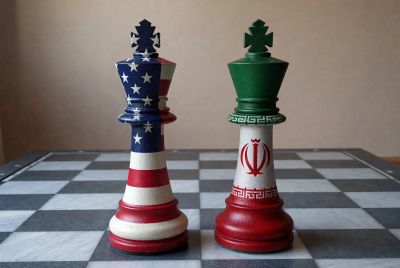
The overlapping crises, spanning direct U.S.-Iran confrontation, proxy attacks inside Iraq, and threats to two of the region's most critical shipping corridors, have left global energy markets on edge as the conflict shows few signs of the sustained de-escalation that briefly appeared to be taking hold earlier in the week.
© Copyright 2026 IBTimes AU. All rights reserved.
- Recommended For You