

Geely Hits 100 Dealerships in Australia in 18 Months as EX5 and EX2 Drive Chinese EV Brand's Rapid Rise
The Chinese automaker has sold 15,709 battery electric vehicles in Australia this year, driven by demand for its EX5 SUV and new EX2 hatchback.
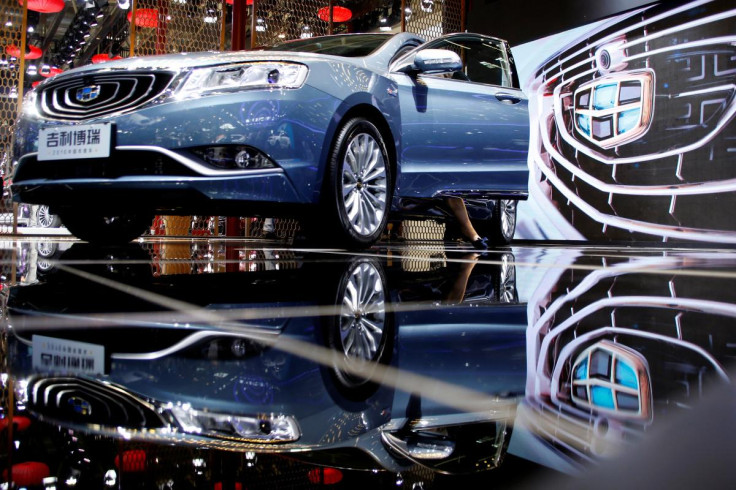
SYDNEY — Geely has opened its 100th dealership in Australia, less than a year and a half after the Chinese automaker entered the market, as strong sales of its electric SUV and a newer small hatchback push it into the top tier of the country's fast-growing electric vehicle market.
The milestone outlet opened in Mandurah, Western Australia. Geely Auto Australia Managing Director Alex Gu called it "a significant milestone for Geely" and said it reflected the momentum behind the brand and its ambitions to grow its local presence.
The network has expanded quickly. When Geely launched in Australia in March 2025, it had 22 dealers. By the end of that year the number had roughly doubled, with representation in every state and territory. The company now says its next phase will focus on regional and rural Australia, putting dealerships closer to buyers outside the major cities.
The expansion has coincided with a sharp rise in sales. According to monthly data compiled by The Driven from the Federal Chamber of Automotive Industries and the Electric Vehicle Council, Geely sold 15,709 battery electric vehicles in Australia in the first nine months of 2026. That ranks the brand third in the country, behind BYD with 44,682 and Tesla with 41,705, and equates to roughly 9 percent of the 180,589 battery electric vehicles sold nationwide over the period.
Momentum has built through the year. Geely sold 415 vehicles in January and 3,219 in September, after recording more than 3,200 in August. Total Australian battery electric sales reached 26,287 in September.
The brand's best-seller is the EX5 electric SUV, which has sold 12,745 units so far this year, making it the third most popular electric model in the country behind the Tesla Model Y and the BYD Sealion 7. The Driven reports that the EX5 has now topped 15,000 sales since launch. It sits ahead of sister-group model Zeekr 7X, which has sold 10,800 this year. Zeekr is a separate brand within the Geely Holding Group, which also owns Volvo, Polestar, Lotus and Farizon, and whose combined Australian electric sales stand at 32,206 this year.
The EX5 is equipped with a 68 kilowatt-hour lithium iron phosphate battery that delivers a rated range of 475 kilometers under the WLTP test cycle. It can charge from 30 to 80 percent in about 20 minutes at a peak DC rate of 100 kilowatts, and it comes standard with 11-kilowatt AC charging, three-phase capability and vehicle-to-load power, which lets owners run appliances from the car's battery.
The company's second model, the EX2 small electric hatchback, has added to the tally. Geely announced it in December 2025 and launched it several months ago, and it has sold 2,964 units in three months, including 1,211 in September. Together, the EX5 and EX2 account for all of Geely's September volume of 3,219.
Geely has also leaned on incentives to keep sales moving. Last week it introduced finance at a 0.09 percent comparison rate over 36 months on eligible EX5 and EX2 vehicles. That followed earlier cashback and finance offers on the EX5 this year, which were designed to sustain demand for the SUV.
Geely's rise reflects a wider shift in Australia's electric vehicle market, where Chinese brands now hold a large share. BYD leads the field, while Zeekr, Omoda Jaecoo, MG, Chery and others have also built substantial volumes. Omoda Jaecoo has sold 10,664 electric vehicles this year and MG 9,911. Among established global brands, Kia has sold 10,390 and Hyundai 3,441.
Tesla remains the single biggest force among models, with the Model Y at 35,930 sales this year, though its sales have fluctuated sharply from month to month. The company has also been working to clear inventory, including a $2,750 price reduction this week on in-stock Model 3 vehicles.
For Geely, the expanded footprint is meant to convert early momentum into durable market share. Building dealerships in regional areas could help it reach buyers who may be unfamiliar with newer Chinese brands and who often rely on a nearby service point before committing to a purchase. Distances are long in Australia, and the availability of local service and support is a frequent consideration for buyers outside capital cities.
The company has not announced a target for the number of dealerships it hopes to open, or a sales goal for 2026 or 2027. It has also not detailed which regional centers will be prioritized. The Mandurah opening, south of Perth, is one of several additions as the network pushes beyond metropolitan areas.
Sustaining the pace will depend on several factors, including continued consumer interest in electric vehicles, the effect of price competition among rivals, and Geely's ability to keep its product lineup fresh. With the EX2 only recently on sale, much of its sales trajectory is still ahead.
For now, the 100-dealer mark gives Geely one of the largest networks among recently arrived brands, and marks a notable step for a company that, until last year, had no presence in the Australian market.
© Copyright 2026 IBTimes AU. All rights reserved.