

Elon Musk Warns AI Firms Could Face a Cash Crisis in 2027 as Data Center Delays Threaten Hundreds of Billions
The warning centres on the financing gap between paying upfront for chips, power and data centres and generating revenue from operational systems.
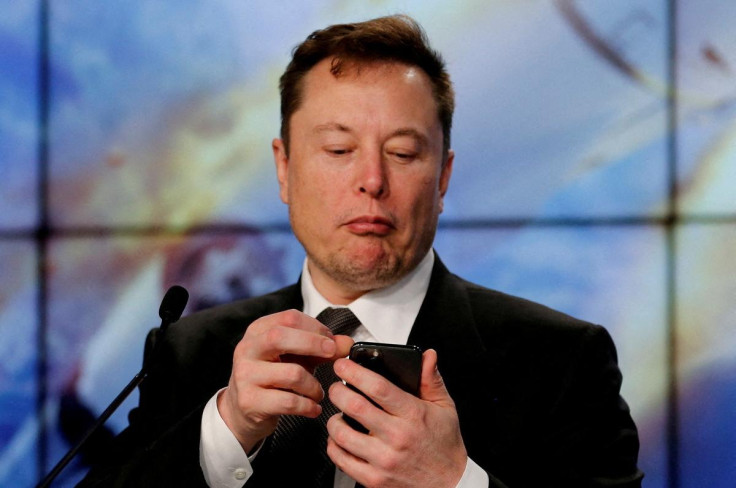
Elon Musk has warned that the artificial intelligence industry could face a severe cash shortage in 2027. He said companies are paying for computing power long before it is ready to earn money.
Musk's Nov. 21 warning on X, which attracted more than 2.3 million views, came in response to AI researcher François Chollet. Chollet created the Keras software library.
"Getting this amount of compute turned on, cooled, and working reliably is incredibly hard. The cash shortage is also going to be nuts next year," Musk wrote.
The bull case Musk responded to
Musk was replying to an upbeat assessment. Calling the tech rout "a rare buying opportunity," Chollet said "frontier training compute is doubling every 5 months," memory production is sold out through 2029, and "inference is profitable with 70-85% margins."
Musk didn't dispute the relentless demand. Instead, he focused on physics and cash flow.
Why delays drain cash
Musk's concern centers on timing. Companies pay for chips, buildings and power equipment up front, but revenue begins only once the systems are running. Musk highlighted the challenge of turning on reliable computing systems quickly enough to avoid a severe cash shortage next year, with even short delays requiring hundreds of billions in extra working capital.
Running AI models can be lucrative once they are operational, but the upfront cash burn needed to bridge construction and grid-connection delays is escalating. Musk has repeatedly flagged electricity and thermal management as the primary constraints on scaling artificial intelligence.
He has warned about funding before. In an Oct. 25 post, Musk wrote that "debt markets have almost entirely shut off access to money for any company that doesn't have substantial revenue in" AI.
The scale of AI spending
The numbers behind Musk's warning are enormous. According to Goldman Sachs data cited in market reports, global AI capital expenditures are nearing $1 trillion in 2026, backed by about $600 billion in AI-related debt. Goldman projects that debt could finance another $440 billion, or 35%, of hyperscaler capex in 2027.
IDC puts second-quarter 2026 AI infrastructure spending at $121.4 billion, up 53%.
The AI build-out is also propping up the wider economy. AI investments drove 1.27 percentage points of U.S. GDP growth through the first three quarters of 2026, about 65% of the total 2% expansion.
SpaceX's own exposure
Musk's warning carries weight because his own companies are major borrowers. Apollo and Goldman Sachs raised a debt offering for SpaceX to about $44 billion to pay for Nvidia chips, according to Artvoice. SpaceX also rents AI compute to Anthropic.
SpaceX's shares have been volatile. The company went public on June 12, 2026. By late July 2026, SpaceX shares had fallen approximately 50% from their peak reached during the week after the IPO.
Two views
Supporters of the AI build-out point to strong demand, sold-out memory supply and high profit margins on inference. They argue the industry can raise the money it needs because the eventual returns are so large.
Skeptics see Musk's warning as a sign the spending has outrun the industry's ability to deploy capacity on schedule. They warn that companies depending on debt could face trouble if financing markets tighten.
The warning came at a turbulent moment. Days later, Nvidia's reinstatement of Jensen Huang as chief executive sparked a sharp rebound in AI stocks. That rally eased short-term fears but did not resolve the questions Musk raised about how the industry will pay for its next phase of growth.
© Copyright 2026 IBTimes AU. All rights reserved.