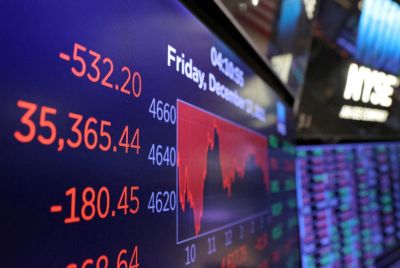
Dow Jones Closes Lower as Geopolitical Tensions and Oil Surge Weigh on Markets
The Dow Jones Industrial Average closed sharply lower Thursday, March 5, 2026, shedding 784.67 points, or 1.61%, to settle at 47,954.74. The blue-chip index opened at 48,526.73 but faced heavy selling pressure throughout the session, dipping as low as 47,577.11 before paring some losses. Trading volume reached approximately 625 million shares across the broader market.

The decline marked the Dow's steepest single-day drop in recent weeks, reversing gains from earlier in the week and extending volatility tied to the escalating Middle East conflict. Oil prices surged to multi-year highs amid fears of supply disruptions from Iranian strikes on Gulf infrastructure and retaliatory actions involving U.S. and Israeli forces. Brent crude briefly topped levels not seen since mid-2024, pressuring energy-sensitive sectors and contributing to a risk-off sentiment across equities.
"The market is pricing in prolonged uncertainty from the Iran situation," one Wall Street strategist noted. "Higher energy costs threaten to stoke inflation just as the Fed has been easing, and that's creating a double bind for investors."
Broader indices followed suit, though with milder declines. The S&P 500 fell 38.79 points, or 0.57%, to 6,830.71, while the Nasdaq Composite slipped 58.50 points, or 0.26%, to 22,748.99. Tech shares showed relative resilience compared to industrials and financials, which bore the brunt of the session's selling.
Leading decliners in the Dow included Goldman Sachs, down 3.68%, Merck, off 3.58%, and Sherwin-Williams, lower by 3.52%. These heavyweight components amplified the index's losses given its price-weighted structure. On the upside, a handful of stocks bucked the trend, with Verizon posting modest gains amid defensive positioning.
The session's volatility echoed earlier reactions to the conflict. On March 3, the Dow had rebounded 238 points to close at 48,739.41, as some traders bet the war's economic fallout would prove contained. But renewed missile exchanges and reports of strikes on regional oil facilities shifted sentiment Thursday, with intraday swings exceeding 1,000 points at one point.
Analysts pointed to several interconnected factors driving the move. Rising oil directly impacts consumer spending, corporate margins and potential Fed policy pivots. Inflation expectations ticked higher, with Treasury yields climbing modestly in response. Geopolitical risk premiums expanded, pushing investors toward safe havens like bonds and gold, which saw gains.
Despite the pullback, the Dow remains well above year-ago levels, up roughly 11-12% over the past 12 months. The index hit an all-time high near 50,512 in February 2026 before entering a consolidation phase. Recent months featured a rare streak of consecutive monthly gains — only the sixth such occurrence in 130 years — signaling underlying bullish momentum even amid corrections.
Market watchers are eyeing key support levels around 47,500-48,000 for the Dow. A break below could test deeper pullbacks toward 46,000, while a rebound might target resistance near 49,000. Futures trading early March 6 suggested continued caution, with premarket indications pointing to modest declines.
Broader economic context includes mixed signals. Corporate earnings season winds down with solid results from many Dow components, but forward guidance reflects caution over energy costs and global trade disruptions. The Federal Reserve's recent rate path remains data-dependent, with officials monitoring how conflict-driven inflation might influence decisions.
Investor sentiment, as gauged by surveys and options activity, shows elevated fear but not panic. Volatility indexes rose but stayed below crisis peaks. Institutional flows leaned defensive, with rotations into utilities, consumer staples and healthcare.
As the week closes, attention turns to upcoming economic releases, including employment data and inflation readings, alongside any diplomatic developments in the Middle East. A de-escalation could spark relief rallies, while prolonged tensions risk further pressure on equities.
The Dow's performance Thursday underscores Wall Street's sensitivity to geopolitical flashpoints, even as underlying fundamentals — corporate strength, AI-driven productivity and consumer resilience — provide a buffer. Whether this marks a short-term correction or the start of a larger retracement will depend on how quickly stability returns to global energy markets and regional security.
For now, traders remain vigilant, balancing optimism in long-term growth against near-term risks from an unpredictable international landscape.
© Copyright 2026 IBTimes AU. All rights reserved.
- Recommended For You