

Robbie Williams Reveals Autism Diagnosis, Says It's Now His 'Get-Out-of-Jail-Free Card' for His Quirks
Singer Robbie Williams discusses his autism diagnosis and its impact on his life and creativity.
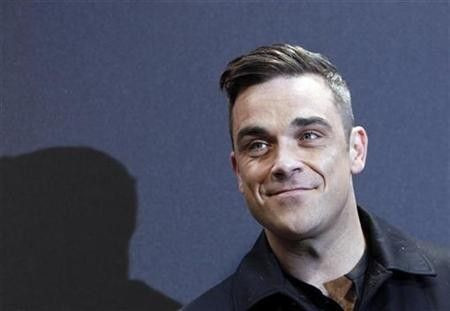
LONDON — Singer Robbie Williams has revealed that he was recently diagnosed with autism, telling fans the discovery has helped him make sense of aspects of his personality and behavior that had puzzled him for years, even as he acknowledged already living with ADHD.
The 52-year-old former Take That frontman shared the news during a question-and-answer session at the Autumn/Winter launch of his clothing line, Hopeium, at Flannels in London on Aug. 13. Speaking candidly to attendees, Williams described the diagnosis in blunt terms. "I have ADHD and I just found out I have a bit of autism as well, which I actually f****** love because it explains so much," Williams said.
Williams went on to joke about how the new diagnosis has already begun shaping the way he explains his own behavior to those around him. "It is my get-out-of-jail-free card now, and all the weird s*** that I do I just say, 'Sorry, I'm autistic,'" he told the crowd.
The singer, who first disclosed his ADHD diagnosis in 2023, used the London event to offer a more detailed picture of how the condition affects his daily life and creative process. He described an intense, singular focus that ADHD allows him to bring to certain tasks, contrasted against significant difficulty engaging with other responsibilities. "With the ADHD you can completely and utterly concentrate on something 1000 per cent, but with absolutely everything else, you just cannot do it. Ask my kids," Williams said.
Williams explained that he leans heavily on creative work as a way of managing anxiety and the intrusive thoughts that can otherwise dominate his attention. "What I'm completely and utterly obsessed with is creating images and making funny things," he said. "If I'm creating images and funny things, I'm not thinking about me, because my brain is incredibly creative, and it can be creative about everything in the world that you panic or scared about."
To illustrate the nature of those intrusive thoughts, Williams offered a specific and unusual example from a recent flight. "For example, this is how crazy I am, recently I was sitting on a plane, and I thought, 'what if I can have telekinesis and my intrusive thoughts tell the plane to crash itself,'" he said. He described the anecdote as representative of a broader pattern he has learned to manage by redirecting his focus toward creative outlets rather than allowing such thoughts to spiral further. "So that's the kind of level of insanity that I'm dealing with," he said. "It's best to train my brain to do something better than worrying about having supernatural powers and crashing a plane."
Monday's revelation builds on a broader, yearslong pattern of Williams speaking openly about his mental health, a subject he has addressed repeatedly throughout a solo career that began in 1997 following his departure from Take That. In October of last year, Williams disclosed that he had also been diagnosed with Tourette syndrome, a neurological condition that can cause involuntary tics, describing his own experience of the condition as manifesting primarily through what he called "inside Tourette's." Speaking to comedian Paul Whitehouse and researcher Dr. Mine Conkbayir for their podcast "I'm ADHD! No You're Not," Williams explained the concept in his own terms, describing the phenomenon as intrusive thoughts rather than the more commonly recognized physical tics associated with the condition.
Notably, Williams' path toward his current autism diagnosis was not straightforward. During that same 2025 podcast appearance, he revealed that an earlier online autism screening test had not classified him as autistic, though it had identified certain traits associated with the condition, particularly around social interaction. "It turns out I'm not [autistic], but I've got autistic traits. And it's around, social stuff, it's about interaction," he said at the time. When pressed by Conkbayir about why he remained convinced he might still be autistic despite the test result, Williams explained that obtaining an official diagnosis would offer him a clearer understanding of longstanding personal struggles. He said a formal diagnosis would help him gain "understanding of why I feel so uncomfortable in my skin," adding that his sense of comfort was largely confined to very specific circumstances. "When I'm in bed, that's my comfort zone. Anywhere outside of that bed is my discomfort zone," he said at the time, while noting that the situation had been gradually improving.
That same conversation offered insight into the gap Williams has said exists between his public persona and his private experience of anxiety and self-doubt. He described himself as highly skilled at concealing his internal struggles behind a more confident public image. "I'm an Olympian at masking," he said, explaining that he had learned over the course of his career to project confidence, bravado and even smugness, qualities he acknowledged had proven commercially valuable throughout his decades as a performer, even as they masked a very different internal experience.
Williams has built one of the most enduring solo careers in British pop music since leaving Take That in the mid-1990s, releasing more than a dozen studio albums, including his most recent release, "Britpop," which arrived in January. Throughout that career, he has periodically opened up about mental health struggles including anxiety and depression, gradually building a public record of candor about conditions that he has said significantly shape both his creative process and his day-to-day life.
The National Health Service in the United Kingdom defines autism as a difference in how a person's brain develops that affects how they see and experience the world, noting that the condition can influence communication, thinking, learning and attention. Autistic individuals are also more likely to experience certain co-occurring conditions, according to NHS guidance on the subject, a pattern broadly consistent with Williams' own disclosure of both ADHD and autism alongside his previously reported experience with Tourette syndrome.
As of this report, Williams has not indicated whether he plans to speak further publicly about his autism diagnosis or how it may influence his approach to future creative projects, live performances or public appearances, though his history of openly discussing his mental health suggests the subject is likely to come up again as he continues promoting his music and other ventures, including his Hopeium clothing brand.
© Copyright 2026 IBTimes AU. All rights reserved.