New Mexico Lawyer Fined $5,000 and Held in Contempt After ChatGPT Fabricated Murder Witnesses in Appeal
The court held Stephen Aarons in contempt and referred him to a disciplinary board after he failed to verify AI-generated material in a murder appeal.

SANTA FE, N.M. — New Mexico's highest court fined a defense lawyer $5,000 and held him in contempt after he submitted a court brief in a murder appeal containing fabricated police testimony and entirely invented witnesses generated by OpenAI's ChatGPT.
The New Mexico Supreme Court sanctioned attorney Stephen Aarons on Wednesday, finding he had failed to verify the accuracy of a filing he said he prepared with help from the AI chatbot. The court said the filing "contained false testimony from wholly fabricated witnesses." The justices went further in their criticism of Aarons' conduct, writing that he had "demonstrated a lack of remorse and a lack of concern for his client." In addition to the $5,000 fine, the court said it would refer Aarons to an attorney disciplinary board for investigation.
Aarons, a private attorney based in Santa Fe, was handling the appeal of Oscar Renee Sandoval, who was convicted of murdering the mother of his children after pleading not guilty and was sentenced last year to life in prison. Aarons had agreed to take up Sandoval's appeal last year and said he used ChatGPT to summarize the trial proceedings as part of his preparation for the case.
In a statement to Reuters, Aarons said he did not fully understand the extent to which artificial intelligence tools could "hallucinate," or generate false information presented as fact. "I am remorseful but hopeful that the disciplinary board takes into account it was an honest mistake," he said. "It is a lesson learned for all professionals who rely upon this powerful but sometimes unstable technology." OpenAI did not immediately respond to a request for comment on the case.
The New Mexico Supreme Court had ordered Aarons last month to explain how the fabricated material made its way into his primary appellate brief. Among the invented details the court flagged were fictional statements claiming the shooter in the underlying case had been "wearing dark pants and a white shirt," details the court said had no basis in the actual trial record.
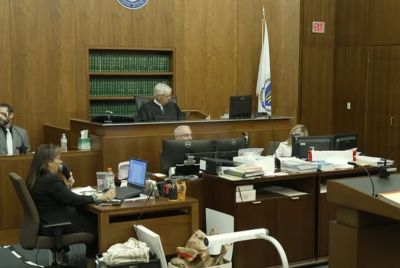
At an August 21 hearing, Aarons told the court he had fed a computer-generated transcript and other case materials into ChatGPT, expecting the tool would produce what he described as "a bulletproof summary" of the proceedings. The justices reacted with evident skepticism that a practicing attorney could have remained unaware of AI's well-documented tendency to fabricate information. "Counsel, do you watch the news? Do you listen to the radio? Do you read anything about what's going on in the world?" Justice C. Shannon Bacon said at the hearing. "Because the problem with lawyers relying on AI hallucinations is an above-the-fold story every single day."
Sandoval's appeal remains pending and was reassigned on September 2 to Kim Chavez Cook, a New Mexico public defender. Cook declined to comment on the case. The district attorney's office for Doña Ana County, which prosecuted the underlying murder case, also declined to comment.
The sanctions against Aarons add to a rapidly growing list of cases in which state and federal judges have disciplined attorneys for submitting AI-generated court filings without adequately reviewing them for accuracy. According to tracking of such cases, dozens of lawyers across the country have already faced sanctions for briefs in which AI tools invented case citations or misstated the law entirely. Aarons' filing stands out even within that pattern, given that it did not merely misstate legal precedent but included fabricated witness testimony embedded directly within a criminal appeal, a filing type in which factual accuracy carries particularly high stakes given a defendant's liberty is directly at issue.
The case reflects a broader reckoning within the legal profession over how quickly generative AI tools have been adopted for legal research and drafting, often outpacing the guardrails lawyers and courts have put in place to catch errors before they reach a judge. Legal ethics experts have increasingly warned that AI chatbots, while useful for certain drafting and summarization tasks, remain prone to generating plausible-sounding but entirely fictional case law, quotations and testimony, a risk that has repeatedly materialized in court filings across multiple jurisdictions over the past several years as adoption of the tools has accelerated.
Judges themselves have not been immune from scrutiny over AI use in their own work, with some jurists facing separate questions about the role AI tools may have played in drafting judicial opinions or orders, a parallel trend that has added to broader unease within the judiciary about verifying the accuracy of AI-assisted legal work at every level of the court system.
For Aarons, the disciplinary referral means his conduct in the Sandoval appeal will now face additional review beyond the New Mexico Supreme Court's contempt finding and fine, a process that could result in further professional consequences depending on the board's findings. Sandoval's underlying appeal, meanwhile, continues under new counsel, with no indication yet of how the fabricated material in the original brief might affect the ultimate resolution of his case.
The New Mexico Supreme Court's ruling adds Aarons' case to a growing body of precedent that legal observers say is likely to shape how courts nationwide respond to AI-related filing errors going forward, particularly in cases where fabricated material extends beyond citation errors into fabricated factual testimony central to a criminal defendant's appeal.
© Copyright 2026 IBTimes AU. All rights reserved.
- Recommended For You