Bitcoin or Ethereum in 2026: Which Crypto Offers Better Upside as Markets Heat Up?

NEW YORK — As Bitcoin trades near $81,000 and Ethereum hovers around $2,330 in mid-May 2026, investors face a familiar dilemma: which digital asset deserves capital in what many analysts call a pivotal year for crypto adoption. With spot ETFs driving institutional inflows, clearer U.S. regulation on the horizon and macroeconomic uncertainty lingering, both flagship cryptocurrencies present compelling but distinct cases.
Bitcoin, the original cryptocurrency, continues its evolution into a macro asset favored by institutions and even sovereign entities. Ethereum, the leading smart contract platform, powers decentralized finance, stablecoins and tokenized real-world assets while offering staking yields. Deciding between them — or blending both — requires weighing scarcity and store-of-value appeal against utility and ecosystem growth.
Bitcoin's Institutional Dominance and Scarcity Narrative
Bitcoin has solidified its position as "digital gold." Its fixed supply cap of 21 million coins, combined with the April 2024 halving that reduced new issuance, underpins a disinflationary profile attractive amid sovereign debt concerns and fiat skepticism. U.S. spot Bitcoin ETFs have absorbed billions in inflows, with institutions holding roughly 12% of total supply as of early 2026.
Recent price action shows resilience. Bitcoin climbed from around $63,000 to over $81,000 in recent months despite broader market volatility. Analysts from Franklin Templeton project recovery above $100,000 in 2026 even in base-case scenarios, driven by continued ETF demand and corporate treasury adoption. Some forecasts eye $150,000 or higher by year-end if liquidity improves.
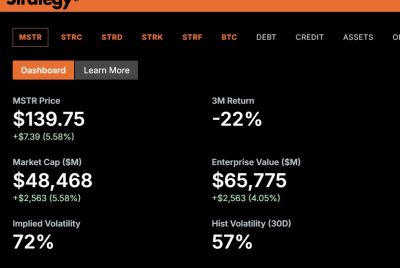
Corporate players like MicroStrategy continue aggressive accumulation, reinforcing Bitcoin's role as a treasury reserve asset. Its simplicity — no complex upgrades required — appeals to conservative investors seeking a hedge rather than speculative technology exposure. Lower drawdowns compared to prior cycles signal maturing market structure.
Ethereum's Utility Edge and Roadmap Catalysts
Ethereum trades at a significant discount to its 2025 highs near $4,950, currently down over 50% from peaks but showing signs of life with recent ETF inflows. Spot Ethereum ETFs recorded strong weekly gains, pulling in hundreds of millions recently and crossing $14 billion year-to-date in some tallies. Staking-enabled products add yield potential of 3-5% annually.
The network's strength lies in its ecosystem. Ethereum hosts the majority of decentralized applications, DeFi activity and stablecoin issuance. Layer-2 scaling solutions have dramatically reduced fees and improved throughput, while upcoming upgrades like the Fusaka hard fork target further efficiency gains. Real-world asset tokenization and institutional DeFi represent massive addressable markets.
Analysts are divided on relative performance. Some, including Standard Chartered, see Ethereum potentially reaching $7,500 by end-2026 if it outperforms Bitcoin amid renewed DeFi momentum. Others caution that ETH/BTC ratios have hit 10-month lows, reflecting investor preference for Bitcoin's safety in uncertain times.
Key Differences Shaping 2026 Investment Cases
Scarcity vs. Utility: Bitcoin's appeal is straightforward digital scarcity and global recognition. Ethereum offers programmable money with real usage, staking rewards and exposure to blockchain innovation, but it faces competition from faster chains and requires ongoing technical execution.
Risk and Volatility: Bitcoin has demonstrated shallower drawdowns and stronger institutional backing, behaving more like a macro hedge. Ethereum carries higher beta — amplifying both upside in risk-on environments and downside during selloffs — but rewards holders with yield and growth potential from on-chain activity.
Adoption Drivers: Bitcoin benefits from ETF flows, corporate treasuries and potential sovereign buying. Ethereum gains from stablecoin growth (projected to exceed $1 trillion), tokenized assets and developer activity. Both stand to benefit from anticipated U.S. regulatory clarity, including market structure legislation.
Market Correlation: In 2026, Bitcoin often leads during risk-off periods while Ethereum shines when innovation narratives dominate. The ETH/BTC ratio serves as a key sentiment gauge for altcoin appetite.
Risks Common to Both
Cryptocurrencies remain highly volatile and speculative. Regulatory shifts, macroeconomic shocks, geopolitical events or technological disruptions could trigger sharp corrections. Security risks, including hacks on exchanges or smart contracts, persist. Neither asset generates cash flow like traditional stocks, relying instead on adoption and sentiment.
Environmental concerns around proof-of-work mining linger for Bitcoin, though Ethereum's shift to proof-of-stake mitigated much of that criticism. Quantum computing threats represent a longer-term tail risk for all blockchains.
Portfolio Strategies for 2026
Many experts recommend diversification rather than an either-or choice. A common allocation is 60-70% Bitcoin for core stability and 20-30% Ethereum for growth exposure, adjustable based on risk tolerance. Beginners may favor Bitcoin for its simpler thesis, while seasoned investors comfortable with complexity often tilt toward Ethereum for higher potential returns.
Dollar-cost averaging mitigates timing risk in volatile markets. Long-term holders emphasize Bitcoin's reliability and Ethereum's ecosystem moat. Short-term traders watch technical levels: Bitcoin support near recent lows around $75,000-$78,000 and resistance toward $85,000-$92,000; Ethereum battles $2,200 support and $2,500-$3,000 upside targets.
Broader 2026 Outlook
Crypto markets enter 2026 with structural tailwinds: institutional integration, clearer policy frameworks and technological maturation. Bitcoin's four-year cycle dynamics, ETF momentum and hedge properties position it as a core holding. Ethereum's fundamentals — Layer-2 adoption, staking and real-world utility — could drive outperformance if execution succeeds.
Analysts from ARK Invest, Fundstrat and others project substantial growth for both, though narratives differ. Bitcoin may act as the steady anchor while Ethereum captures upside from decentralized applications and tokenization. Combined, they represent complementary bets on digital asset proliferation.
Ultimately, the decision hinges on individual goals, time horizon and risk appetite. Bitcoin suits those seeking a digital store of value with proven institutional traction. Ethereum appeals to believers in blockchain infrastructure and Web3 expansion. Many investors choose both to capture the strengths of each in what could be a transformative year for cryptocurrency.
As regulatory clarity improves and adoption deepens, 2026 may mark another step toward mainstream financial integration for digital assets. Investors should conduct thorough due diligence, consider portfolio allocation limits and maintain a long-term perspective amid inevitable volatility. Whether Bitcoin's scarcity or Ethereum's utility prevails remains the central debate, but both are likely to play starring roles in the evolving financial landscape.
© Copyright 2026 IBTimes AU. All rights reserved.
- Recommended For You