Apple Stock Dips 3.2% to $264.18 Amid Geopolitical Tensions, But Upcoming Product Fuel Optimism for 2026
Apple Inc.'s stock closed at $264.18 on Friday, Feb. 27, 2026, down $8.77 or 3.21% from the previous session's close, as broader market concerns over escalating U.S.-Israel-Iran conflict and potential oil price spikes weighed on technology shares. Despite the pullback, AAPL remains near its recent highs, with analysts highlighting resilient demand for iPhones, record Services growth and anticipated AI-integrated product reveals as drivers for potential recovery and gains through the rest of 2026.
Trading volume reached 72.4 million shares on the Nasdaq, reflecting heightened investor activity amid global uncertainty. The decline followed a volatile week where shares traded in a range of $262.89 to $272.81. After-hours trading saw a further modest dip to $263.55.
The drop came against a backdrop of geopolitical risks, with U.S. and Israeli strikes on Iran prompting retaliatory actions and raising fears of disrupted supply chains and higher energy costs impacting consumer spending on premium devices. Apple's heavy reliance on Asian manufacturing, particularly in regions sensitive to regional instability, added to caution among some traders.
Yet Apple's fundamentals remain robust. The company reported record fiscal first-quarter results for the period ended Dec. 27, 2025, with revenue surging 16% year-over-year to $143.8 billion and diluted earnings per share climbing 19% to $2.84, both exceeding Wall Street expectations. iPhone revenue jumped 23%, driven by strong demand for the iPhone 17 series, while Services hit an all-time high with 14% growth to around $30 billion. Operating cash flow approached $54 billion, enabling nearly $32 billion in shareholder returns via buybacks and dividends.
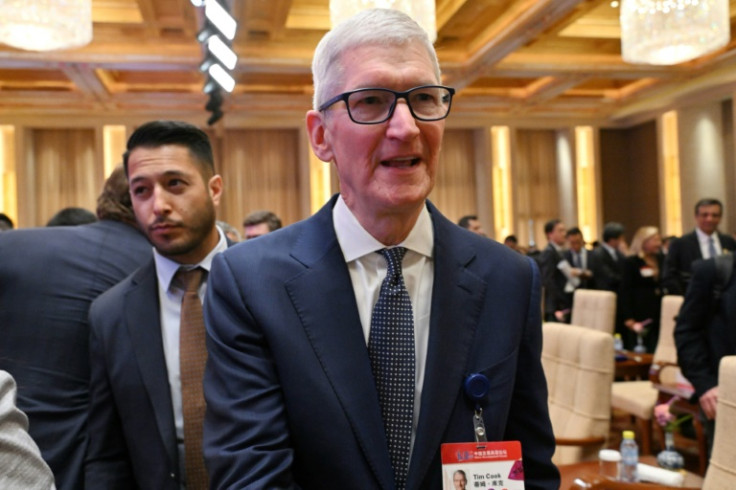
CEO Tim Cook described the quarter as "remarkable," noting an installed base exceeding 2.5 billion active devices and unprecedented iPhone performance across all geographic segments. The results underscored Apple's ability to weather macroeconomic headwinds through premium pricing power, ecosystem loyalty and diversification beyond hardware.
Looking ahead, Apple is gearing up for a significant product event on March 4, 2026, with launches expected in New York, London and Shanghai. Reports point to new AI-enhanced wearables, a potential lower-priced iPhone model (possibly the iPhone 17e starting at $599), updated MacBooks and iPads. Bloomberg and other outlets suggest these could include advanced AI features, building on Apple's push into generative AI companions and integrations.
Analysts view the March 4 event as pivotal for sustaining momentum. J.P. Morgan and others have highlighted AI companions as a potential game-changer, positioning Apple to capitalize on the AI boom despite lagging some peers in headline-grabbing announcements. Daniel Ives of Wedbush called 2026 potentially "monumental" for Apple's AI execution, forecasting meaningful growth from monetizing the technology roadmap.
Market research from IDC forecasts a challenging year for smartphones, predicting a 12.9% drop in global shipments to 1.12 billion units due to rising memory chip prices—the largest-ever decline. However, Apple and Samsung are expected to gain market share, benefiting from brand strength and premium positioning. Apple's minimal impact from memory costs in the December quarter positions it well, though a greater effect is anticipated in the current March quarter.
Institutional sentiment remains positive. Berkshire Hathaway's Greg Abel emphasized Apple's long-term compounding potential in the company's annual letter, reinforcing confidence in its enduring value. Some hedge funds, including those linked to George Soros, have increased stakes, viewing AAPL as undervalued relative to its cash generation—nearly 28% free cash flow margins—and consistent returns to shareholders.
Wall Street consensus leans bullish. MarketBeat aggregates a Moderate Buy rating from 36 analysts, with an average 12-month price target around $291.70 to $293.41, implying roughly 10-11% upside from current levels. Other forecasts range higher, with some eyeing $300+ if AI and new products drive acceleration. Public.com cites a consensus Buy with targets near $287.95.
Challenges persist. Apple's P/E ratio hovers around 33.4x, reflecting a premium valuation. Geopolitical risks, potential slowdowns in China (despite recent iPhone strength), and competition in AI from Microsoft, Google and others could pressure multiples. A stronger dollar or economic softening might also curb discretionary spending on high-end gadgets.
Despite Friday's decline, Apple's year-to-date performance in 2026 has been solid, with shares recovering from early-year dips and benefiting from the blowout holiday quarter. The 52-week range spans $169.21 to $288.62, with the all-time high closing price at $285.92 in December 2025.
As March begins, focus shifts to the March 4 event and upcoming fiscal second-quarter guidance. With strong cash flows supporting buybacks, a $0.26 quarterly dividend (yield ~0.4%) and ongoing innovation, Apple appears well-positioned to navigate uncertainty and deliver shareholder value in a turbulent 2026 landscape.
Investors will watch closely for signs of sustained demand and AI traction, which could propel shares toward consensus targets and beyond amid a market hungry for resilient tech leaders.
© Copyright 2026 IBTimes AU. All rights reserved.
- MOST POPULAR IN News