Alphabet Shares Climb as Analysts Affirm Long-Term Buy on AI Momentum and Cloud Surge
NEW YORK — Alphabet Inc. shares rose more than 2% in early trading Tuesday, with the Google parent's Class C stock (GOOG) climbing to around $280 as Wall Street largely reaffirmed its bullish stance on the tech giant's long-term prospects amid accelerating artificial intelligence investments and robust Google Cloud growth.
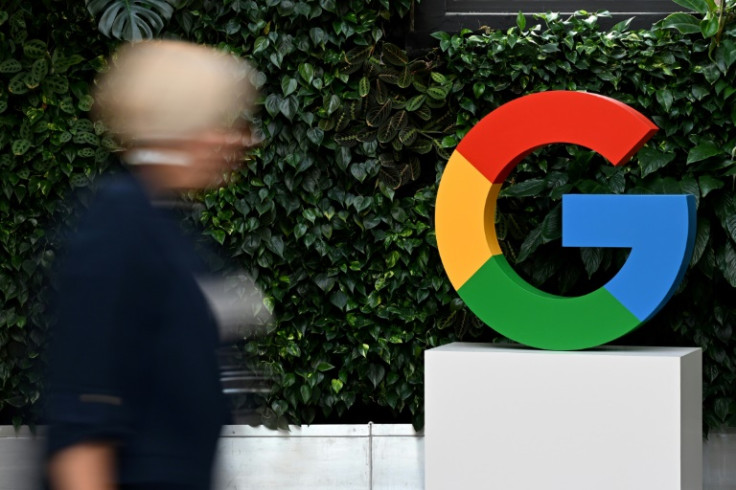
The stock gained $6.82, or 2.50%, to trade near $279.96 shortly after the market open, extending a recovery from earlier 2026 consolidation. Despite elevated capital spending plans that pressured shares following the fourth-quarter earnings report in February, analysts continue to view Alphabet as a core long-term holding, citing its dominant position in search advertising, expanding AI capabilities through Gemini models, and Google Cloud's rapid scaling.
Alphabet, which briefly surpassed a $4 trillion market capitalization in January 2026, now carries a valuation around $3.3 trillion, making it one of the world's most valuable companies. The stock has delivered strong returns over the past year, though it has faced periodic pullbacks amid concerns over heavy AI infrastructure outlays and ongoing antitrust scrutiny.
In its fourth-quarter 2025 results released in early February, Alphabet posted revenue of $113.83 billion, up 18% from the prior year and beating analyst expectations. Annual revenue topped $400 billion for the first time, reaching $402.8 billion. Earnings per share rose 31% to $2.82. Google Cloud stood out as a key growth engine, with revenue jumping 48% to $17.7 billion and operating income climbing sharply, pushing the segment's annual run rate above $70 billion. The cloud backlog surged 55% to $240 billion, reflecting strong enterprise demand for AI infrastructure and solutions.
CEO Sundar Pichai highlighted momentum across the business, noting that Gemini models now process over 10 billion tokens per minute via API and that the Gemini app has surpassed 750 million monthly active users. Search usage reached record levels, with AI features driving an "expansionary moment" in user engagement. YouTube advertising and subscriptions also contributed, with annual YouTube revenue exceeding $60 billion.
Yet the standout item in the report — and a source of near-term investor caution — was Alphabet's guidance for 2026 capital expenditures. The company signaled spending in the range of $175 billion to $185 billion, roughly double the $91.4 billion invested in 2025 and well above the roughly $120 billion many analysts had anticipated. Executives framed the increase as essential to meet surging demand for AI computing infrastructure, frontier model development and cloud capacity.
Some investors initially worried that the aggressive spending could weigh on free cash flow and margins in the short term. Shares dipped after the release, but many analysts quickly characterized the move as a necessary investment in Alphabet's competitive moat rather than a red flag. Several maintained or raised price targets, pointing to expected returns from AI monetization across search, cloud and consumer products.
Wall Street consensus remains strongly positive. Across more than 40 analysts tracked by major platforms, the average 12-month price target sits around $345 to $380, implying 20% to 35% upside from current levels near $280. High-end targets reach $395 to $420 from firms including J.P. Morgan and others, while the lowest sit near $210. The overwhelming majority rate the stock a "Buy" or "Strong Buy," with few Holds and no Sells in recent coverage.
Analysts cite several tailwinds supporting a long-term bullish case. Google maintains roughly 90% share in global search, generating steady, high-margin advertising revenue that funds AI ambitions. Google Cloud has emerged as a credible challenger to Amazon Web Services and Microsoft Azure, particularly in AI-optimized infrastructure and enterprise solutions. The company's early integration of generative AI into Search, Workspace and consumer apps positions it to capture new revenue streams as businesses and users adopt these tools.
Longer-term forecasts are even more optimistic. Some projections see the stock reaching $380 by the end of 2026 and climbing significantly higher by 2030, driven by compound growth in earnings and potential multiple expansion if AI delivers on productivity promises. Earnings per share are expected to grow at double-digit rates annually through the late 2020s, supported by operating leverage as cloud margins improve and AI features boost search engagement without proportionally higher costs.
Still, risks remain. Antitrust cases continue to loom, including challenges to Alphabet's ad technology practices and past rulings on search dominance. While a major breakup threat was averted in 2025, ongoing litigation and potential remedies could constrain certain business practices. Increased competition in AI from OpenAI, Anthropic, Microsoft and others requires sustained innovation and spending.
Regulatory scrutiny in Europe and elsewhere on data privacy, advertising and app store policies adds another layer of uncertainty. Elevated interest rates or an economic slowdown could also temper advertising budgets, though Alphabet's diversified revenue mix — including subscriptions and cloud — provides some buffer compared with pure ad-dependent peers.
On valuation, the stock trades at roughly 25-28 times forward earnings, a premium that many argue is justified by growth prospects in a winner-take-most AI landscape. Free cash flow is projected to remain healthy even with elevated capex, with some estimates suggesting $55 billion or more in 2026. The balance sheet remains fortress-like, with substantial cash reserves supporting both investments and potential shareholder returns through buybacks or dividends, though the latter has not been a priority.
Institutional investors have shown continued confidence, with notable options activity and accumulation in call positions earlier in the year. The stock's inclusion in major indexes and its role as a bellwether for the AI trade keep it in focus for portfolio managers.
For long-term investors, the debate often centers on whether it is "too late" after strong 2025 gains. Many analysts counter that Alphabet's scale, data advantages, talent pool and integrated ecosystem — from hardware like Pixel devices to software and infrastructure — create durable competitive edges. Gemini advancements, including multimodal capabilities and enterprise deployments, suggest the company is not merely catching up but carving out leadership in key AI segments.
Pichai has emphasized a disciplined approach: investing heavily now to secure long-term leadership while maintaining profitability in core operations. Google Cloud's improving margins and accelerating revenue demonstrate early validation of that strategy.
As markets digest mixed macroeconomic signals, including geopolitical tensions and interest rate policy, tech giants with strong balance sheets and clear growth narratives like Alphabet have retained appeal. Tuesday's intraday gain reflected renewed buying interest, with traders citing broader market strength and sector rotation toward AI-exposed names.
Looking ahead, investors will watch for the first-quarter 2026 earnings report expected in late April. Key metrics will include continued cloud acceleration, AI feature adoption rates in Search and YouTube, and any updates on capex execution or efficiency gains. Analysts will also scrutinize commentary on competitive dynamics and regulatory developments.
In the broader context, Alphabet exemplifies the opportunities and challenges facing big tech in the AI era. Its ability to translate massive infrastructure spending into profitable growth will determine whether current valuations prove justified over the coming decade.
For individual investors considering a long-term position, the consensus view leans toward yes — provided they maintain a multi-year horizon and tolerate potential volatility from spending cycles or external shocks. Diversification remains advisable, as no single stock, even one as dominant as Alphabet, is without risk.
The company's track record of innovation, from early search dominance to Android, YouTube and now AI, supports the argument that it can adapt and thrive. With Google Cloud gaining traction and Gemini expanding its user base rapidly, many see Alphabet as well-positioned to benefit from the next wave of technological transformation.
As trading continued Tuesday morning, GOOG held its gains, underscoring sustained market faith in the company's strategic direction despite the heavy lifting required in AI infrastructure. Wall Street's price targets and "Buy" ratings suggest that for patient investors, Alphabet remains a compelling long-term opportunity in the evolving digital economy.
© Copyright 2026 IBTimes AU. All rights reserved.
- MOST POPULAR IN Technology