

Alphabet Stock Holds Steady Near $312 Amid AI Spending Surge and Analyst Upgrades
MOUNTAIN VIEW, Calif. — Alphabet Inc., the parent company of Google, saw its shares close at $311.69 on Monday, February 23, 2026, down 1.02% from the previous session but remaining resilient in a volatile tech sector. The stock has traded in a range of roughly $302 to $344 so far in 2026, reflecting investor confidence in the company's AI investments despite broader market pressures from tariffs and economic uncertainty.
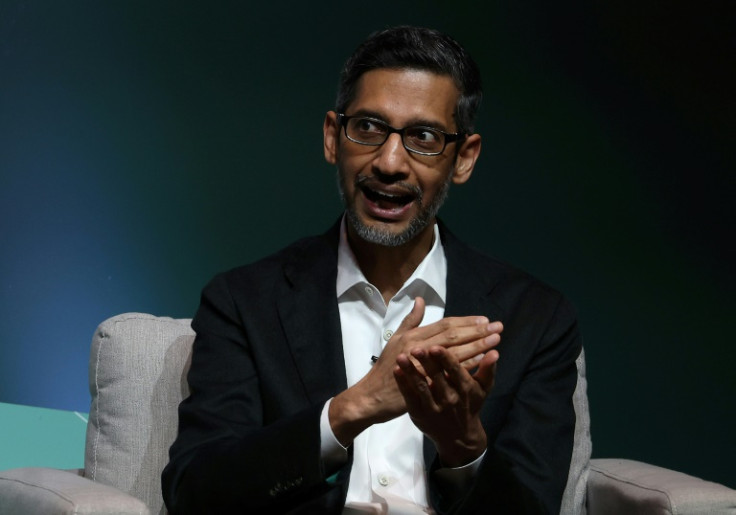
Alphabet's Class C shares (GOOG) and Class A shares (GOOGL) have gained more than 75% over the past 52 weeks, driven by strong performance in core businesses like Search, YouTube, and Google Cloud. The company's market capitalization stands at approximately $3.77 trillion, making it one of the world's most valuable firms. Recent analyst upgrades and earnings momentum continue to support the stock, even as capital expenditure forecasts raise questions about near-term profitability.
The latest catalyst came February 23 when Wells Fargo upgraded Alphabet from Equal-Weight to Overweight, raising its 12-month price target to $387 from $353. Analyst Ken Gawrelski cited Alphabet's aggressive AI infrastructure expansion — from 15 gigawatts to 35 gigawatts by 2028 — as a key driver, positioning the company to outpace rivals in compute capacity. The upgrade implies about 22-24% upside from current levels, with Wall Street consensus around $338-340 per share.
Alphabet's fourth-quarter 2025 earnings, reported February 4, 2026, beat expectations with revenue of $113.83 billion (up 18% year-over-year) and earnings per share of $2.82 (versus $2.59 expected). Google Services grew 14% to $95.9 billion, led by Search and YouTube, while Google Cloud surged 48% to $17.7 billion, driven by enterprise AI demand. Annual revenue topped $400 billion for the first time, a milestone shared with peers like Apple and Amazon.
Management guided capital expenditures for 2026 at $175 billion to $185 billion — potentially doubling prior levels — to fuel AI data centers, servers, and networking. CEO Sundar Pichai highlighted momentum in Gemini models, with the Gemini App reaching over 750 million monthly active users and first-party models processing more than 10 billion tokens per minute via API. YouTube crossed $60 billion in annual revenue across ads and subscriptions, underscoring diversified growth.
Despite the positive earnings, shares have pulled back about 7% month-to-date amid concerns over AI spending sustainability. Investor Michael Burry questioned the scale of hyperscaler capex in a February 21 X post, estimating significant depreciation impacts and potential free cash flow declines for companies like Alphabet. Some analysts project Alphabet's free cash flow could drop sharply in 2026 as investments ramp up, though others view the spending as essential to maintain AI leadership against Microsoft, Amazon, and Meta.
Institutional activity remains robust. Stevens Capital Management increased its stake by 401% in Q3 2025, while major funds like Norges Bank, JPMorgan, and Vanguard adjusted positions. Insider sales occurred, including CAO Amie Thuener O'Toole disposing of shares in early February, but overall ownership stays strong.
The stock's valuation trades at a forward P/E around 22-24, considered reasonable given growth prospects. AI Overviews and AI Mode in Search are expanding usage, while Cloud's $240 billion backlog signals sustained demand. Challenges include regulatory scrutiny, competition in AI, and macroeconomic factors like tariffs that could raise costs.
As Alphabet navigates 2026, its dual focus on core advertising strength and AI/cloud acceleration positions it well. The next earnings report is expected in late April, with analysts forecasting EPS around $2.67 for Q1 2026.
With upgrades and AI tailwinds, Alphabet remains a cornerstone of tech portfolios, balancing short-term caution with long-term optimism.
© Copyright 2026 IBTimes AU. All rights reserved.