10 Things You Must Know About Jamie Dimon: JPMorgan CEO's Bold 2026 Warnings on AI, Economy and His Future
NEW YORK — At 70 years old, Jamie Dimon remains one of the most influential figures in global finance, steering JPMorgan Chase — America's largest bank by assets — through economic turbulence while issuing pointed warnings about artificial intelligence, potential recession risks and market exuberance in 2026.
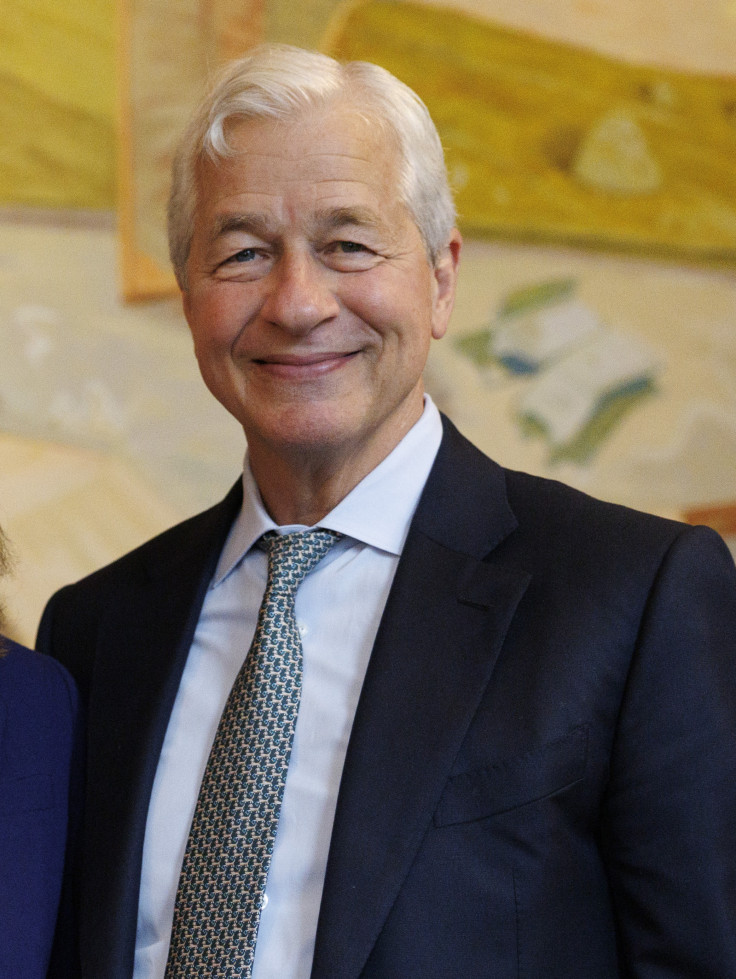
As chairman and chief executive officer since 2006, Dimon has guided the bank to record scale, with trillions in assets and leadership across consumer banking, investment banking and asset management. Yet in recent months, the veteran banker has signaled he plans to stay at the helm "for a few years" while cautioning investors and policymakers about rapid technological disruption and economic vulnerabilities.
Here are 10 essential things to know about Jamie Dimon based on his career trajectory, personal background and latest public statements as of late March 2026.
1. Dimon has led JPMorgan Chase for two decades, navigating crises with notable success. Dimon became CEO on Jan. 1, 2006, and chairman the following year after the bank's merger with Bank One, where he had served as chairman and CEO since 2000. Under his leadership, JPMorgan emerged stronger from the 2008 financial crisis after selling off risky subprime mortgages beforehand and acquiring distressed assets like Bear Stearns and Washington Mutual at bargain prices. The bank now boasts about $3.2 trillion in assets and serves millions of customers worldwide.
2. He plans to remain CEO for "a few years" and possibly serve as executive chairman afterward. At JPMorgan's February 2026 investor day, Dimon explicitly stated he would stay as CEO for several more years and might continue afterward in a chairman role. The comment eased succession concerns at the bank, which has long been scrutinized for its reliance on Dimon's steady hand. He has previously batted away retirement rumors while emphasizing long-term planning.
3. Dimon is issuing stark warnings about AI's impact on jobs and society. In speeches and interviews, including at the World Economic Forum in Davos in early 2026, Dimon has described AI as a transformative force that could eliminate jobs and require government intervention. He has urged preparation for labor market disruption, noting that while AI boosts productivity, its rollout may happen "too fast for society." At the same time, he predicts JPMorgan will be "a winner" in the AI race and has boosted the bank's 2026 technology spending to nearly $20 billion.
4. He cautions against excessive market exuberance and sees recession risks in 2026. Dimon has advised investors to "take a deep breath and watch out" amid high asset prices and AI hype. He has flagged debt levels, inflation, geopolitical tensions and other factors that could trigger a recession this year despite recent U.S. economic resilience. "My anxiety is high," he said regarding inflated AI-related valuations, drawing parallels to pre-crisis periods.
5. Gold could surge dramatically in turbulent times, according to Dimon. In March 2026 comments, the JPMorgan chief — who once dismissed Bitcoin — suggested gold prices could climb to $5,000 or even $10,000 per ounce in certain economic environments, reflecting his broader concerns about uncertainty.
6. Dimon boasts a long and resilient career built on mentorship and turnaround expertise. Born James Dimon on March 13, 1956, in New York City to Greek-American parents, he earned a bachelor's degree from Tufts University in 1978 and an MBA from Harvard Business School in 1982. He started at American Express under Sandy Weill, helped build Citigroup, faced a dramatic ouster there, then turned around Bank One before merging it with JPMorgan. His Greek grandfather changed the family name from Papademetriou to Dimon.
7. He survived serious health challenges, including throat cancer and an aortic emergency. Dimon was diagnosed with throat cancer about a decade ago and underwent treatment while continuing to lead the bank. More recently, he experienced an acute aortic dissection requiring emergency surgery. Turning 70 in March 2026, he has spoken about how these brushes with mortality reshaped his perspective on leadership and life priorities, often stating "family first, country second, JPMorgan literally last."
8. Dimon is married with three daughters and maintains a relatively private family life. He wed Judith "Judy" Kent in 1983. The couple has three daughters: Julia, Laura and Kara Leigh. Despite his high-profile role, Dimon emphasizes family as his top priority and serves on several nonprofit boards, including the Federal Reserve Bank of New York and the United Negro College Fund.
9. His compensation reflects JPMorgan's performance, with massive recent payouts. Dimon earned approximately $770 million in 2025 from salary, bonuses, dividends and stock-related gains, according to reports. His net worth is estimated around $2.7 billion to $3 billion as of late 2025 and early 2026, largely tied to his substantial holdings in JPMorgan stock.
10. He remains a vocal voice on broader policy issues, from regulation to economic preparedness. Dimon frequently comments on U.S. competitiveness, infrastructure needs, education and the importance of organic growth over aggressive acquisitions. At the 2026 investor day, he highlighted JPMorgan's ability to deploy $40 billion to $50 billion into organic opportunities while staying open to deals. He continues to stress resilience, diversification and long-term shareholder value amid intensifying competition and technological change.
Dimon's influence extends beyond banking. He has engaged with policymakers on topics ranging from AI governance to fiscal policy and has been mentioned in past speculation about political roles, though he has not pursued elected office. His annual letters to shareholders are closely read for their candid assessments of the economy and business environment.
As 2026 unfolds, Dimon's blend of caution and confidence defines his leadership. He sees JPMorgan positioned to thrive through investments in technology and its diversified business model, yet he repeatedly urges vigilance against complacency in markets and society.
Critics sometimes view his warnings as overly pessimistic, but supporters credit his track record — steering the bank through the 2008 crisis with relatively limited damage — as evidence that his concerns merit attention.
With JPMorgan reporting strong performance in recent years, including market share gains and robust returns on equity across its business lines, Dimon continues to balance optimism about the bank's prospects with realism about external risks.
For investors, executives and policymakers alike, Jamie Dimon's perspectives carry significant weight. Whether addressing AI's dual nature as opportunity and disruption, potential economic headwinds or the need for societal preparation, the JPMorgan chief shows no signs of softening his outspoken style.
As he enters his 21st year at the top of JPMorgan, Dimon embodies continuity in an era of rapid change. His message for 2026 appears consistent: prepare for volatility, invest wisely in the future, and never underestimate the speed at which technology and geopolitics can reshape the landscape.
© Copyright 2026 IBTimes AU. All rights reserved.
- MOST POPULAR IN Business