10 Fun Facts About Easter Sunday 2026: From Lunar Timing to Spring Traditions on April 5 Celebration
Easter Sunday 2026 falls on April 5, bringing together ancient religious traditions, astronomical precision and modern family festivities for Christians across the United States and around the world. As millions prepare for church services, egg hunts and festive meals, here are 10 fun facts that highlight what makes this year's observance unique, rooted in centuries of history and tied closely to the cycles of the moon and spring.

1. Easter 2026 lands on the early side of the possible calendar range. The movable feast can fall anywhere between March 22 and April 25 in the Western Christian tradition. April 5 places it comfortably in early spring, often coinciding with blooming flowers and milder weather in many regions, making outdoor activities more appealing than in years when the holiday arrives later.
2. The date is determined by a precise lunar-solar calculation dating back to the Council of Nicaea in 325 A.D. Easter falls on the first Sunday after the first full moon following the spring equinox. In 2026, the astronomical spring equinox occurred around March 20, and the Paschal full moon — known as the Pink Moon — peaked on April 1, setting Easter for the following Sunday.
3. The full moon on April 1, 2026, created a whimsical alignment with April Fools' Day. While the coincidence is purely calendrical, it added a lighthearted note to the lead-up to Holy Week, with some social media users joking about the moon "fooling" observers with its timing just days before the solemn observances began.
4. Western and Eastern Christians will celebrate on different dates this year. Most Protestant and Catholic churches observe Easter on April 5, while Eastern Orthodox Christians, following the Julian calendar, mark the resurrection on April 12. The gap of one week is relatively close compared to some years when the dates diverge by nearly a month.
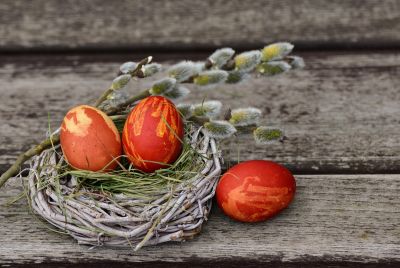
5. Easter eggs trace their Christian roots to fasting traditions rather than pagan origins alone. During Lent, eggs were often forbidden as food, so they became a special treat for Easter. Early Christians dyed them red to symbolize the blood of Christ and the joy of resurrection. By the Middle Ages, the practice of decorating and gifting eggs had spread widely across Europe.
6. The Easter Bunny tradition arrived in America with German immigrants in the 1700s. Known as the "Osterhase" or Easter Hare in German folklore, the character was said to lay colorful eggs for well-behaved children. Pennsylvania Dutch settlers popularized the custom, which evolved into the basket-delivering bunny familiar today. The first edible chocolate bunnies appeared in the 19th century.
7. In 2026, Easter Sunday coincides with the final day of the Church of Jesus Christ of Latter-day Saints' general conference weekend for many members. The April 4-5 conference schedule overlaps with Holy Week, creating a busy spiritual calendar for Latter-day Saint families who may attend both conference sessions and Easter services.
8. Egg rolling has a storied place in American Easter lore. The annual White House Easter Egg Roll, which dates back to the 1870s, draws thousands of children and families to the South Lawn. Though the 2026 event details were still being finalized as April approached, the tradition symbolizes renewal and has been hosted by presidents across party lines for more than 140 years.
9. Passover and Easter 2026 overlapped closely. The Jewish holiday of Passover began on the evening of April 1, the same day as the Paschal full moon. This alignment reflects the historical connection between the two observances, as the Last Supper is traditionally understood to have been a Passover meal. Many interfaith families use the proximity to foster dialogue about themes of liberation and resurrection.
10. Economic impact of Easter remains significant despite its primarily religious nature. The National Retail Federation and other analysts estimate Americans spend billions annually on candy, baskets, clothing, travel and gifts. In 2026, with the holiday falling on a pleasant early-April weekend, retailers anticipated strong sales in spring fashions, chocolates and outdoor entertaining supplies as families gathered after the long winter.
Beyond these facts, Easter Sunday 2026 carries deeper meaning as the culmination of Holy Week. Palm Sunday on March 29 recalled Jesus' entry into Jerusalem. Maundy Thursday on April 2 commemorated the Last Supper. Good Friday on April 3 marked the crucifixion, with many churches holding somber services. The stock market closed for Good Friday, giving traders and workers an extended weekend to reflect or travel before markets reopened April 6.
The name "Easter" itself has intriguing linguistic roots. In English, it likely derives from "Eostre," an Anglo-Saxon goddess mentioned by the 8th-century monk Bede, though the connection remains debated among scholars. In many other languages, the holiday is called "Pascha," directly linking it to the Hebrew Passover.
Astronomically, 2026 offered additional skywatching opportunities around Easter. Some reports noted potential comet visibility in early April, adding a celestial backdrop to the season of renewal. While not directly tied to the holiday, such events often inspire wonder that complements spiritual themes of hope and new beginnings.
Globally, Easter customs vary delightfully. In Italy, the Scoppio del Carro in Florence features a historic cart exploding with fireworks on Easter Sunday. In parts of Eastern Europe, intricate egg decorating known as pysanky continues as a cherished folk art. In the United States, sunrise services at beaches, parks and mountaintops draw crowds seeking to witness the dawn as a symbol of the empty tomb.
For many families, Easter 2026 provided a chance to blend faith with fun. Children hunted for hidden eggs, often dyed in vibrant pastels or filled with candy and small toys. Adults attended worship services that emphasized messages of redemption and resurrection. Brunch buffets, ham dinners and hot cross buns rounded out the day's culinary traditions.
The holiday also highlights themes of renewal that resonate beyond Christianity. As spring unfolds with daffodils, tulips and budding trees, Easter's timing reinforces cycles of life, death and rebirth observed in nature. Environmental groups sometimes tie Earth Day observances later in April to similar ideas of stewardship and hope.
In a year marked by global events, religious leaders used Easter messages to call for peace, unity and compassion. Sermons frequently drew on the resurrection as a symbol of triumph over adversity, offering comfort amid personal or societal challenges.
Retail and tourism sectors benefited from the timing. With schools often on spring break and many workplaces offering Friday off, families planned short getaways or hosted large gatherings. Travel experts noted increased bookings for destinations known for Easter parades or scenic sunrise services.
Despite commercial elements, core observances remain spiritual. Millions will rise early for sunrise services, sing hymns like "Christ the Lord Is Risen Today," and reflect on the central Christian belief that Jesus conquered death. Baptisms and confirmations often occur during Easter Vigil services the night before.
As April 5, 2026, dawned, communities large and small prepared to celebrate. In big cities, cathedrals hosted elaborate liturgies with choirs and processions. In small towns, local churches organized community egg hunts and potluck meals. Online services expanded reach for those unable to attend in person.
Looking ahead, Easter will shift again in 2027 to March 28, one of the earlier possible dates. The perpetual calendar ensures the holiday continues its dance with the moon and equinox, reminding observers of the ancient wisdom embedded in its calculation.
For now, the 10 fun facts above offer a glimpse into the rich tapestry surrounding Easter Sunday 2026. Whether focusing on the astronomical precision, historical customs or joyful family traditions, the day stands as a beacon of hope and renewal for believers and a cherished spring milestone for many others.
As families hide eggs, share meals and attend services on April 5, they participate in traditions that have endured for centuries while creating new memories in the present. In that blend of old and new lies much of Easter's enduring appeal.
© Copyright 2026 IBTimes AU. All rights reserved.
- Recommended For You