Travere Therapeutics TVTX Stock 2026 Outlook: Buy Rating Holds After FDA Approval of FILSPARI for FSGS
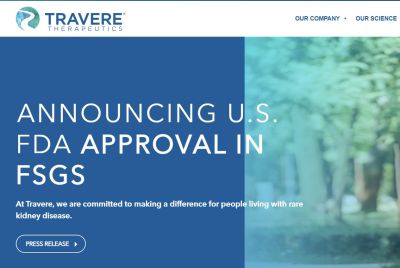
NEW YORK — Travere Therapeutics Inc. (NASDAQ: TVTX) emerged as one of the biotech sector's biggest movers in mid-April 2026 after the U.S. Food and Drug Administration granted full approval for its drug FILSPARI (sparsentan) as the first and only approved treatment for focal segmental glomerulosclerosis (FSGS) in patients without nephrotic syndrome, sending shares surging more than 30 percent in a single session and reinforcing a consensus "Moderate Buy" rating among Wall Street analysts.

The April 13 approval marked a pivotal milestone for the San Diego-based rare kidney disease specialist, expanding FILSPARI's label beyond its existing accelerated approval for immunoglobulin A nephropathy (IgAN). Analysts quickly responded by raising price targets, with firms including Canaccord Genuity lifting its target to $56 from $47, Guggenheim to $54 from $49, BofA Securities to $49 from $44, Citi to $53 from $48, and Wedbush to $44 from $39. The average 12-month price target across 14-15 analysts now sits around $42.50 to $43.79, implying potential upside of roughly 40 percent or more from the stock's price near $30-31 following the post-approval volatility.
FILSPARI, a dual endothelin and angiotensin receptor antagonist, demonstrated clinically meaningful reductions in proteinuria and favorable effects on estimated glomerular filtration rate (eGFR) and kidney survival in the Phase 3 DUPLEX study, particularly in the FSGS population without nephrotic syndrome. The approval gives Travere a clear path to accelerate commercial growth in a combined addressable market exceeding 100,000 patients across IgAN and FSGS in the U.S. alone, with peak sales potential estimated above $3 billion domestically. The company has an established nephrology sales force of more than 100 field professionals already experienced with FILSPARI in IgAN, positioning it for a rapid launch in the new indication.
Travere's stock reacted sharply to the news, rising as much as 43 percent in pre-market trading on April 14 before settling with strong gains. The move followed an earlier extension of the PDUFA date in January 2026, which had caused a significant pullback as investors digested the FDA's request for additional clinical benefit data. The eventual full approval removed that overhang and validated the drug's profile in a rare disease with high unmet need, where patients often progress to end-stage kidney disease requiring dialysis or transplant.
Analyst sentiment remains overwhelmingly positive. Out of recent ratings, 11-13 firms carry "Buy" or "Outperform" recommendations, with only two "Hold" and minimal "Sell" voices. J.P. Morgan and Guggenheim reaffirmed their Buy ratings immediately after the approval. The bullish case centers on FILSPARI's potential to become foundational therapy in IgAN and now FSGS, combined with a restarted Phase 3 HARMONY study for pegtibatinase in classical homocystinuria (HCU) — another rare disease program that could diversify the pipeline.
Yet risks persist in the volatile biotech sector. Travere still faces commercial execution challenges, reimbursement negotiations and competition in the kidney disease space. The company reported strong IgAN uptake in 2025 with record patient numbers, but revenue remains modest compared to peak projections, and the stock has experienced sharp swings tied to regulatory milestones. Short-term technical signals have been mixed, with some models issuing near-term caution after the surge, though longer-term moving averages support an overall uptrend.
For investors weighing a buy decision in 2026, the bull thesis rests on several factors. First, the dual indications for FILSPARI create a scaled commercial platform with established relationships in nephrology. Second, the addressable patient population expansion supports sustainable revenue growth and potential for further label expansions through ongoing studies like EPPIK in pediatrics and SPARX in post-transplant settings. Third, Travere's pipeline progress in HCU provides additional shots on goal, with enrollment resuming in the pivotal HARMONY trial after manufacturing optimizations.
Financially, the company ended recent quarters with a solid cash position to support launch activities and clinical programs. Analysts project improving revenue trajectories through 2026 and beyond as FSGS sales ramp, with some forecasting positive earnings momentum in coming years. The rare disease focus also qualifies for various incentives, including potential orphan drug benefits that enhance pricing power and market exclusivity.
On the sell or hold side, concerns include binary regulatory risks (now largely resolved for FSGS), high development costs for the broader pipeline, and the inherent volatility of small- to mid-cap biotech names. Some models flagged short-term resistance near recent highs and noted that the stock had already priced in much of the positive news. Broader market factors such as interest rates, healthcare policy changes and overall biotech funding sentiment could also influence performance.
Travere's 2026 corporate priorities center on maximizing FILSPARI uptake in both IgAN and FSGS, generating additional clinical evidence at medical meetings, and advancing the HCU program. Management has expressed confidence in a successful FSGS launch, leveraging years of nephrology experience and strong clinical familiarity among physicians. The company also continues business development efforts to further diversify its pipeline.
From a technical perspective, the stock has shown resilience after the approval catalyst, trading well above key support levels despite earlier volatility tied to the PDUFA extension. Volume spiked on the positive news, indicating strong investor interest. Longer-term charts reflect substantial gains over the past year, though the path has been punctuated by regulatory-driven swings typical of clinical-stage or launch-stage biotech firms.
For retail investors considering Travere Therapeutics in 2026, the decision hinges on risk tolerance and investment horizon. Growth-oriented portfolios with an appetite for biotech may view current levels — post-approval but before full FSGS revenue ramp — as an attractive entry point given the analyst upside and expanded market opportunity. More conservative investors might wait for sustained commercial traction or clearer earnings visibility before adding exposure.
Diversification remains essential. Travere should represent only a modest allocation in a balanced portfolio due to the sector's volatility and dependence on successful commercialization. Investors should monitor upcoming quarterly results, FSGS launch metrics, HARMONY study enrollment updates and any further pipeline developments.
As Travere enters this new phase with its first dual-indication product, the company stands at an inflection point. The FDA approval of FILSPARI for FSGS validates years of clinical work and opens a significant growth avenue in rare kidney diseases. While challenges in execution and competition remain, the consensus Wall Street view leans bullish, with multiple firms raising targets and maintaining Buy ratings in the wake of the milestone.
The biotech sector's unpredictable nature means no outcome is guaranteed, but Travere's progress on FILSPARI and pipeline advancement position it as a name worth watching closely in 2026. Whether the stock delivers on its potential will depend on commercial execution, clinical data and broader market conditions for innovative therapies.
Market participants should conduct thorough due diligence, review the latest SEC filings and consider professional financial advice before making buy or sell decisions. Stock investing involves substantial risk, including the potential loss of principal, particularly in the volatile healthcare sector.
© Copyright 2026 IBTimes AU. All rights reserved.
- Recommended For You