NuScale Power Stock at Crossroads in 2026: Buy the SMR Hype or Sell on Execution Risks?

CORVALLIS, Ore. — NuScale Power Corporation shares have delivered a volatile ride in 2026, surging as much as 40% in recent weeks on renewed nuclear enthusiasm before pulling back, leaving investors to wrestle with a classic question: is the small modular reactor pioneer a compelling long-term buy amid the global push for clean, reliable power, or has the market already priced in too much optimism while the company remains years from meaningful revenue?
The stock, trading under NYSE: SMR, closed at approximately $13.58 on April 22 after a sharp 16.28% single-day gain, driven by positive sentiment around upcoming first-quarter earnings on May 7 and broader interest in nuclear energy. Year-to-date, however, shares are down roughly 22% from the start of 2026, reflecting the high-risk nature of a pre-revenue company in a capital-intensive industry. Market capitalization hovers near $4.4 billion, far below peaks reached during earlier hype cycles.
NuScale stands out as the only U.S. small modular reactor developer with full Nuclear Regulatory Commission design approval for its VOYGR technology. Its modular approach promises safer, more flexible nuclear power with factory-built units that can be deployed in smaller increments than traditional large reactors. Proponents argue this positions NuScale to capture a slice of the massive opportunity created by surging electricity demand from data centers, artificial intelligence infrastructure and the global energy transition.
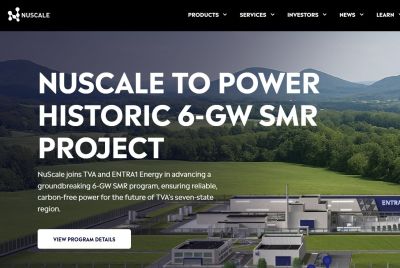
Recent catalysts have reignited investor interest. A White House initiative to accelerate space nuclear power has highlighted NuScale's technology as a potential contender for orbital and lunar applications, given its compact design and existing regulatory credentials. Partnerships continue to expand: collaborations with Framatome for fuel supply, Ebara Elliott Energy for industrial process heat applications targeting petrochemical plants by 2027, and ongoing work with the Tennessee Valley Authority and ENTRA1 Energy on ambitious multi-gigawatt SMR deployments.
Analysts remain divided but lean toward cautious optimism. Consensus among roughly 17 Wall Street firms points to a "Hold" or "Moderate Buy" rating, with an average 12-month price target around $20 to $20.75 — implying roughly 50% upside from current levels. Targets range widely from lows near $9 (Citi recently cut to $9 from $11.50) to optimistic highs of $41 or more. Bulls highlight the trillion-dollar potential of the SMR market if deployment scales, while bears point to persistent net losses, execution risks and the lengthy timeline to first commercial revenue.
The company continues to report widening losses as it invests heavily in technology refinement, supply chain development and project pursuits. Q1 2026 earnings, scheduled for May 7, will be closely watched for updates on project pipelines, partnership progress and cash burn. NuScale ended previous periods with a solid cash position but will need substantial additional capital to move from design and demonstration to full commercialization.
Key near-term milestones include potential advancements on the RoPower project in Romania (now targeted for deployment around 2030-2033) and U.S. opportunities with TVA. A strategic partnership with Ebara Elliott aims to demonstrate high-temperature steam applications for industrial users, opening revenue streams beyond traditional electricity generation. Supporters see these as proof points that could de-risk the technology and attract utility-scale commitments.
Yet challenges loom large. Historical setbacks, including the cancellation of an early Idaho project due to cost overruns, underscore the difficulties of bringing first-of-a-kind nuclear technology to market. Regulatory hurdles, financing complexities and supply chain bottlenecks remain significant barriers. A recent securities class action lawsuit tied to partnership disclosures has added legal uncertainty, though such suits are common in high-growth speculative sectors.
Broader tailwinds for nuclear energy are undeniable. Governments worldwide, including the U.S., are revisiting atomic power as a carbon-free baseload source to complement intermittent renewables. AI-driven data centers require always-on power that natural gas or renewables alone struggle to provide reliably. NuScale's modular design theoretically addresses many traditional nuclear drawbacks — smaller upfront capital, factory fabrication for quality control and enhanced safety features.
For long-term believers, the investment thesis rests on patience. If NuScale secures firm orders and begins deploying modules in the early 2030s, the addressable market could prove enormous. Some optimistic forecasts see the global SMR sector eventually reaching multi-trillion-dollar scale, with NuScale well-placed as an early leader thanks to its regulatory head start.
Shorter-term traders face higher risks. The stock has shown extreme volatility, with sharp rallies on hype followed by corrections as reality sets in. Options activity has been mixed, reflecting both bullish bets on nuclear momentum and hedging against further downside. Insider selling has also drawn attention in recent months.
Investment banks offer mixed guidance. While some maintain overweight or buy ratings citing strategic positioning, others have trimmed targets amid delayed timelines and ongoing cash consumption. The wide dispersion in price targets — from single digits to over $40 — underscores the binary nature of the outcome: either NuScale becomes a cornerstone of the next nuclear renaissance or struggles to translate approvals into commercial success.
As April 2026 draws to a close, the narrative around NuScale remains one of high conviction versus high uncertainty. The company's technology is real and regulator-approved, partnerships are expanding and policy support for nuclear is strengthening. Yet revenue is still years away, losses are mounting and competition in the advanced reactor space is intensifying from both domestic and international players.
Investors considering a position must weigh their risk tolerance and time horizon carefully. Those with a multi-year view and belief in the nuclear renaissance may see current levels — after the year-to-date pullback — as an entry point into a potentially transformative technology. More cautious participants might prefer to wait for concrete commercial orders, positive earnings momentum or clearer deployment timelines before committing capital.
The May 7 earnings call could provide fresh color on project progress and capital needs. In the meantime, NuScale Power exemplifies the classic growth stock dilemma in 2026: enormous potential reward balanced against substantial execution and dilution risks. Whether the stock ultimately rewards patient buyers or punishes those chasing hype will depend on NuScale's ability to turn regulatory approval and promising partnerships into actual deployed reactors and sustainable revenue.
For now, the market continues to price NuScale as a high-beta bet on the future of clean energy rather than a mature operating business. As the broader energy transition accelerates, the coming quarters and years will determine whether this small modular reactor pioneer can deliver on its ambitious vision or remains a compelling story without commercial scale.
© Copyright 2026 IBTimes AU. All rights reserved.
- Recommended For You