New Blood and Gene Test Combo Can Predict Alzheimer's Symptoms Years Before They Appear, Study Finds
The Columbia-led study found that people with elevated p-tau217 levels and APOE4 variants may develop symptoms sooner than those with other APOE profiles.
NEW YORK — Researchers at Columbia University have identified a way to estimate how many years remain before someone at high risk of Alzheimer's disease will begin showing symptoms, a development that could eventually help doctors time the use of preventive treatments now in development.
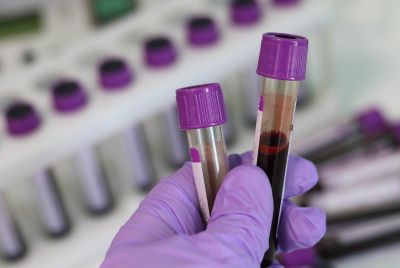
The study, published September 9 in The Lancet Neurology, analyzed data from roughly 8,500 participants drawn from a range of ethnic backgrounds. It found that combining two existing tools, a blood test that measures a biomarker called p-tau217 and a genetic test for a high-risk variant of the APOE gene, can meaningfully predict when symptoms are likely to begin in people who currently show no signs of cognitive decline.
According to the findings, once p-tau217 levels become elevated, people carrying one or more copies of the high-risk APOE4 gene variant are likely to develop symptoms within three to four years. People with other APOE gene variants, by contrast, are likely to develop symptoms within five to six years of that same biomarker threshold being crossed.
Richard Mayeux, chair of the Department of Neurology at Columbia University's Vagelos College of Physicians and Surgeons and neurologist-in-chief at NewYork-Presbyterian/Columbia University Irving Medical Center, led the research team behind the findings. "The combination of the tests really makes a difference in predictive power. And the projections are the same for everyone regardless of their background," Mayeux said. He added that the practical value of the findings lies in helping physicians better time interventions once they become available. "What this will allow us to do is make better predictions about the onset of symptoms in people at risk, and when preventive drugs become available, prescribe those at the right time."
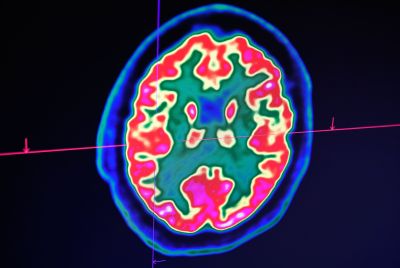
The p-tau217 blood test itself has already reshaped how Alzheimer's disease is diagnosed in recent years. The biomarker reflects the presence of amyloid and tau pathology in the brain, the hallmark proteins associated with Alzheimer's disease, and neurologists now routinely use tests for it to help confirm or rule out the condition in older adults experiencing memory loss or broader cognitive decline. Elevated p-tau levels have also been detected in people who have not yet developed any symptoms, raising the possibility of using the biomarker as an early warning sign. On its own, however, the biomarker has not proven precise enough to reliably predict when symptoms will actually begin.
To address that limitation, Mayeux's team examined whether adding a second risk factor, the APOE4 gene variant, could sharpen those predictions. APOE4 is considered the strongest known genetic risk factor for Alzheimer's disease, and roughly one in five people carry at least one copy of the gene. By combining the two measures, elevated p-tau217 levels alongside a person's APOE genetic status, the research team found it could generate meaningfully more precise estimates of when cognitive symptoms would likely emerge, and that those projections held consistently across the diverse racial and ethnic groups represented in the study's participant pool.
Despite the advance, Mayeux cautioned that the findings do not yet translate into a recommendation for widespread testing among people without symptoms. "I don't recommend that people get these tests right now if they're asymptomatic," he said. "What would you do with that information?" Under current treatment guidelines, people who have not yet developed symptoms are not eligible to receive the monoclonal antibody drugs currently approved for Alzheimer's disease, meaning a prediction of eventual symptom onset would not, at this stage, change a patient's treatment options.
That limitation could shift in the coming years, however. A separate study already underway is examining whether existing antibody drugs can slow the progression of Alzheimer's disease when administered to people who have no symptoms but do show elevated p-tau217 levels. Beyond that specific trial, a broader pipeline of experimental drugs aimed at slowing the disease is currently in development, and Mayeux said the new prediction model could play an important role in designing future clinical trials for those treatments.
"If you have a drug that could prevent disease, what would be the optimal time to give it to people? Our data is telling us, for people at high risk with APOE4 genes, the best time is when their p-tau levels elevate, about three years before symptoms emerge," Mayeux said, describing how the findings could eventually guide the timing of preventive treatment once such drugs receive regulatory approval for use in asymptomatic patients.
The research was published under the title "Plasma phosphorylated tau 217 concentrations, APOE genotype, and timing of cognitive impairment in individuals across diverse racial and ethnic groups: a pooled analysis of prospective cohort studies," with Yuexuan Xu listed as lead author alongside Mayeux and the rest of the Columbia-led research team. The study pooled data from multiple prospective cohort studies to arrive at its conclusions, a design intended to strengthen the reliability of its findings across different populations.
The work adds to a broader wave of recent research aimed at improving early detection of Alzheimer's disease, following earlier studies establishing that blood-based tests could help identify healthy individuals at elevated risk for the condition even before Columbia's team layered in genetic risk data. As pharmaceutical companies continue advancing new drug candidates aimed at slowing or preventing Alzheimer's progression, researchers say tools capable of accurately timing symptom onset, like the one described in the new study, are likely to become increasingly central to how those treatments are eventually deployed in clinical practice.
© Copyright 2026 IBTimes AU. All rights reserved.
- Recommended For You