(VIDEO) RSPCA Rescues 250 Dogs Crammed Into One UK Home: Shocking Hoarding Case Sparks AI Photo Doubts
LONDON — Animal welfare officers from Britain's Royal Society for the Prevention of Cruelty to Animals (RSPCA) discovered more than 250 poodle-cross dogs living in severely overcrowded and unsanitary conditions inside a single family home, the charity announced Wednesday in a case that has drawn widespread shock and disbelief online.

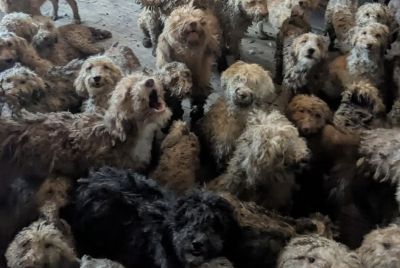
The dogs, mostly small poodle mixes, were found crammed into tight spaces throughout the property, with dozens packed into one living room where they stood shoulder-to-shoulder amid filth, matted coats and skin sores. Some animals sought refuge inside a wood burner fireplace or under furniture, highlighting the desperate lack of space and basic care. The RSPCA described the scenes as "shocking" and said the numbers had spiraled out of control due to uncontrolled breeding amid extenuating family circumstances affecting the elderly owner.
The rescue, which took place earlier this year at an undisclosed location in Nottinghamshire, prompted the RSPCA to take in 87 of the dogs while the Dogs Trust accepted the remainder. Many of the animals arrived caked in their own waste, suffering from matted fur and dermatological issues that required immediate veterinary attention. Photos released by the charity showed a living room overflowing with the small dogs, an image so startling that social media users accused it of being AI-generated — a claim the RSPCA firmly denied, confirming the picture was taken by a rescuer on site.
RSPCA officials said the case exemplifies a worrying rise in large-scale animal welfare interventions. The charity reported a 70% increase in multi-animal rescues over the past four years, often linked to hoarding behaviors, mental health challenges, cost-of-living pressures and irresponsible backyard breeding. In this instance, concerned neighbors tipped off authorities after noticing unusual activity and odors from the property.
Upon arrival, rescuers found the home overwhelmed by the sheer volume of dogs. The owner, described as extremely vulnerable and elderly, told investigators they had lost control of the breeding operation as family circumstances deteriorated. No criminal charges have been reported at this stage, with the focus remaining on rehoming the animals and supporting the owner through appropriate services.
The poodle-cross breed, popular for its hypoallergenic qualities and affectionate nature, proved especially vulnerable in the overcrowded setting. Many dogs exhibited signs of stress, anxiety and neglect, including fearfulness toward humans. Two of the rescued animals, named Stevie and Sandy, are now at the RSPCA's Southridge Animal Centre in Hertfordshire and are actively seeking forever homes after receiving grooming, medical care and socialization.
The case has ignited public debate about animal hoarding, backyard breeding and the strains on Britain's animal welfare system. Experts note that hoarding often stems from complex psychological issues rather than deliberate cruelty, though the resulting neglect can cause significant suffering. The RSPCA emphasized that such incidents are resource-intensive, requiring coordinated efforts with partner organizations like the Dogs Trust to rehome large numbers of animals safely.
Social media reaction was swift and intense. The released photograph sparked hundreds of comments questioning its authenticity, with some users insisting it must be computer-generated due to the density of dogs in the frame. The RSPCA responded directly, stating the image was genuine and captured the real conditions rescuers encountered. The charity used the moment to highlight the growing challenge of large-scale rescues and to urge the public to consider adoption over buying from breeders.
Veterinary professionals involved in the operation reported that many dogs needed extensive grooming to remove mats and debris, along with treatment for skin conditions. Behavioral assessments are ongoing to prepare the animals for adoption, as prolonged confinement in such conditions can lead to long-term anxiety or socialization difficulties. The RSPCA has appealed for donations and foster homes to support the ongoing care of these and similar rescued animals.
This rescue comes amid broader concerns about puppy farming and unregulated breeding in the UK. Poodle crosses, often marketed as "designer dogs," command high prices, which can incentivize backyard operations that prioritize profit over welfare. The RSPCA has long campaigned for stricter licensing of breeders and better public education on responsible pet ownership.
Animal welfare advocates called the discovery a stark reminder of the hidden suffering behind seemingly ordinary homes. Neighbors reported hearing constant barking and noticing an increase in the number of dogs over time, but the full scale only became apparent when rescuers gained entry. The operation required careful planning to safely remove and transport the animals without causing further distress.
The RSPCA used the case to renew its call for more people to adopt rather than buy pets, noting that shelters and rescue centers across the country are frequently at capacity. Large-scale hoarding incidents strain resources and divert attention from routine welfare work. In recent years, similar cases involving dozens or even hundreds of animals — including cats, dogs and exotic species — have highlighted systemic pressures exacerbated by economic hardship and mental health issues.
For the rescued dogs, the future now looks brighter. After initial medical checks, grooming and rehabilitation, many are expected to become loving companions once placed in suitable homes. The charity has shared before-and-after images showing some of the dogs transformed after cleaning and care, underscoring the impact of timely intervention.
As details of the rescue spread Wednesday, calls for stronger regulation of home breeding intensified. Campaigners argue that current laws allow too many animals to be kept without adequate oversight, leading to welfare crises when circumstances change. The RSPCA stressed the importance of early intervention and community awareness in preventing such situations from escalating.
The elderly owner's circumstances remain private, but the charity noted that support services were being offered to address underlying issues. Animal hoarding is recognized as a complex disorder often intertwined with isolation, grief or other mental health challenges, requiring compassionate rather than purely punitive responses.
This incident adds to a growing body of evidence that large-scale animal rescues are becoming more common. The RSPCA reported handling significantly more multi-animal cases in recent years, placing pressure on its network of centers and partner organizations. Public donations and volunteer support remain critical to sustaining these efforts.
As the 250 dogs continue their recovery, the RSPCA hopes the case will inspire greater responsibility among potential pet owners and breeders alike. Adopting from rescues not only saves lives but helps alleviate the burden on the welfare system.
The discovery serves as a powerful illustration of both the capacity for neglect in domestic settings and the dedication of animal welfare workers who step in to provide relief. While the immediate crisis has been addressed, the long-term work of rehoming, healing and preventing future incidents continues.
For those interested in supporting similar efforts or adopting one of the rescued dogs, the RSPCA and Dogs Trust have provided details on available animals and donation channels. Stevie and Sandy, among others, are ready to begin new chapters in caring homes.
© Copyright 2026 IBTimes AU. All rights reserved.
- Recommended For You