

SK Hynix Shares Extend Slide as China's CXMT Memory Breakthrough Claims Rattle Chip Investors on Wall Street
Investors are questioning whether ChangXin Memory Technologies can produce its denser chip design at scale and threaten established leaders such as SK Hynix, Samsung and Micron.
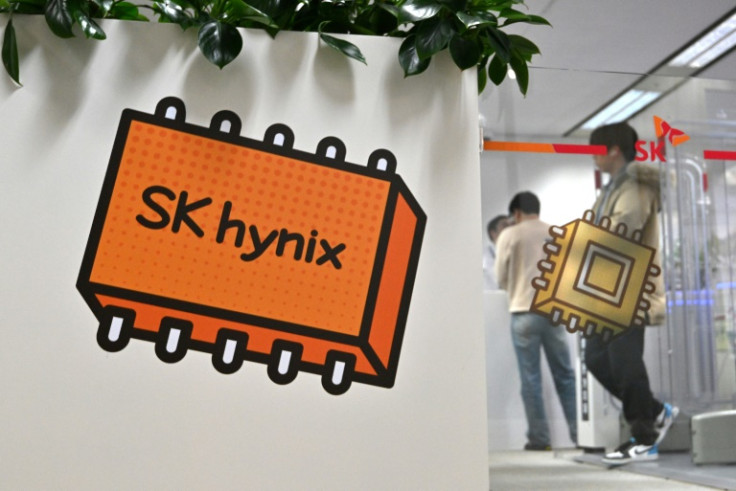
NEW YORK — U.S.-listed shares of SK Hynix fell again Wednesday, extending a sharp sell-off in memory chip stocks driven by fears that Chinese rival ChangXin Memory Technologies is closing the technology gap with the industry's established leaders.
SK Hynix's American depositary receipts were down $7.43, or 4.7%, at $149.64 in midday trading on the Nasdaq. The shares closed Tuesday at about $157 and had ended Monday at $162.23.
The latest decline leaves the stock well below its recent peak of about $195, reached in early October, a drop of roughly 23% in less than two weeks.
China's memory challenge
The sell-off began after CXMT, China's leading domestic memory chipmaker, said it had made progress on a new chip architecture designed to pack more data into a smaller space.
The company said its "4F²" cell layout allows more memory to fit into the same chip area and that it plans to ship server memory using the design by the end of 2026. Its claims have not been independently verified.
The announcement raised concerns that Chinese producers could eventually add significant new supply to the global memory market and challenge established leaders including SK Hynix, Samsung Electronics and Micron Technology.
Charu Chanana, a strategist at Saxo, told Reuters that the CXMT news was "a clear trigger for the selloff in memory stocks."
Steep losses in Seoul
The concerns hit South Korean chipmakers hardest. On Tuesday, SK Hynix shares plunged more than 10% in Seoul trading, while Samsung Electronics fell 7.4%, with both touching their lowest levels since August.
The losses spread to other memory and storage companies. Micron, SanDisk, Seagate and Western Digital also fell as investors reassessed risks across the sector.
South Korea's benchmark Kospi index slipped again Wednesday.
Analysts question scale of sell-off
Some analysts argued that the market reaction was out of proportion to the near-term threat.
Phillip Wool, chief market strategist at Rayliant Global Advisors, described the CXMT announcement as a meaningful moment for China's chip industry. But he noted that CXMT has not yet proven it can manufacture the new design at volume and still holds a small fraction of the market share commanded by Samsung and SK Hynix.
Most analysts consider CXMT to be behind the leading memory makers in technology. Chinese producers also continue to face hurdles in the most advanced memory products, including the high-bandwidth memory used in artificial intelligence chips.
Why it matters for SK Hynix
SK Hynix has been one of the biggest winners of the AI boom. The company is a key supplier of high-bandwidth memory, or HBM, to Nvidia, whose processors power many of the world's AI systems.
That position has allowed SK Hynix to command high prices and strong profit margins, as demand for advanced memory has outpaced supply. Analysts say those margins depend heavily on tight supply conditions.
If CXMT can produce denser memory chips at scale and at competitive prices, it could pressure pricing across the industry, particularly for conventional DRAM used in servers, computers and smartphones.
Memory stocks had surged dramatically over the past year on expectations of sustained AI-driven demand, which left them vulnerable to sharp declines when sentiment shifted.
Broader pressure on tech
The decline in memory stocks comes amid wider weakness in technology shares. The Nasdaq composite fell Wednesday after a report showed consumer prices rose more than expected in September, pushing Treasury yields higher.
Higher yields tend to weigh on technology and other growth stocks, whose valuations depend heavily on expectations for future earnings.
Chip equipment maker ASML reported record third-quarter sales Wednesday and raised its full-year outlook on strong AI demand, but its shares also fell. ASML supplies the advanced lithography machines that memory makers, including SK Hynix, use to produce their most sophisticated chips.
CXMT's rising profile
CXMT has drawn growing attention from investors as China pushes to build a self-sufficient semiconductor industry amid U.S. export restrictions on advanced chip technology.
The company's progress is seen as an important test of whether Chinese chipmakers can compete with global leaders despite restrictions on access to some of the most advanced manufacturing equipment.
Investors will be watching Taiwan Semiconductor Manufacturing's results on Thursday for further signals on AI-related chip demand. Earnings from memory makers in the coming weeks, including SK Hynix's own third-quarter report, will offer more insight into pricing trends and whether demand for high-bandwidth memory remains strong.
Analysts will also be looking for evidence of whether CXMT can deliver on its plans to ship its new server memory by the end of the year, which will be key to determining how much of a competitive threat it poses.
© Copyright 2026 IBTimes AU. All rights reserved.