

Rebel Creamery Files For Chapter 11 Bankruptcy After Losing $23.8 Million Ice Cream Packaging Lawsuit
Rebel Creamery seeks Chapter 11 protection following a costly legal battle over packaging infringement with Van Leeuwen Ice Cream.
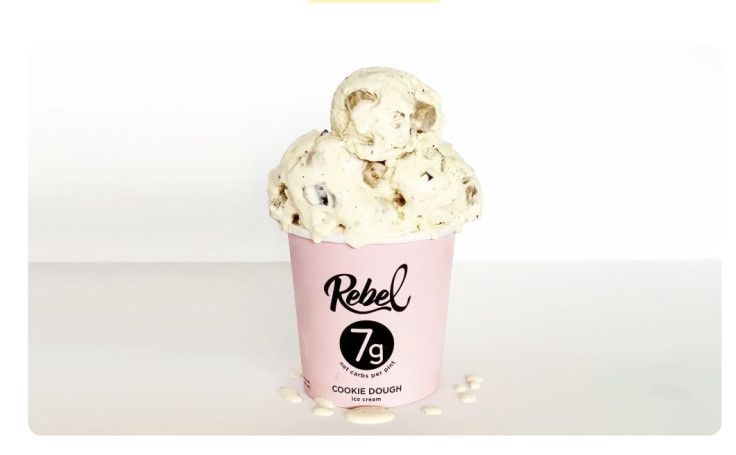
Rebel Creamery, the maker of Rebel Ice Cream sold in grocery stores nationwide, has filed for Chapter 11 bankruptcy protection just weeks after a federal judge ordered the company to pay $23.8 million to rival Van Leeuwen Ice Cream over intentional packaging infringement.
Rebel Creamery LLC filed its Chapter 11 petition August 14 in the U.S. Bankruptcy Court for the District of Utah, according to court records. The Midway, Utah-based company reported approximately $13.78 million in assets against $23.85 million in liabilities, figures that place the Van Leeuwen judgment at the center of the company's financial distress. Van Leeuwen is listed among Rebel's unsecured creditors with a $23.785 million claim tied to the federal judgment, though Rebel listed the claim as disputed and noted that the underlying ruling remains under appeal.
The bankruptcy filing came less than a month after U.S. District Judge Eric Komitee of the Eastern District of New York ruled, following a bench trial, that Rebel had intentionally infringed and diluted Van Leeuwen's trade dress through its ice cream packaging. "The evidence at that trial left no doubt that Rebel infringed and diluted," Komitee wrote in a July 16 memorandum and order, finding Rebel liable for trade dress infringement, unfair competition and dilution.
Van Leeuwen originally filed its lawsuit against Rebel in April 2021, alleging that Rebel's ice cream pint packaging copied the distinctive overall appearance of its own product line. The court described Van Leeuwen's protected trade dress as including monochromatic cardboard pints with matching lids, a primarily pastel color palette, black script lettering and an overall minimalist design aesthetic. Komitee found that Rebel's packaging bore substantial similarities to that design and that the evidence supported findings of both consumer confusion and bad faith on Rebel's part. Rebel had argued during the litigation that its founders were unaware of Van Leeuwen's packaging when developing their own design after the company launched in 2017, an account the court explicitly rejected.
As part of the ruling, Komitee permanently barred Rebel from selling products bearing trade dress likely to be confused with Van Leeuwen's and ordered the company to redesign its packaging going forward. Van Leeuwen had originally sought $36.4 million in disgorged profits from Rebel, but the court reduced that figure by 33%, finding that some portion of Rebel's sales were driven by broader consumer demand for keto-friendly and other better-for-you ice cream products rather than specifically by the packaging at issue. That reduction left Van Leeuwen entitled to the $23.785 million awarded in the final judgment.
Rebel filed a notice of appeal August 12, just two days before seeking Chapter 11 protection. Court filings do not establish that the Van Leeuwen judgment was the sole cause of Rebel's bankruptcy filing, though the size of the award relative to the company's overall balance sheet made it by far the largest liability listed in its bankruptcy schedules. Beyond the disputed Van Leeuwen claim, Rebel reported approximately $5.22 million in cash and cash equivalents, $2.59 million in accounts receivable and $5.65 million in inventory as part of its filing. The company's voluntary petition estimated both its assets and liabilities at between $10 million and $50 million and indicated that funds would be available for distribution to unsecured creditors. Austin Archibald is listed as the company's manager and member in the filing, with Michael Johnson of the law firm Ray Quinney & Nebeker serving as bankruptcy counsel.
Chapter 11 bankruptcy allows a company to continue operating while it restructures its debts under court supervision, meaning the filing does not by itself indicate that Rebel is shutting down or pulling its products from shelves. Rebel Ice Cream remains available at major retailers including Walmart, Kroger, Target and Safeway, among other grocery chains nationwide. The bankruptcy filing also triggers an automatic stay, a legal mechanism that generally prevents creditors, including Van Leeuwen, from pursuing collection of pre-bankruptcy debts without separate permission from the bankruptcy court. The precise interaction between that automatic stay, the packaging injunction Komitee ordered, and Rebel's ongoing appeal will depend on further proceedings in both the bankruptcy court and the appellate courts.
Van Leeuwen, founded in 2008, has built a national retail and scooped-ice-cream presence in the years since, drawing occasional celebrity and political attention, including a visit from President Joe Biden to one of its New York locations following a 2024 taping of "Late Night with Seth Meyers." The company redesigned its packaging in 2014 and again to its current design in August 2016, according to court records, with that later design forming the basis for its trade dress claims against Rebel.
With Rebel's appeal of the underlying judgment still pending and its bankruptcy case now proceeding in Utah federal court, the ultimate resolution of both the packaging dispute and the company's broader financial restructuring remains unsettled, leaving open questions about how the case will ultimately affect Rebel's operations and its continued availability on grocery store shelves nationwide.
© Copyright 2026 IBTimes AU. All rights reserved.