

Kate Middleton's 2017 Remarks on Maternal Loneliness Resurface as a Lesson on Motherhood Isolation
Kate Middleton's insights on motherhood and mental health continue to resonate years later
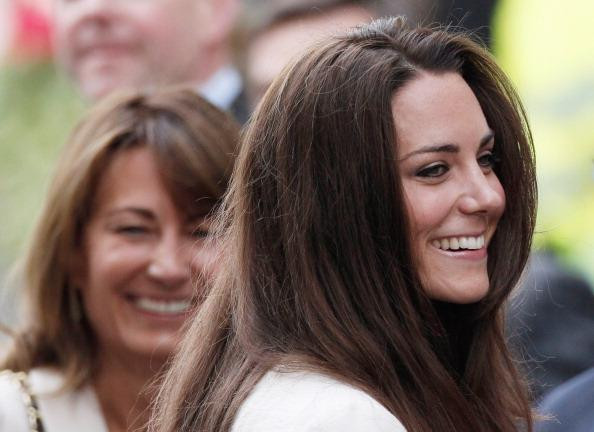
LONDON — Remarks Kate, the Princess of Wales, made nearly a decade ago about the isolation many new mothers experience have resurfaced online, offering what commentators describe as a timely reminder that feelings of loneliness in motherhood are far more common than they may appear.
Speaking on April 20, 2017, at the opening of Global Academy, a new school in west London, then-Duchess of Cambridge addressed the emotional difficulty many parents face after having children. "It is lonely at times, and you do feel quite isolated," she said. "But actually, so many other mothers are going through exactly what you are going through. It is being brave enough, like you obviously were, to reach out to those around you."
The remarks were directed specifically at Katie Massie-Taylor and Sarah Hesz, the co-founders of Mush, an app designed to connect new mothers with one another. The two women had built the platform after becoming genuine friends themselves while supporting each other through the isolation that often accompanies early motherhood. The event took place as part of the royal family's Heads Together mental health campaign, and Kate's husband, Prince William, along with his brother Prince Harry, were also present that day, both speaking openly about their own experiences with grief and mental health following the death of their mother, Diana, Princess of Wales.
Kate has returned to the theme of maternal isolation on more than one occasion since that 2017 appearance, often drawing on specific personal experience rather than speaking in general terms. During a separate visit to a children's center in Cardiff, she described the period immediately following the birth of her eldest son, Prince George, when William was still serving as a search and rescue helicopter pilot with the Royal Air Force. "I was chatting to some of the mums, I had just had George and William was still working with search and rescue, so we came up here when George was a tiny, tiny little baby, in the middle of Anglesey," she said. "It was so isolated, so cut off, I didn't have my family around me, he was doing night shifts."
That specific, personal account has continued to lend particular weight to Kate's broader public comments on motherhood and mental health, distinguishing her remarks from the kind of generalized advice more commonly associated with royal engagements. Rather than speaking about isolation as an abstract concept, she described a concrete period during which she personally experienced the kind of disconnection many new parents report.
Kate has continued to speak on related themes of connection and isolation in subsequent public appearances. In other remarks attributed to her, she has warned more broadly about the paradox of modern connectivity, observing that current generations may be simultaneously more digitally connected than any before them while also experiencing greater isolation and loneliness. She has also spoken about the importance of early childhood development, saying she believes the experiences children have in their earliest years carry lasting effects throughout the rest of their lives, a theme that has anchored much of her public work, including her long-running early years initiative through the Royal Foundation.
Kate's 2017 remarks and subsequent related comments have taken on renewed relevance in recent commentary examining the gap between the public perception of motherhood and the private reality many parents describe experiencing. Coverage of her remarks has noted that motherhood is frequently portrayed publicly through milestones and family moments, while more difficult aspects, including exhaustion, uncertainty and loneliness, often remain unspoken. That silence, according to the commentary, can create a misleading impression that other parents are managing the transition to parenthood with relative ease, leaving individual mothers feeling as though their own struggles are unusual or isolating in a way others do not share.
Public health experts and parenting researchers have separately noted that the transition to parenthood often brings substantial disruption to a new parent's existing social routines and relationships, even when family, friends or other parents remain physically present nearby. The shift in daily responsibilities that accompanies caring for a young child can significantly reduce opportunities for the kind of regular social contact that previously helped maintain a person's sense of connection, a dynamic that can produce feelings of emotional isolation even in the presence of considerable practical support.
Kate's broader public engagement around maternal mental health has continued in the years since her original 2017 remarks, including through her work establishing the Royal Foundation Centre for Early Childhood, which has focused on raising awareness of the formative importance of a child's earliest years of development. Her public statements on the topic have generally emphasized both the significance of early childhood experiences and the importance of parents receiving adequate emotional and practical support during that period.
Kate has also spoken publicly about maintaining a positive outlook during difficult periods in her own life, including remarks she made regarding the importance others placed on her mindset during a personal health challenge. "Everyone said to me, please keep a positive mindset, it makes such a difference," she has said, reflecting a broader pattern in her public commentary of connecting personal experience to wider themes of resilience and emotional wellbeing. She has also spoken about her professional work bringing her genuine fulfillment, saying in past remarks that her work "has always brought me a deep sense of joy," and expressing eagerness to return to public engagements when circumstances allow.
Kate's continued willingness to speak candidly about difficult personal experiences, including isolation during early motherhood, has been credited by commentators with helping normalize public conversations around maternal mental health, a topic that has historically received less open discussion in public life despite affecting a significant proportion of new parents. Her remarks continue to circulate in commentary examining parental mental health nearly a decade after they were first delivered, reflecting the resonance many parents have found in hearing a public figure describe personal struggles with isolation in terms that closely mirror their own experiences.
As renewed attention returns to Kate's original 2017 comments, the broader message embedded in her remarks — that reaching out for support represents an act of courage rather than a sign of struggling to cope — continues to be cited by parenting advocates and mental health commentators as a meaningful counterpoint to the isolation many new parents report experiencing, even while surrounded by supportive family, friends and communities.
© Copyright 2026 IBTimes AU. All rights reserved.