

Bill Gates' Quiet Visit to Chile's Most Iconic Copper Mine Sparks Political Row Over Codelco's Future Owners
The visit has prompted opposition lawmakers to seek answers as President José Antonio Kast's government considers allowing more private investment in the state-owned mining giant.
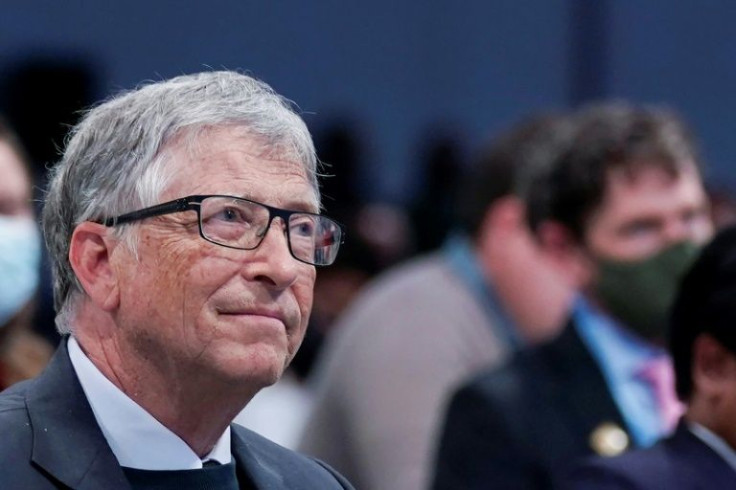
SANTIAGO, Chile — A private visit by Bill Gates to one of Chile's best-known copper mines has become a political controversy. It has added to a heated debate over whether private investors should get a bigger role in Codelco, the country's state-owned copper giant.
The Microsoft co-founder toured Chuquicamata, a century-old copper mine in northern Chile, in early November 2026. He came on a private trip, asked for discretion, according to people at the company, and announced nothing.
Even so, the visit touched one of the most sensitive subjects in Chilean politics: who should control the country's huge copper reserves.
Lawmakers demand answers
Opposition lawmakers sent Codelco a formal request asking who approved the tour, who attended, whether a confidentiality agreement was signed and whether investments or private partners were discussed.
"We are concerned about safeguarding public assets and understanding the circumstances under which this visit took place," said Deputy Valentina Cáceres of the left-wing Frente Amplio.
Codelco had not responded. Requests for comment to Gates' venture firm and foundation also went unanswered. There is no public evidence that Gates was negotiating anything.
Why the visit raised suspicion
Gates' business ties gave critics reason for concern. His links to mining through the investment firm Breakthrough Energy Ventures, along with growing signs that the pro-market government of President José Antonio Kast wants to bring private capital into Codelco, were enough to fuel suspicion that the visit had other purposes.
Breakthrough Energy Ventures backs KoBold Metals, which uses artificial intelligence to explore for copper and lithium. The lawmakers named KoBold in their request.
A state miner under strain
The visit came at a difficult time for Codelco. On Nov. 5, chairman Bernardo Fontaine told an extraordinary shareholders' meeting that 42,100 metric tons of copper had been wrongly recorded as production in 2024 and 2025, an accounting charge of $120 million to $140 million.
Codelco also cut its 2026 production forecast to slightly above 1.2 million tons, from earlier guidance of 1.331 million to 1.357 million tons. Fontaine said the company invested about $32 billion over eight years while annual output fell from 1.7 million to 1.3 million tons.
Debt is another concern. Net debt was $24.3 billion as of June 30, 2026, or 2.8 times adjusted earnings. Fontaine has denied any plan to privatize, but argues partnerships are the only way to develop Codelco's resources.
What the government is considering
Kast's officials have given mixed signals about how far private money could go. On Nov. 11, Finance Minister Jorge Quiroz said private investors could eventually take a minority stake in Codelco, but not now.
Two days later, Economy and Mining Minister Daniel Mas said the government is studying a law change that would let private companies into some deposits, processing plants and shared infrastructure. He said Codelco would remain state-owned and that minority shareholders are not under discussion.
The Socialist Party and unions accuse the government of exaggerating Codelco's problems to prepare for asset sales. The government and Codelco's board reject that.
The Copper Workers Federation warned against "privatizing the company piecemeal."
A national symbol
Copper ownership is a deeply emotional issue in Chile. The country nationalized its large mines in 1971. Transferring those nationalized deposits would require a constitutional amendment, and no one in government has proposed it.
Some analysts urge caution about reading too much into the visit. Mining consultant Juan Ignacio Guzmán warned against treating the Gates episode as a signal, noting that the privatization talk is coming from outside the government.
The visit may turn out to have been simply a private tour. Still, it has put renewed pressure on Kast's government to say exactly how much private capital it will allow into one of Chile's most important national assets.
© Copyright 2026 IBTimes AU. All rights reserved.