

Chinese Robot Maker Unitree Sees Shares Surge Nearly 500% on Stock Market Debut in Shanghai
Unitree's IPO marks a significant milestone in the rapidly growing humanoid robotics sector, reflecting strong investor interest.
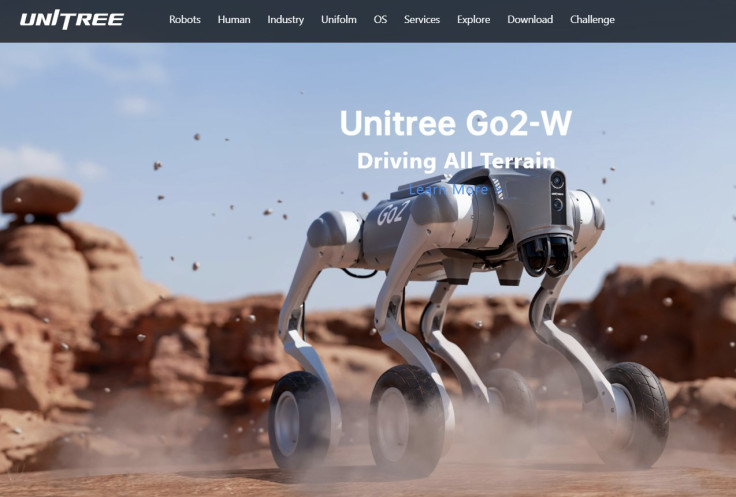
Shares in Unitree, the world's largest maker of humanoid robots, surged as much as 600% before paring back to a gain of nearly 500% on the company's debut on China's stock market Wednesday, marking one of the most explosive public listings of the year as investors race to identify winners in the fast-growing robotics sector.
Shares in the company, officially known as Yushu Technology Co., rose to as high as 1,100 yuan, or roughly £120.39, from an initial public offering price of just 150.8 yuan, before settling to a still-remarkable gain of nearly 500% by the end of trading. The listing places Unitree among the standout technology debuts on Chinese exchanges this year, reflecting intense investor appetite for exposure to humanoid robotics, an industry widely viewed as one of the central battlegrounds in the broader global race around artificial intelligence.
Unitree, founded in 2016, has built global recognition largely through viral videos showcasing its robots performing martial arts routines, running at speeds comparable to Olympic athletes, and serving as backup dancers during pop star performances. The company shipped more than 5,500 humanoid robots last year, positioning it as one of the most commercially established players in a market still in its relatively early stages of large-scale deployment.
The broader humanoid robotics market is projected to grow dramatically over the coming decade. Analysts estimate that global sales of humanoid robots could climb from roughly $2 billion in 2025 to as much as $300 billion by 2035, a growth trajectory that has fueled significant investor enthusiasm for companies positioned to capture a meaningful share of that expansion.
Retail investor demand for Unitree's IPO proved exceptionally strong. According to reporting on the listing, the portion of shares set aside for non-professional individual investors was oversubscribed by thousands of times, reflecting the scale of public enthusiasm surrounding the offering among ordinary Chinese stock market participants, in addition to institutional interest.
Unitree occupies a relatively unique position within the still-developing humanoid robotics industry as one of the few publicly listed pure-play companies in the space. Its largest competitor, AgiBot, remains privately held, while a smaller rival, UBTech, is listed on the Hong Kong stock exchange rather than mainland Chinese markets. At least half a dozen other Chinese humanoid robotics companies, including Deep Robotics and Leju Robotics, are reportedly preparing their own public listings, suggesting Unitree's debut could serve as an early bellwether for investor appetite toward the broader sector as additional competitors move toward going public.
The scale of Wednesday's share price surge has had a dramatic personal financial impact on Unitree founder and chief executive Wang Xingxing, who founded the company in 2016 and continues to own roughly a fifth of the business. According to Reuters, the jump in Unitree's valuation means Wang's personal stake is now worth more than $12 billion on paper, a significant increase to his net worth driven entirely by the market's reaction to the company's public debut.
Unitree's stock market listing coincided with the opening of the World Robot Conference in Beijing on Wednesday, an event that brings together hundreds of companies, the vast majority of them Chinese, to unveil new products and showcase recent technical advances across the robotics industry. The timing of the listing alongside the high-profile conference likely amplified investor attention on the sector more broadly, contributing to the intensity of demand for Unitree shares.
Unitree's rapid rise has not been without controversy or geopolitical friction. Last month, the U.S. Federal Communications Commission moved to ban imports of future models of foreign-made humanoid and quadruped robots, citing national security concerns, a decision widely understood to be aimed primarily at Chinese manufacturers such as Unitree given the country's dominant position in the global humanoid robotics supply chain. Separately, the Pentagon added Unitree to a list of Chinese companies it has identified as contributors to China's defense industrial base earlier this summer, a designation Unitree has pushed back against, with the company previously stating that its robots are intended for civilian use rather than military applications.
Despite the friction with U.S. regulators, Unitree has continued to attract substantial backing from major Chinese technology companies, with both Tencent and Alibaba among the firm's corporate investors, underscoring the strategic importance domestic Chinese technology giants have placed on securing early positions within the country's rapidly developing robotics ecosystem.
Unitree's stock market debut adds to a broader wave of attention on China's robotics sector this year, as the country has increasingly positioned humanoid and quadruped robots as a strategic priority within its broader technology development agenda, alongside ongoing investment in artificial intelligence more generally. The intense investor demand seen in Wednesday's listing suggests that enthusiasm extends well beyond government-level strategic interest and into broad-based public market appetite for exposure to companies at the forefront of the robotics industry.
With several additional Chinese humanoid robotics companies reportedly preparing their own initial public offerings in the coming months, market analysts are likely to closely watch how sustained investor interest proves to be following Wednesday's dramatic debut, both as a signal of confidence in Unitree specifically and as a broader indicator of how receptive Chinese capital markets may prove to be toward the wave of robotics-focused listings expected to follow in the sector over the remainder of the year.
© Copyright 2026 IBTimes AU. All rights reserved.