

Could Jensen Huang's Ouster Derail the AI Boom? Wall Street Fears Losing the Dealmaker Behind Nvidia's Empire
Investors are weighing the impact of Huang's reported relationships and a possible board decision on Nvidia's leadership, financing role and market value.
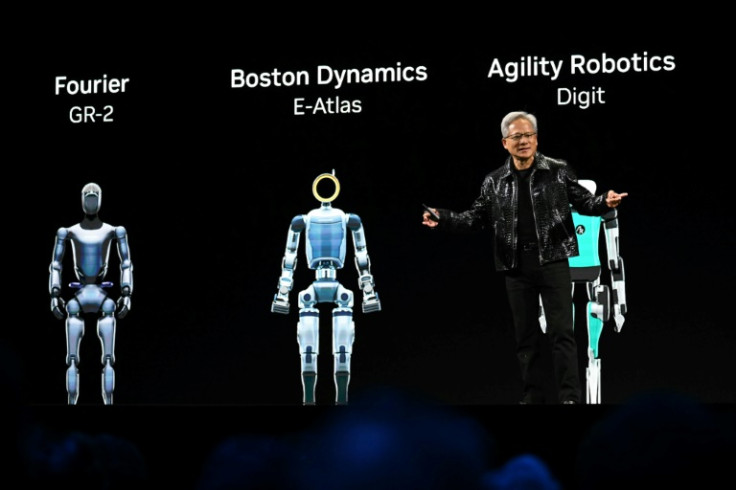
The scandal engulfing Nvidia Corp. Chief Executive Jensen Huang is raising questions on Wall Street that reach far beyond one company. Investors are asking whether the artificial intelligence boom can keep its momentum without the man who did more than anyone to build it.
Nvidia's board met late Wednesday to decide whether to remove Huang, after The Wall Street Journal reported that directors were preparing to oust him. No decision had been announced as of early Thursday.
Nvidia shares closed Wednesday up 2.87% at $173.73, then fell about 8.6% in after-hours trading to around $159 following the reports. Nvidia's Frankfurt-listed shares were down about 7% before the U.S. open on Thursday. Nasdaq-100 futures fell, and Nvidia suppliers in Asia, including SK Hynix, TSMC and Advantest, also declined.
From a diner booth to $4 trillion
Huang co-founded Nvidia in 1993 after meeting two electrical engineers at a Denny's restaurant in Northern California. Under his leadership, the company grew from a maker of video-game graphics cards into the dominant supplier of the chips that power artificial intelligence.
Nvidia shares have returned about 759,500% since the company's 1999 initial public offering, giving it a market value of about $4.19 trillion at Wednesday's close, according to Dow Jones Market Data.
"AI is where it is because of him, no matter anything else about his character," Anni Sen, managing partner at BluBird Capital, told MarketWatch. "Nobody else has that vision."
Michael Monaghan, portfolio manager at the Founders 100 ETF, described Huang as "the architect of the modern AI economy."
Two scandals
Huang's position weakened sharply this week. He acknowledged an extramarital relationship with Alice Huang, a former executive at an Nvidia customer whom U.S. officials suspect of working for Chinese intelligence. The two are not related, and China has denied the spying allegations.
On Wednesday, The New York Times reported that Huang also had a relationship with Kimberly Powell, Nvidia's vice president of health care, who reports directly to him. Nvidia, Huang and Powell have not confirmed that report.
Nvidia's board launched an independent investigation on Sunday into whether Huang was the target of a foreign intelligence operation.
The 'bank of Nvidia'
Analysts say Huang's influence goes well beyond designing chips. Nvidia has invested heavily in customers and suppliers across the AI supply chain, helping fund the companies that buy its products. It has also pioneered ways to secure loans backed by Nvidia chips.
Nigam Arora, founder of investment research firm The Arora Report, said Nvidia's financing deals and strategic investments have given it the role of a central bank in the AI ecosystem.
Sen said Nvidia's investments in component makers Lumentum and Coherent, as well as AI developers Anthropic and OpenAI, will all face questions if Huang leaves. She expects the AI trade to carry a much lower valuation without Nvidia's capital.
"That's why Lumentum is pushing to do a deal with Marvell, why Anthropic is rushing to IPO," Sen said. She believes companies are trying to secure funding before the "bank of Nvidia" stops financing the AI trade.
Ted Mortonson, a managing director at Baird, told MarketWatch that Nvidia's billions of dollars in AI financing deals will likely come under scrutiny, since the investments would be considered contingent liabilities.
"He will go down as one of the greatest tech visionaries and CEOs ever, but that's 100% tainted by moral behavior," Mortonson said.
No heir apparent
Analysts say Nvidia is poorly prepared for a sudden change at the top. Huang has an estimated 60 direct reports and has shown little interest in succession planning. Nvidia's board does not have a chairman.
"There's no heir apparent," Arora said.
Market watchers say the most prominent internal candidates are Chief Financial Officer Colette Kress and Ian Buck, Nvidia's vice president of hyperscale. Bloomberg has reported that Nvidia is working with an outside firm to explore potential replacements.
Morningstar analyst Brian Colello said the lack of a succession plan means Nvidia would have to build one on the fly. He said Huang's role in running the company and managing relations with Washington would be difficult to replace.
"The U.S. government is going to need to get used to working with somebody else at Nvidia very closely," Colello said.
Arora also framed the issue as a national security concern. "What gives the U.S. an edge over China? The chips," he said. "If we take our most visionary semiconductor leader away, how is that good for the United States?"
Limited power to fight back
Unlike some Silicon Valley founders, Huang cannot rely on special voting rights to protect his job. He owns about 3% of Nvidia, and the company has only one class of stock.
"Jensen doesn't hold the super-voting control some newer founders have, so this is the board's call," Monaghan said.
Business still strong
Some analysts argue that Nvidia's business would survive Huang's departure. The company's technological lead and software ecosystem would take rivals such as Advanced Micro Devices and Broadcom years to match.
Bernstein analyst Stacy Rasgon called the stock "almost absurdly cheap" in a client note and said Nvidia's revenue is expected to keep growing. Still, he downgraded the shares to market-perform from outperform, citing possible investigations into Huang and Nvidia.
Whitney Stewart, portfolio manager at Sterling Capital Management, told MarketWatch that Nvidia's fundamentals and product legacy are "probably unaffected."
Arora, however, said Nvidia shares would likely fall further if the board removes Huang.
Investors are waiting for word from Nvidia's board ahead of the company's fiscal third-quarter earnings report, scheduled for Nov. 17. Huang also faces a request from House Republicans to attend a closed-door briefing on Nov. 18 about his contacts with Alice Huang.
This article is for informational purposes only and does not constitute investment advice.
© Copyright 2026 IBTimes AU. All rights reserved.