Healx AI: 10 Essential Facts About the Cambridge Rare Disease Drug Discovery Pioneer
CAMBRIDGE, England — Healx, a leading UK artificial intelligence-powered biotech company, continues to reshape drug discovery for rare diseases in 2026, leveraging advanced machine learning to accelerate treatments for conditions that affect millions but often lack approved therapies.
Founded in 2014, the Cambridge-based firm stands out in the competitive AI drug discovery landscape by focusing on repurposing and enhancing existing compounds through data-driven insights rather than starting from scratch. With a growing pipeline advancing toward clinical stages, strategic partnerships and recent expansions into oncology and neuroregeneration, Healx exemplifies how AI can address the high failure rates and costs of traditional pharmaceutical development.

Here are 10 key things to know about Healx and its mission to bring hope to rare disease patients.
- Patient-inspired origins: Healx traces its roots to a 2014 meeting between co-founders Dr. Tim Guilliams and Dr. David Brown with Nick Sireau, whose son has alkaptonuria, a rare genetic disorder. This encounter highlighted the urgent need for faster treatments for the estimated 10,000 rare diseases affecting 300 million people worldwide, 90% of which have no approved therapies.
- Cambridge techbio powerhouse: Headquartered in the heart of the UK's leading life sciences cluster, Healx benefits from proximity to world-class research institutions like the University of Cambridge. The company recently opened new labs at Chesterford Research Park, enhancing its capabilities in AI-driven biology and chemistry while maintaining a team of around 69 employees focused on interdisciplinary expertise.
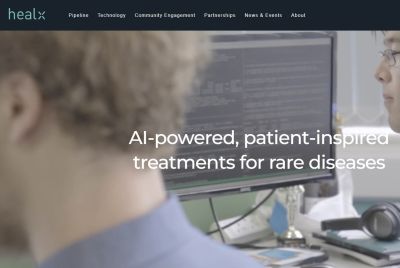
- AI platform at the core: Healx's proprietary next-generation AI platform analyzes millions of drug and disease data points to uncover novel connections. By integrating generative AI, machine learning, biomedical knowledge graphs and frontier technologies, it runs discovery stages in parallel and hypothesis-free, significantly shortening timelines from prediction to patient compared to conventional methods.
- Co-founder with Viagra pedigree: Chairman and co-founder Dr. David Brown is the co-inventor of the blockbuster erectile dysfunction drug Viagra and former global head of drug discovery at Roche. His deep pharmacology expertise complements CEO Dr. Tim Guilliams' background in biophysics, neuroscience and tech entrepreneurship, creating a strong foundation for blending AI with proven drug development know-how.
- Substantial funding secured: Healx has raised approximately $115-134 million to date across multiple rounds. Key milestones include a $47 million Series C in 2024 co-led by Atomico and R42 Group, a $2 million later-stage investment from SCI Ventures in 2025, and earlier rounds backed by Balderton Capital, Amadeus Capital and others. This capital has fueled pipeline advancement and platform enhancements.
- Advancing clinical-stage pipeline: The company's pipeline features assets in rare and pediatric oncology and neurology. HLX-1502 and HLX-0213 target Neurofibromatosis Type 1, with FDA clearance for a Phase 2 trial of HLX-1502 secured in 2024. Other candidates address Fragile X Syndrome, Angelman Syndrome, osteosarcoma and undisclosed rare conditions, with several programs in preclinical or IND-enabling stages.
- Strategic oncology expansion: In September 2025, Healx entered a strategic transaction with Vuja De Sciences to strengthen its focus on preventing cancer recurrence and metastatic endurance. The deal advances HLX-4310 and integrates expertise in rare and pediatric oncology, marking a significant step beyond traditional rare genetic disorders while leveraging the AI platform's predictive power.
- Partnerships tackling paralysis: In 2025, Healx partnered with SCI Ventures — the world's first specialist venture fund dedicated to curing paralysis — to apply its AI platform to spinal cord injury (SCI) therapies. The collaboration targets chronic SCI, a condition with lifetime care costs of $3-6 million per patient and limited treatment options, combining AI insights with neuroregeneration expertise.
- Additional high-profile collaborations: Healx has worked with Sanofi to identify new rare disease indications for proprietary compounds and maintains ties with organizations like the Children's Tumor Foundation. These partnerships validate the platform's ability to generate therapeutic rationale quickly and support milestone-driven progress toward the clinic.
- Mission-driven impact and recognition: Healx aims to deliver novel treatments faster, more cost-effectively and with higher success probability than the traditional 5% rate in drug discovery. The company has earned accolades such as AI Company of the Year and continues to emphasize ethical, patient-centric innovation. Its approach not only accelerates individual programs but also contributes to broader advancements in AI for biomedicine.
Healx's technology combines three key drug discovery paradigms — AI predictions, in-house expert validation and patient insights — to create a more efficient pipeline. Traditional methods often take 10-15 years and cost billions, with most candidates failing. By contrast, Healx's data-intensive method identifies repurposing opportunities or novel enhancements, potentially reaching clinical trials in as little as 24 months for some programs.
In 2026, the company remains active at major industry events, including the BIO International Convention, where it showcases its platform's potential for rare and neglected conditions. Recent moves, such as the Vuja De Sciences transaction and SCI Ventures partnership, demonstrate strategic evolution while staying true to its rare disease roots.
The broader context for Healx includes a booming AI drug discovery sector, where UK firms benefit from strong talent pools, government support for life sciences and a regulatory environment that increasingly embraces innovative technologies. Challenges persist, including the need for robust clinical validation, competition for compute resources and navigating complex biology in heterogeneous rare diseases.
Yet Healx's progress stands out. With assets advancing toward or in clinical stages, the firm positions itself as a bridge between cutting-edge AI research and tangible patient benefits. CEO Tim Guilliams has highlighted the emotional drive behind the work, noting that every rare disease patient deserves a treatment and that AI can help solve humanity's toughest health challenges, from genetic disorders to cancer recurrence.
Industry observers view Healx as part of the UK's vibrant AI biotech ecosystem, alongside companies like Isomorphic Labs. Its patient-inspired model — starting from real unmet needs rather than purely technological curiosity — resonates with investors and partners seeking meaningful impact alongside commercial potential.
As clinical data emerges in the coming years, particularly from the Neurofibromatosis Type 1 program expected to yield results in 2026 or beyond, Healx could provide proof points for AI's role in transforming pharma. Success would not only benefit specific patient communities but also validate scalable approaches for thousands of rare conditions.
For now, the Cambridge company continues refining its platform, expanding collaborations and advancing its pipeline with disciplined execution. Its story illustrates how AI, when paired with deep domain expertise and human-centered focus, can address long-neglected areas of medicine.
Healx's journey from a 2014 conversation about one boy's rare disease to a clinical-stage biotech with international partnerships underscores the power of technology to drive hope. As the firm pushes forward in 2026, it stands as a compelling example of British innovation tackling global health inequities, one AI-driven discovery at a time.
© Copyright 2026 IBTimes AU. All rights reserved.
- Recommended For You