

Elon Musk Endorses Tesla and SpaceX Merger Idea as Special Committees Form to Explore Historic Deal
Independent director committees at both companies are reviewing a possible combination, though Musk says no terms have been agreed and the deal is far from certain.
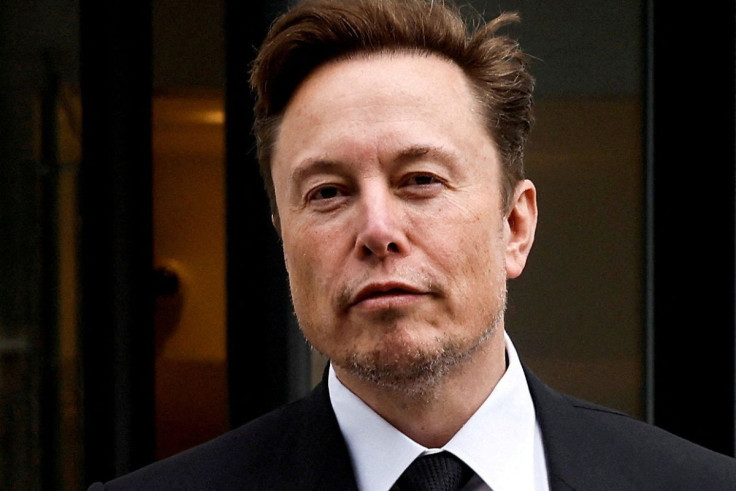
Elon Musk said Tuesday that combining Tesla and SpaceX would be a good idea, as both companies have formed special committees of independent directors to examine a potential merger that would create one of the largest corporate combinations on record.
Speaking during SpaceX's third-quarter earnings call, Musk confirmed that the committees were established at the request of shareholders. He stressed that the groups have not agreed on terms and that a deal is far from certain. At recent valuations, Tesla and SpaceX together were estimated at roughly $3.5 trillion, a figure reflecting their combined market value rather than any negotiated price.
"I think it would be a good idea, but it's really up to the special committees of both companies," Musk said. Because he serves as chief executive of both firms and holds substantial ownership stakes, he described himself as a conflicted party who cannot participate in the committees' discussions. He called the process an "odd kabuki dance" in which two groups of people are talking and he cannot be in the conversation.
Musk said he saw considerable merit in bringing the businesses together as the industry approaches what he termed the "superintelligence singularity." He pointed to potential gains from cooperating on artificial intelligence software, chip design, the Terafab manufacturing project, robotics, mass-to-orbit capabilities for the Starmind constellation, and connectivity services. "There's a lot to be gained from cooperating," he said.
Any transaction would require shareholder approval. On the Tesla side, Musk said a merger would need the support of 50 percent of all outstanding shares, not merely a majority of those that vote. He described that threshold as "quite a high hurdle." He cautioned against viewing a combination as inevitable. "Some people out there assume that a SpaceX and Tesla merger is a certainty, and I think that would be overstating it," he said. "Do I think it would be a good idea? Yes. But at the end of the day, the shareholders have to be supportive of this."
The comments came after SpaceX reported third-quarter revenue of $14.58 billion, up 161 percent from a year earlier and ahead of analyst estimates. The company posted net income of $4.4 billion, compared with a loss of about $1.05 billion in the same period the prior year. Growth was driven in large part by its Super Intelligence segment, which saw revenue surge more than 800 percent year over year, alongside ongoing Starlink satellite internet operations. SpaceX shares rose roughly 8 percent in extended trading after the results and Musk's remarks; Tesla shares also gained modestly in after-hours trading.
SpaceX, which completed the largest initial public offering on record in June 2026, has a market capitalization in the range of $1.9 trillion to $2 trillion. Tesla's market value stands near $1.5 trillion. A completed merger would rank among the biggest corporate combinations in history, surpassing many prior blockbuster deals. Musk owns nearly one-fifth of Tesla and just under half of SpaceX, with greater voting control at the space company through dual-class shares. Analysts have noted that a combination could consolidate his influence over the combined entity, though any agreement would still need formal board and shareholder processes.
The companies have collaborated in recent years on artificial intelligence, chip development, and other technology projects. SpaceX acquired Musk's artificial intelligence firm xAI earlier in 2026. Speculation about a broader tie-up between Tesla and SpaceX has circulated for months, particularly after SpaceX's public listing. Musk had previously declined to comment extensively on the possibility, saying such discussions would need to follow appropriate procedures.
Independent directors on the special committees have not been publicly named. Tesla's board includes several independent members under listing standards, and SpaceX maintains its own set of independent directors. The committees' work remains preliminary. Musk said they have not reached agreement on transaction terms and that there is no guarantee they will. A person familiar with the matter told Reuters that discussions began in recent weeks and could result in SpaceX acquiring Tesla, though that remains unconfirmed by the companies.
Market observers have described the potential combination as a logical step given overlapping ambitions in AI, robotics, and advanced computing, but they also note significant regulatory, governance, and valuation hurdles. A deal of this scale would face intense scrutiny from shareholders and possibly antitrust authorities. Tesla shareholders in particular have historically shown strong support for Musk's strategic direction, though the all-shares voting requirement raises the bar beyond typical majority-of-votes-cast standards.
SpaceX's strong quarterly performance, powered by AI-related revenue and satellite services, has strengthened its position as a major technology platform beyond traditional launch services. Tesla continues to focus on electric vehicles, energy storage, and its own robotics and AI initiatives, including Optimus humanoid robots. Combining the two could accelerate shared technology development, particularly in custom chips and large-scale computing infrastructure, according to Musk's comments on the call.
The announcement marks the clearest public confirmation yet that formal processes are underway. Musk emphasized that the outcome rests with the special committees and, ultimately, shareholders. No timeline has been disclosed, and the companies have not issued joint statements beyond Musk's remarks on the earnings call. Investors and analysts will watch for further updates in coming weeks, including any filings that detail the committees' progress or proposed terms.
As both companies pursue aggressive expansion in artificial intelligence and related technologies, the prospect of a merger has drawn attention as a potential realignment of resources under a single structure. Whether the committees can bridge differences on valuation, governance, and strategic priorities remains to be seen. For now, the discussions represent an early formal step toward what would be an unprecedented consolidation of electric vehicles, space systems, AI, and robotics businesses.
© Copyright 2026 IBTimes AU. All rights reserved.