

Five Forces Behind Wall Street's $3 Trillion Tech Crash, From Data Center Curbs to Qualcomm's Warning
Political uncertainty over data centres, weak Qualcomm guidance, doubts about AI spending, technical signals and rising rates combined to drive the market rout.
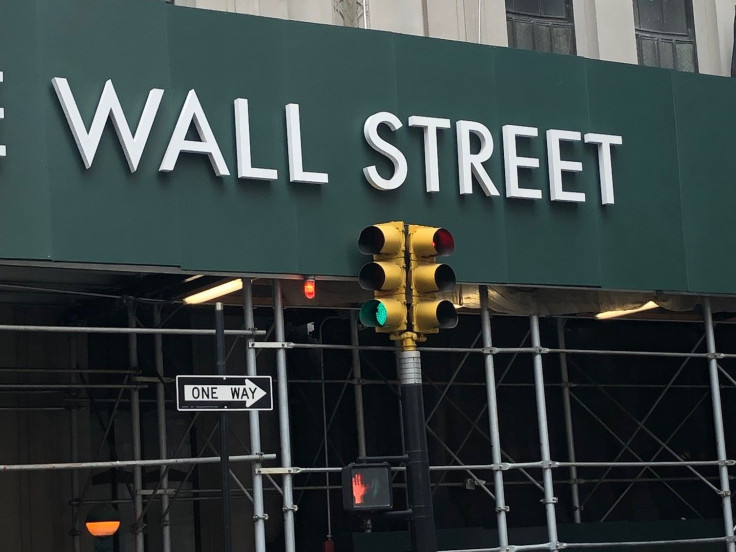
NEW YORK — Wall Street's sharpest selloff in more than a year wiped about $3 trillion from U.S. stocks on Thursday, as several pressures converged on the technology and artificial intelligence companies that have powered the market for much of the past two years.
The losses were broad and severe. The Nasdaq 100 sank 6.36%, its worst day since March 2020, when the onset of the COVID-19 pandemic roiled markets. The Nasdaq Composite fell 5.6%, its worst day in 19 months, as $3 trillion was wiped off the value of S&P 500 companies.
Chipmakers took the heaviest hit. The Philadelphia Semiconductor Index dropped 12%, and the Cboe Volatility Index, Wall Street's fear gauge, jumped about 70% to close at 28.18, its highest finish since March 30.
The rout spread overseas on Friday, triggering a trading halt in South Korea and pushing Japan's Nikkei into a bear market.
Here are five forces analysts say drove the crash.
1. Democrats' threat to the data center boom
The biggest trigger was political. Technology and chip stocks were hit hardest as investors weighed what Democrats' sweeping midterm victories could mean for AI regulation and data center development.
The governors' races mattered as much as Congress. Democrats flipped governorships in Texas, Georgia and Ohio, and all three governors-elect ran against rapid data center growth. In Texas, Gov.-elect Gina Hinojosa promised a moratorium on new buildouts until lawmakers enact stronger protections.
Texas is central to the industry's plans. The state alone is projected to hold nearly 30% of U.S. data center capacity by 2028, according to a Bloom Energy report cited by Fortune.
Electricity costs turned the issue into a campaign theme. Rising power prices helped make the construction of power-hungry data centers a political issue during the midterms, with some Democrats calling for restrictions or pauses on new projects.
The companies most exposed fell hardest. So-called neoclouds, which build data centers to lease computing power to larger players, were particularly hard hit. IREN, Applied Digital and Nebius Group each fell more than 14%.
2. Qualcomm's disappointing outlook
A weak forecast from a major chipmaker added fuel. Qualcomm reported late Wednesday that handset chip revenue dropped 26% to $5.14 billion, missing analyst estimates.
The problem was the outlook, not the headline profit. Qualcomm issued weak guidance despite a strong quarterly earnings report, citing an ongoing shortage of memory components for smartphones. The chipmaker fell short of estimates for fourth-quarter smartphone chip sales on sluggish demand and declining Apple-related revenue.
Some investors saw the earnings miss as decisive. Keith Buchanan, senior portfolio manager at Globalt Investments, told The Wall Street Journal that Thursday's drop was more about disappointment in Qualcomm's earnings and "the continuation of the rotation trade away from AI."
Not every signal from Qualcomm was negative. Chief Executive Cristiano Amon said Android handset sales had bottomed out, and the company guided data center sales to $650 million next quarter, above estimates.
3. Doubts over AI spending returns
The political shock landed on a market that was already nervous. The data center pledges hit a market already worried about whether AI spending will pay off.
Some portfolio managers described the selling as a breaking point. "This feels like the capitulation phase for the data center capex beneficiary stocks," Jed Ellerbroek, portfolio manager at Argent Capital Management, told Reuters.
The damage spread across the AI supply chain. Utilities and equipment suppliers exposed to the data center boom, including GE Vernova and Constellation Energy, also fell, while AI server maker Dell dropped 10.5%.
Even the largest tech firms were swept up. Hyperscalers Microsoft, Alphabet and Amazon, which had supported the indexes on Wednesday, were caught in Thursday's downdraft.
4. Technical breakdowns and a reversing rally
Chart patterns accelerated the selling. Some of Thursday's selling appeared technical as support levels were erased on the way down, and the plunge pushed the Nasdaq-100 and Nasdaq Composite below their 200-day moving averages.
The decline erased Wednesday's post-election gains. While the major indexes rose Wednesday, shares of chipmakers and companies tied to the AI data center buildout were already falling beneath the surface.
The Nasdaq is now officially in a correction. The index has fallen about 12% from a record high set just a month ago.
This has been a volatile year for the index. The Nasdaq closed in correction in March, rallied to record highs in early June, nearly fell into correction in late July, then reclaimed record highs in September and October before sliding into correction again on Thursday.
5. Rising rates and oil
Interest rates and energy costs added to the pressure on high-valued tech stocks. The Bank of England raised its policy rate to 4% on Thursday and warned that another increase could be needed if the U.S.-Iran conflict persists.
Markets are also bracing for tighter policy elsewhere. Analysts said market pricing of interest rate hikes by the Federal Reserve and European Central Bank may be overly aggressive.
Oil prices rebounded on Friday. Asian markets crashed after the open as investors focused on selling in AI and tech stocks, spillover from Wall Street's crash and crude oil rebounding toward $100 a barrel.
Overreaction or turning point?
Some analysts urged caution about reading too much into the drop. Keith Lerner, chief investment officer at Truist Advisory Services, saw the week's moves as more of a knee-jerk reaction than a real indication of how tech might fare under a Democratic Congress. Fundstrat's Tom Lee also called the drop in data center and AI stocks a short-term reaction.
Investors will now look to upcoming earnings, especially Nvidia's report on Nov. 17, and to statements from incoming state officials for signs of whether data center restrictions will actually materialize.
© Copyright 2026 IBTimes AU. All rights reserved.