

Jensen Huang Joins a Notorious List: 5 Famous Americans Caught in Alleged Honey Traps by Foreign Spy Agencies
The Nvidia chief's resignation and unproven allegations involving a woman suspected of links to Chinese intelligence have revived scrutiny of romance-based espionage tactics.
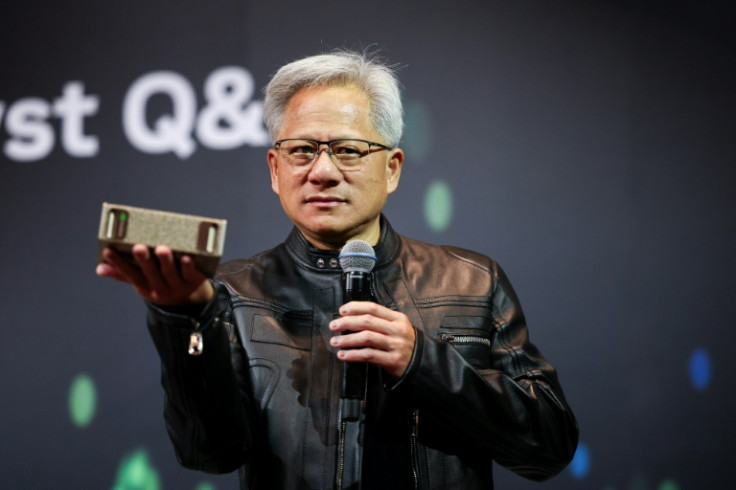
WASHINGTON — Jensen Huang's resignation as Nvidia's chief executive amid an affair scandal has revived interest in one of espionage's oldest tactics: the honey trap, in which a foreign intelligence service allegedly uses romance or sex to gain access to a valuable target.
U.S. counterintelligence officials have long warned that powerful people, from lawmakers to defence workers, can be targeted this way. Some well-known cases ended in espionage convictions. Others ended in embarrassment, career damage and unresolved questions, with no charges at all.
Here are five Americans whose relationships with women linked by investigators to foreign intelligence drew national headlines.
1. Jensen Huang, Nvidia co-founder
The latest and highest-profile case involves Huang, who co-founded Nvidia and led it for 33 years, building it into the world's most valuable chipmaker.
Huang resigned Thursday, days after admitting in a message to employees that he had been unfaithful to his wife. Reports identified the woman as Alice Huang, also known as Huang Le, a former executive at Singapore-based Megaspeed International, which bought chips from Nvidia. The two are not related.
U.S. intelligence officials suspect Alice Huang of working for China's Ministry of State Security, according to The New York Times and other outlets. Taiwan's Liberty Times reported this week that she belonged to a "Chip Team" inside the ministry. U.S. officials have not confirmed that report.
The allegations remain unproven. Attorney General Todd Blanche said Thursday that "there's no conclusions reached by the Department of Justice" on whether she is a spy, though the FBI is investigating. China has denied the allegations. Jensen Huang has not been accused of any crime.
2. Eric Swalwell, former congressman
Former Rep. Eric Swalwell, a California Democrat, was linked to Christine Fang, also known as Fang Fang, a Chinese national whom U.S. officials suspected of being an intelligence operative.
Fang allegedly sought to build relationships with rising political figures in California between 2011 and 2015. Swalwell met her in 2012 while serving on the Dublin City Council, before he was elected to Congress. She later helped with fundraising for his 2014 campaign.
The FBI gave Swalwell a defensive briefing about Fang in 2015, and he cut off contact with her. FBI records released in August showed Swalwell told investigators he had physical relations with Fang "on a handful of occasions," but never dated her or had a romantic relationship.
Swalwell was never charged. A 2017 FBI memo said investigators had "not found violations of federal corruption statutes perpetrated by Congressman Eric Swalwell." A House Ethics Committee review closed in 2023 without action. Swalwell has repeatedly said he did nothing wrong. "There was never a suspicion of wrongdoing on my part," he said in 2020.
3. James J. Smith, FBI counterintelligence agent
One of the FBI's most embarrassing cases involved James J. Smith, a veteran Los Angeles agent who specialized in Chinese counterintelligence.
In the early 1980s, Smith recruited Katrina Leung, a Chinese American businesswoman and Republican fundraiser, as an informant code-named "Parlor Maid." The FBI paid her $1.7 million over nearly two decades. Prosecutors alleged that Smith and Leung carried on a roughly 20-year extramarital affair, and that Leung copied classified documents from Smith's briefcase and passed information to China.
Leung also had an affair with a second FBI agent in San Francisco, William Cleveland Jr.
The case collapsed. Neither Leung nor Smith was charged with espionage. Smith pleaded guilty to making a false statement about the affair and received probation and a $10,000 fine. A judge dismissed the charges against Leung over prosecutorial misconduct, and she later pleaded guilty to lying to the FBI and filing a false tax return. A Justice Department inspector general report later found FBI supervisors had done "little or nothing" to resolve concerns about Smith's handling of Leung.
4. Richard Miller, the first FBI agent convicted of espionage
In 1984, Richard Miller became the first FBI agent arrested for espionage.
Miller, a struggling agent in Los Angeles, began an affair with Svetlana Ogorodnikova, a Soviet emigre. She told him she was a KGB major and asked him to sell her information, according to accounts of the case. He was convicted of passing an FBI counterintelligence document to the Soviets in exchange for promises of $65,000 in gold and cash.
Miller claimed he was trying to infiltrate the KGB as a double agent. The jury rejected that defence. His first conviction was overturned, but he was convicted again in 1990 and sentenced to 20 years in prison. He was released in 1994 after his sentence was reduced.
Miller later called his relationship with Ogorodnikova "the dumbest thing I did in my whole life," the Los Angeles Times reported.
5. Clayton Lonetree, U.S. Marine embassy guard
Marine Sgt. Clayton Lonetree became the first U.S. Marine convicted of spying against the United States, in one of the Cold War's best-known "sexpionage" cases.
While serving as a security guard at the U.S. Embassy in Moscow, Lonetree began dating Violetta Seina, a Soviet woman who worked at the embassy, after meeting her at a Marine ball in 1985. She introduced him to her "Uncle Sasha," who was in fact a KGB officer. Lonetree went on to give the Soviets information about embassy staff and building floor plans, including after his transfer to Vienna.
Lonetree turned himself in to the CIA station chief in Vienna in December 1986. He was convicted by court-martial in August 1987 and sentenced to 30 years in prison, later reduced to 15. He served nine years.
The Marine Corps commandant later wrote that Lonetree's motivation "was not treason or greed, but rather the lovesick response of a naive, young, immature and lonely troop in a lonely and hostile environment."
Other cases
Smaller cases have followed similar patterns. In 2014, Benjamin Bishop, a retired Army lieutenant colonel working as a defence contractor at U.S. Pacific Command in Hawaii, was sentenced to 87 months in prison for emailing classified information to a 27-year-old Chinese graduate student he was dating. Authorities never said publicly whether she worked for the Chinese government.
An old tactic, a new era
Counterintelligence experts say honey traps remain effective because they exploit loneliness, ego and secrecy, not technical weaknesses. As technology executives gain more influence over national security, the targets may be shifting from embassy guards and FBI agents to the leaders of companies that build the world's most advanced technology.
The Huang case is still unfolding, with investigations under way in the United States, Singapore and elsewhere.
© Copyright 2026 IBTimes AU. All rights reserved.