

Hang Seng Drops 216 Points as Tencent Sinks Below HK$400 and CATL Tumbles, Erasing Early Hong Kong Gains
The Hang Seng lost 0.90% after technology and battery stocks reversed early gains, while investors weighed weak earnings and limited prospects for immediate Beijing support.
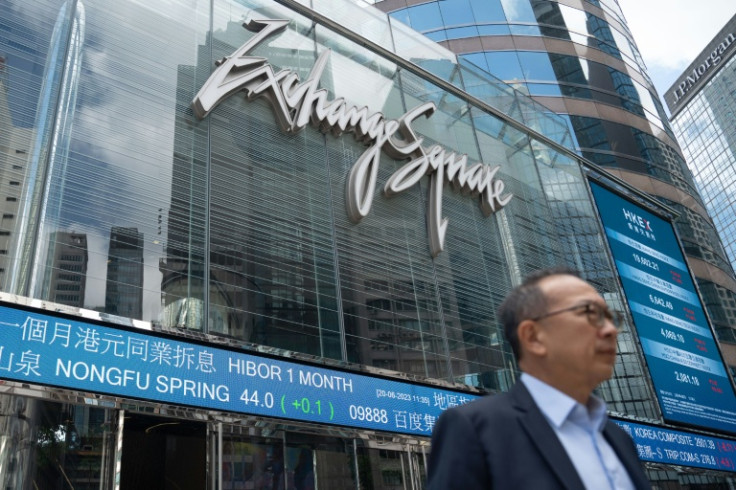
HONG KONG — Hong Kong stocks fell for a second straight session Wednesday. An early rally faded as Tencent Holdings dropped below HK$400 and battery maker CATL fell sharply after weaker-than-expected earnings.
The benchmark Hang Seng Index fell 215.87 points, or 0.90%, to close at 23,651.87. The Hang Seng Tech Index dropped 1.44%. Turnover for the day was about HK$176 billion.
The decline was a sharp reversal. The Hang Seng opened 271 points higher at 24,139, lifted by a rebound in Asian chipmakers after strong results from U.S. companies tied to artificial intelligence. Early gains in technology and health care stocks did not last, and the index moved steadily lower through the afternoon. It closed nearly 500 points below its opening level.
Tencent weighs on the index
Tencent, the largest stock in the index, fell 3.7% and closed below the HK$400 level. Afternoon turnover in the stock was about HK$12.7 billion. Because of its heavy weighting, Tencent alone took roughly 60 points off the Hang Seng.
Other major internet companies also fell. Kuaishou Technology, Meituan and Bilibili each lost more than 2%. Two Chinese AI model developers bucked the trend: Zhipu rose 1.4% and MiniMax gained 0.64%.
CATL slump spreads
Contemporary Amperex Technology Co., the world's largest EV battery maker, fell about 10% in Hong Kong and on the mainland. The company reported much slower third-quarter profit growth, citing fierce competition and slower growth in Chinese car sales. Its drop pulled down lithium battery and new energy shares across the market.
Pop Mart International, the toymaker known for its Labubu collectible figures, fell about 4% by midday as investors braced for weak third-quarter results. Traders said investors were selling consumer stocks ahead of earnings to reflect doubts about China's domestic demand.
Second day of losses
On Tuesday, the market's first session after Monday's Chung Yeung Festival holiday, the Hang Seng fell 1.32% to 23,867.74. That decline followed Beijing's decision to leave key lending rates unchanged. Strong third-quarter GDP data, showing 4.5% growth, also reduced expectations for more stimulus. The Hang Seng Tech Index touched a two-year low during Tuesday's session as AI hardware stocks fell. Lenovo Group lost nearly 10% that day.
Over the two sessions, the Hang Seng has dropped more than 530 points and has now closed below 24,000 on consecutive days.
A difficult stretch for Hong Kong
Hong Kong stocks have struggled in recent weeks. On Oct. 2, the Hang Seng fell 2.6% in its steepest single-day drop since March, as the market reopened after a holiday and caught up with a global bond selloff. Disappointment with China's latest stimulus measures and weak Macau gaming data added to that decline.
The index is now down about 7% for the year and more than 3% for October. It is roughly 16% below its 52-week high of 28,056.10 and about 5% above its 52-week low of 22,518.00.
Technology stocks have been hit especially hard. Investors have questioned the high valuations of AI-related companies, and a jump in U.S. inflation last week revived concerns that interest rates will stay high for longer.
Policy backdrop
Unlike in previous downturns, investors see little chance of immediate support from Beijing. Analysts say policymakers seem focused on long-term goals such as technology and industrial upgrades rather than short-term measures to lift markets, since export-driven growth remains strong.
There have been some steps to support Hong Kong's market structure. On Tuesday, China's securities regulator said it would speed up efforts to add yuan-denominated trading counters and real estate investment trusts to the Stock Connect program linking Hong Kong and mainland exchanges.
Meanwhile, finance ministers from Asia-Pacific Economic Cooperation economies are meeting in Hong Kong this week, putting the city's financial sector in the regional spotlight.
Mainland markets also lower
On the mainland, the Shanghai Composite Index fell 0.6% to 3,713.03, and the Shenzhen Component Index lost 0.82%.
What comes next
Investors will closely watch third-quarter results from major Chinese technology and consumer companies in coming weeks. Tencent, Alibaba and Meituan typically report in November. Their results could show whether recent losses reflect real weakness in profits or mainly nervous sentiment.
Global factors will also play a role. Meta Platforms and Tesla are due to report in the United States this week, and chipmakers Lam Research and Texas Instruments will follow. Those results will help show whether the AI spending boom can hold up, an important issue for Hong Kong's tech-heavy market.
© Copyright 2026 IBTimes AU. All rights reserved.