

Hundreds of Boston Dynamics Workers Petition to Halt $1.3 Million Spot Robot Sale to ICE
Staff say the deal risks reputational damage, while the company maintains the Spot robots cannot be weaponised and will be used to assess dangerous situations.
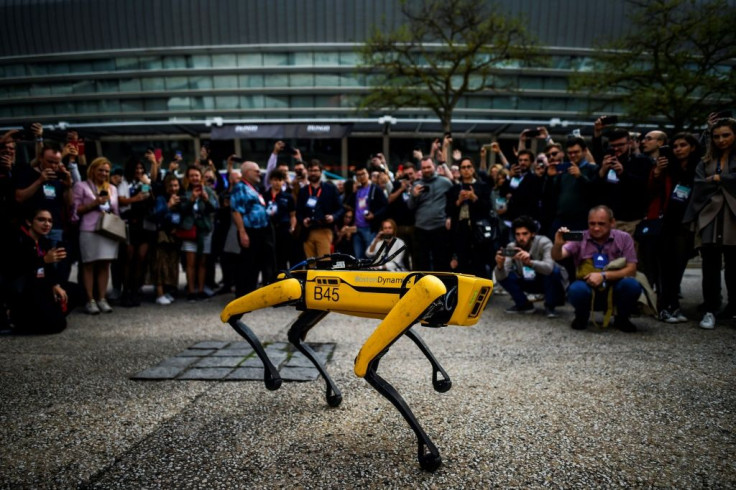
WALTHAM, Mass. — Nearly 300 employees at Boston Dynamics signed an internal petition urging the company to cancel a $1.3 million contract that will place four of its Spot robotic dogs with U.S. Immigration and Customs Enforcement, according to reports from the Boston Globe and WBUR.
The petition, sent to company leadership in early September, argued that the arrangement presents the firm as working directly with ICE at a time when the agency has worked to sow fear across the country. Signers wrote that they cannot be proud of working at Boston Dynamics when that work is being used by a government agency that brutalizes civilians, including some of their own colleagues.
A company spokesperson confirmed the existence of the letter and said nearly half of the roughly 300 signatures were entered anonymously. Boston Dynamics employs between 1,400 and more than 1,500 people, meaning the petition represents a minority of the workforce. The company has nonetheless moved forward with the sale.
The robots are being supplied through Radeco, a Connecticut-based partner that modifies the standard Spot platform. The customized units, nicknamed Cerberus, include a robotic arm, thermal camera and sensors for detecting explosive materials. ICE finalized the contract in September. The agency has said the machines will be used primarily by its Homeland Security Investigations unit for transnational criminal matters rather than by Enforcement and Removal Operations.
A Department of Homeland Security spokesperson said the robot provides law enforcement officers with an additional tool to safely assess potentially dangerous situations before placing personnel or the public at risk. ICE has described the technology as a means to inspect tunnels, evaluate hazards and gather information in confined or uncertain environments without immediately sending agents in.
Boston Dynamics interim CEO Amanda McMaster, who has since been replaced by a permanent chief executive, responded to the petition in a letter to employees. She stated that the company was standing by its decision and that customers must comply with terms and conditions that prohibit any attempts to weaponize the robots or use them for purposes of harm or intimidation. McMaster wrote that the decision aligned with the company's purpose of ethically advancing intelligent machines in service of humanity and asked workers to accept it even if they disagreed.
The company has long maintained a public anti-weaponization policy. In earlier statements about the ICE contract, a spokesperson said any suggestion that the robots will be used to support immigrant detentions or deportations is false. Officials noted that language referring to detention in procurement documents is standard boilerplate.
The internal opposition follows earlier external criticism. Advocacy groups and demonstrators have protested outside Boston Dynamics' Waltham headquarters and ICE facilities in the region. Some activists have called for the state to reconsider tax credits awarded to the company for a planned manufacturing expansion. External protesters have held signs reading variations of "Boston Dynamics Resist ICE" and "No Robot Dogs for ICE."
Employees who signed the petition expressed concern about reputational damage and potential effects on recruitment and retention. The letter stated that the risks are simply too great to continue with the deal and that public-facing teams have already received external emails questioning the arrangement. Signers said many of them have received messages from friends and family asking in disbelief and horror whether the news is true and how they can live with themselves if it is.
Spot is a four-legged robot capable of climbing stairs, navigating uneven terrain and opening doors. It can be equipped with cameras and sensors for hazard detection. The platform has been used by other law enforcement agencies for standoffs, suspicious package inspections and search operations. Boston Dynamics has previously canceled or altered deals involving potential police applications after internal employee pushback, including a proposal that would have involved attaching flash-bang devices.
The current contract is structured through a third-party reseller, which the company has cited as limiting its direct relationship with ICE while still requiring the buyer to adhere to Boston Dynamics' terms. Company officials have said they would take steps including voiding warranties, withholding software updates or terminating licenses if the robots were misused.
Rohit Prasad, formerly of Amazon's Alexa and AI teams, was named permanent CEO in early October, succeeding McMaster in the interim role. The company, owned by Hyundai Motor Group, continues to expand commercial sales of Spot and its humanoid Atlas robot.
No further public response from the company beyond the confirmation of the petition and the decision to proceed has been reported as of late October. ICE has not indicated any change in its plans to deploy the units. The dispute highlights ongoing tensions inside technology firms over government contracts involving immigration enforcement and the limits of contractual restrictions on how customers use the products.
© Copyright 2026 IBTimes AU. All rights reserved.