

Austal Shares Gain 7.6% as Shipbuilder Updates Investors on Hanwha Talks for US Arm and A$5 Billion Contracts
The shipbuilder said talks with Hanwha were more advanced, but no binding offer had been received, while its Australian defence order book climbed to about A$5.6 billion.
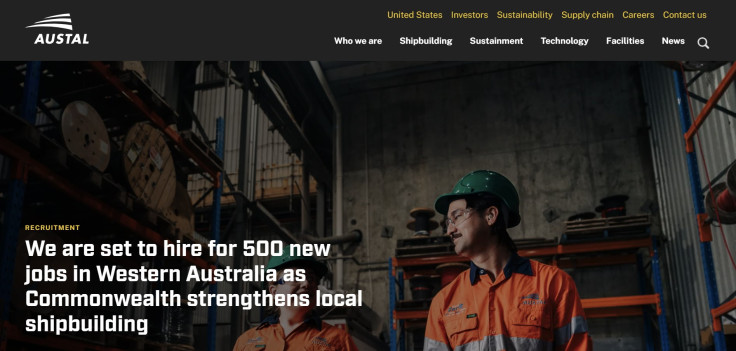
Austal Ltd shares rose more than 7% on Wednesday. The defense shipbuilder had updated shareholders at its annual general meeting on talks to sell its U.S. business and on a surge in new Australian naval contracts.
Austal shares gained 33 Australian cents, or 7.64%, to close at A$4.65. In the session they traded between A$4.51 and A$4.69. About 5.2 million shares changed hands, and the company's market value rose to about A$2 billion.
Despite the gain, the stock is down about 37% over the past year.
The S&P/ASX 200 ended flat at 8,847.3.
AGM update
At its annual meeting in Fremantle, Western Australia, on Tuesday, Chairman Richard V. Spencer updated shareholders on several major issues facing the company.
Austal USA sale talks
The biggest focus for investors is the possible sale of Austal USA, the company's American shipbuilding business.
South Korean conglomerate Hanwha made a non-binding indicative offer for the U.S. business in February. U.S. investment firm Wildcat Infrastructure has also made an indicative offer. Talks with Hanwha are more advanced.
According to the update, the indicative price range is US$1.05 billion to US$1.2 billion. Austal extended Hanwha's deadline to submit a binding proposal to Oct. 14. As of the meeting, no binding proposal had been received, and there is no certainty a deal will happen.
Hanwha has regulatory approval to raise its stake in Austal to 19.9%. Its proposal covers Austal USA's holding entities, excluding Austal's listed shares and its Australian operations.
Austal USA reported a substantial loss in fiscal 2026. A sale could allow Austal to exit a business that has weighed on its results while focusing on its growing Australian operations.
A$5 billion in contracts
The company has secured about A$5 billion in new contracts in Australia:
A$1 billion for 18 Landing Craft Medium for the Australian Army, to be built at its Henderson shipyard near Perth A$4 billion for eight Damen-designed Heavy Landing Craft
The National Reconstruction Fund Corporation is contributing A$245 million to upgrade the Common User Facility at Henderson into a defense shipbuilding hub.
Austal's Australasian defense order book has risen to about A$5.6 billion, from A$700 million a year earlier.
Frigate ambitions
Austal is also pursuing a role in building Mogami-class general purpose frigates at Henderson, under Australia's plan to acquire Japanese-designed warships. The contract is expected to be awarded in fiscal 2028, and the chairman described early discussions as promising.
Challenges in the US
Austal has faced difficulties in the United States, where it builds vessels for the U.S. Navy and Coast Guard. The company has sought compensation for cost increases on several programs.
The U.S. Department of War declined to provide accelerated contractual relief for Austal USA and instead requires a formal request for equitable adjustment process. The chairman said Austal's entitlement to full compensation for the program changes was not in dispute, and that only the recovery process had changed.
Austal cut its fiscal 2026 earnings guidance earlier this year and posted a statutory loss for the year, despite revenue rising about 11% to about A$2.03 billion.
Volatile shares
Austal's share price has swung sharply this year. It fell more than 60% from its January peak at one point, then rebounded on interest in its U.S. business and its growing Australian order book.
Defense spending tailwind
Austal is benefiting from rising defense spending in Australia and allied nations, driven by strategic tensions in the Indo-Pacific region. Australia has committed to expanding its naval shipbuilding capability, with Henderson playing a central role.
What to watch
Investors will be watching for any binding proposal from Hanwha or Wildcat for Austal USA, progress on the landing craft programs and the frigate contract, and resolution of compensation claims in the United States.
© Copyright 2026 IBTimes AU. All rights reserved.