

Elon Musk Says SpaceX-Tesla Merger Has Merit as Independent Committees Weigh Potential Deal
Independent director committees are examining possible structures, including an all-stock transaction, but shareholder, regulatory and national-security approvals would still be required.
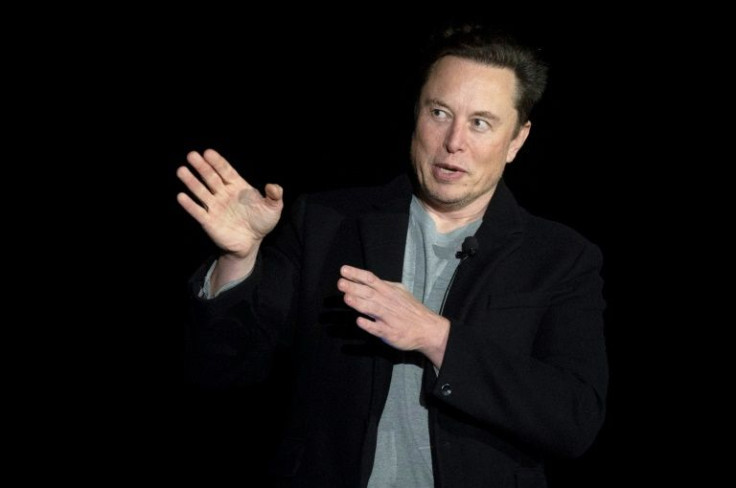
Space Exploration Technologies Corp. and Tesla have formed special committees of independent directors to explore a potential merger, Elon Musk said during SpaceX's third-quarter earnings call, adding that he sees "a lot of merit" in combining the companies even as he cautioned that no agreement is assured.
Musk, who serves as chief executive of both firms, described the regulatory and governance constraints around any such discussion. "This is definitely kind of a question where I feel like I'm tap dancing through a minefield," he said. "But I do think there's a lot of merit to combining the companies." He added, "Do I think it would be a good idea? Yes," while noting that he cannot participate in the committees' deliberations because he is a "conflicted party."
The committees, established at the request of shareholders, have not reached agreement on terms, Musk said. He warned that treating a merger as a certainty would be overstating the situation. Any transaction would still require board and shareholder approvals. For Tesla, that includes support from a majority of all outstanding shares, a threshold he has described as a high hurdle.
SpaceX completed its initial public offering on June 12, 2026, listing Class A shares on the Nasdaq under the ticker SPCX in what was the largest IPO on record. The offering raised roughly $75 billion to $86 billion at a $135 price, valuing the company near $1.8 trillion at the offering price. Shares closed their first day higher, and the company has since reported its first quarterly profit as a public entity. In the third quarter, SpaceX posted net income of $4.4 billion, well above analyst expectations, with revenue rising 161 percent year over year, driven in part by growth in its artificial intelligence-related business.
Tesla, the electric-vehicle and energy company, has long been publicly traded. Musk holds approximately 20 percent of Tesla's shares and roughly 48 percent of SpaceX, along with super-voting shares that give him control of more than 80 percent of SpaceX's voting power. Analysts have noted that a combination could consolidate his influence over a combined entity valued around $3.5 trillion at current levels.
Musk has pointed to operational overlaps as a rationale. He has cited potential gains from joint work on artificial intelligence software, chip design, manufacturing facilities, robotics, and orbital infrastructure, including concepts for space-based data centers. The companies have collaborated on certain projects in the past, though their core businesses—launch and satellite services for SpaceX, and vehicles, energy storage, and autonomy for Tesla—have historically been viewed as distinct.
News of the committees and Musk's comments prompted gains in both stocks in extended trading after the call. SpaceX shares rose as much as 8 percent at one point, while Tesla also advanced. Speculation about a possible combination had already been circulating among investors and analysts, including suggestions that an announcement could come before Tesla's annual meeting. Musk's public remarks, however, have also drawn internal concern. People familiar with the discussions told Reuters that some participants worry the comments could invite additional shareholder scrutiny and delay the process by weeks, recalling past litigation over related-party transactions.
No definitive structure has been disclosed. Sources have said options under consideration include SpaceX acquiring Tesla or the formation of a new holding company. An all-stock deal is among the structures being weighed. Advisers have been retained, and parties are working to keep Musk outside the formal negotiations. The talks remain at an early stage, with no guarantee of completion.
Regulatory, antitrust, and national-security reviews would likely be required for a transaction of this scale. SpaceX holds contracts related to national security and satellite communications, while Tesla's business intersects with automotive, energy, and artificial intelligence regulation. Shareholder votes at both companies would also be necessary, particularly given Musk's dual roles and ownership stakes.
Musk has previously downplayed the likelihood of combining the firms, once describing ties between them as limited. His more recent comments reflect the expanding scope of both companies into artificial intelligence, advanced manufacturing, and connectivity. SpaceX's public listing has also given investors a clearer window into its finances and growth trajectory, including the rapid expansion of its AI-related revenue.
Tesla shareholders would gain exposure to SpaceX's launch business, Starlink broadband network, and future space ventures under a combination. SpaceX investors would obtain stakes in Tesla's vehicle, energy, autonomy, and robotics operations. Valuation discussions remain preliminary. Some analysts have estimated limited premiums in an all-stock structure given the size of both companies and the potential for dilution.
The formation of independent committees is a standard step in related-party transactions to address conflicts. Musk has emphasized that the outcome rests with those committees and, ultimately, shareholders. "It's really up to the special committees of both companies," he said. "They've got to come up with something and then that's going to be put to the shareholders as a vote."
As of late October 2026, neither company has announced a definitive agreement, timeline, or recommended structure. Shares of both have continued to trade amid the speculation, with SpaceX's post-IPO performance and Tesla's existing investor base shaping the market's view of any potential combination. Further updates would depend on the work of the special committees and any subsequent board and shareholder actions.
© Copyright 2026 IBTimes AU. All rights reserved.