

SK Hynix Shares Sink 7% on Nasdaq as AI Spending Panic Overshadows a Record Quarter and Rattles Seoul
Investors focused on a weaker-than-expected earnings-per-share result and growing concerns over the sustainability of AI investment, despite strong revenue and analysts' continued support.
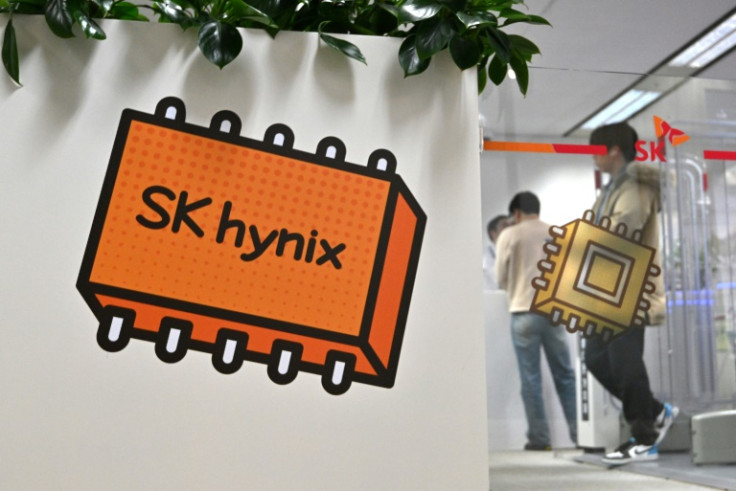
SK Hynix's U.S.-listed shares fell nearly 7% on Friday as a global selloff in memory chip stocks overwhelmed a record quarter for the South Korean chipmaker, one of the world's most important suppliers of memory used in artificial intelligence systems.
The American depositary shares traded at $151.29 shortly before 10:45 a.m. EDT, down $10.80, or 6.7%.
In Seoul, SK Hynix shares closed down 7.08%, while Samsung Electronics fell 3.02%.
Record results, earnings miss
The decline came despite strong results. SK Hynix reported record third-quarter revenue of 104.6 trillion won and an 80% operating margin, its sixth straight quarter of record results.
But its earnings per share fell well short of Wall Street consensus, raising valuation concerns even as revenue beat expectations.
Analysts largely stood by the stock. Cantor Fitzgerald trimmed its price target while keeping an overweight rating, William Blair reiterated outperform and Nomura/Instinet maintained a buy, citing confidence in the company's leadership in next-generation HBM4 memory.
AI spending fears
The bigger driver was a broad retreat from AI-linked stocks. The selloff swept the global memory sector after a major cloud and AI company reported that heavy investment had pushed its free cash flow negative, stoking fears that the spending boom could be nearing its limits.
Amazon reported a free cash outflow of $42.4 billion over the past 12 months, while Alphabet's shares fell more than 12% on Thursday after its second straight quarter of negative free cash flow.
The Alphabet shock spread to Seoul. South Korea's benchmark KOSPI fell 5%, triggering a sell-side circuit breaker, with Samsung down 6% and SK Hynix down 8%.
Sector-wide pressure
The weakness was not unique to SK Hynix. Micron, SanDisk, Silicon Motion, Western Digital, Seagate and Rambus all fell sharply, suggesting the selling reflected broad market forces rather than company-specific problems.
Intel's grim forecast added to the gloom. The U.S. chipmaker blamed a memory shortage for higher PC prices and now expects the PC market to shrink 12% in 2026 and 10% in 2027.
A volatile stretch since listing
SK Hynix began trading on Nasdaq in July after raising about $26.5 billion through its ADR offering at $149 per share, one of the largest U.S. listings on record.
The stock has been volatile since. Days after the debut, SK Hynix's Seoul shares fell more than 15%, their biggest one-day drop in nearly two decades.
Friday's decline leaves the ADR well below its 52-week high of $199.87. The shares have fallen about 12% over the past month.
Headwinds building
Other concerns have weighed on the stock in recent weeks. Reports earlier this month that SK Hynix delayed equipment orders for its next-generation HBM4 production line raised questions about its capacity plans.
Investors have also worried about Chinese competition in memory chips and the possibility of oversupply as early as 2029, as manufacturers race to expand production to meet AI demand.
Long-term case intact, analysts say
Despite the turbulence, analysts broadly say SK Hynix's dominant position in high-bandwidth memory keeps its long-term investment case intact. HBM chips are a critical component in AI accelerators made by companies such as Nvidia.
What to watch
Investors will be watching whether major U.S. tech companies keep spending at current levels. Amazon CEO Andy Jassy said the company plans to spend more in 2027, a potential tailwind for memory suppliers.
The next test for the sector will be whether the memory shortage that has powered record profits begins to ease, and whether AI customers keep paying premium prices for high-performance chips.
© Copyright 2026 IBTimes AU. All rights reserved.