Apple iPhone 17 Pro Max Claims Top Spot in Battery Life Tests, Outlasting 35 Phones

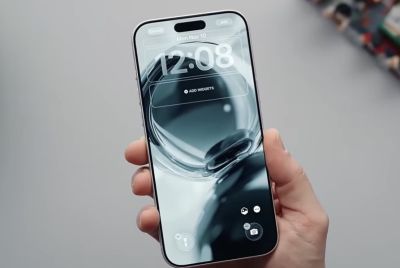
Apple's iPhone 17 Pro Max has emerged as the battery life champion among 35 smartphones rigorously tested in early 2026, delivering exceptional endurance that outpaces competitors despite a relatively modest battery capacity compared to some Android rivals.
Independent evaluations from CNET, Tom's Guide, PhoneArena, GSMArena and others highlight the device's efficiency, crediting Apple's tight hardware-software integration, the new A19 Pro chip, iOS 26 optimizations and a vapor chamber cooling system. In CNET's comprehensive battery showdown published Feb. 4, 2026, the iPhone 17 Pro Max topped the leaderboard across multiple real-world scenarios, beating models with larger batteries like the OnePlus 15 and Samsung Galaxy S25 Ultra.
CNET pitted the Pro Max against 34 other devices in two key benchmarks. In a three-hour video streaming test over Wi-Fi at full screen brightness starting from 100% charge, the phone lost just 9% battery — tying the Motorola Razr (2024) for the best result ever recorded in that specific test. The achievement stands out given the iPhone's large 6.9-inch OLED display, which typically consumes more power than foldable screens in efficiency-optimized scenarios.
In CNET's 45-minute mixed-use endurance test — involving gaming, video streaming, social media scrolling and a video call — the iPhone 17 Pro Max dropped only 1% from a full charge, securing the top position once again. Three other Apple models trailed closely, including the more affordable iPhone 16E at $599, underscoring Apple's broad efficiency gains across the lineup.
The iPhone 17 Pro Max's 5,088mAh battery (in eSIM-only variants; slightly less in dual-SIM regions) isn't the largest on the market — the OnePlus 15 packs 7,300mAh and the Pixel 10 Pro XL 5,200mAh — yet it consistently outperformed them. CNET noted the results prove "raw capacity means nothing without proper optimization," praising Apple's A19 Pro chipset and iOS 26 for minimizing background drain and maximizing screen-on efficiency.
Tom's Guide echoed the praise in its continuous web browsing test over 5G at 150 nits brightness. The iPhone 17 Pro Max lasted 17 hours and 54 minutes — the longest runtime the outlet has recorded for any iPhone and a clear win over the Galaxy S25 Ultra's 17 hours and 14 minutes, despite Samsung's 5,000mAh cell. The Google Pixel 10 Pro XL managed only 14 hours and 20 minutes in the same conditions, highlighting Android's challenges with cellular radio and display efficiency.
GSMArena's lab tests reinforced the trend. The Pro Max achieved class-leading results in screen-on scenarios, including web browsing, video playback and calls. PhoneArena reported strong real-world performance, with the device comfortably lasting a full day of heavy mixed use — photography, app navigation, streaming and more — often ending with significant charge remaining.
YouTube creators and independent testers like The Tech Chap and PhoneBar conducted multi-hour drain tests pitting the iPhone 17 Pro Max against predecessors and rivals. In one endurance run combining gaming, streaming and social media, the Pro Max lasted over 13 hours — topping the iPhone 16 Pro Max's 12 hours 15 minutes and the Galaxy S25 Ultra's 11 hours 58 minutes.
The efficiency stems from several factors. Apple's A19 Pro chip offers better power management than the A18 series, while iOS 26 introduces aggressive background app throttling, adaptive refresh rates and enhanced thermal controls via the vapor chamber. The Pro Max's larger chassis allows a bigger battery without compromising the slim design, and the LTPO OLED display dynamically adjusts refresh rates to conserve power during static content.
Comparisons to Android flagships show Apple's advantage in optimized scenarios. While devices like the OnePlus 15 excel in raw capacity and fast charging, they often fall short in sustained efficiency under mixed loads. Tom's Guide's freezing-temperature drain test further demonstrated the iPhone 17 Pro Max's resilience: it retained 100% charge after 90 minutes outdoors in sub-zero conditions, outperforming the Galaxy S25 Ultra (92%) and Pixel 10 Pro XL (88%).
The results come as Apple pushes battery life as a key selling point for the iPhone 17 series, launched in September 2025. Marketing claims of up to 39 hours video playback and 35 hours streamed video align closely with independent findings, though real-world use varies by habits — heavy 5G, gaming or camera work can reduce totals.
Reviewers note the Pro Max's battery performance makes it ideal for power users: photographers capturing ProRAW or 4K ProRes, travelers relying on offline maps, or professionals using the device all day without a charger. In everyday scenarios, many testers reported ending days with 20-30% remaining after 7-9 hours of screen time.
The achievement bolsters Apple's reputation for longevity in a market increasingly focused on AI features and cameras. While the iPhone 17 Pro Max lacks groundbreaking new AI capabilities compared to rivals, its endurance provides a practical edge for users prioritizing reliability over flashy specs.
As competitors roll out 2026 flagships with even larger batteries and advanced silicon, Apple's software-hardware synergy continues to set benchmarks. The Pro Max's top rankings across diverse tests — from lab streaming to mixed-use endurance — affirm it as the current battery life leader among premium smartphones.
For consumers weighing upgrades, the results suggest the iPhone 17 Pro Max delivers meaningful improvements over the iPhone 16 Pro Max (typically 14-17 hours in similar tests) and crushes Android alternatives in efficiency-focused scenarios. Whether the gains justify the premium price depends on individual needs, but for battery-conscious buyers, the data speaks clearly: the iPhone 17 Pro Max reigns supreme in 2026 endurance tests.
© Copyright 2026 IBTimes AU. All rights reserved.
- MOST POPULAR IN Gadgets