(VIDEO) Italy Miss Third Straight World Cup After Bosnia Shootout Heartbreak in Zenica Thriller
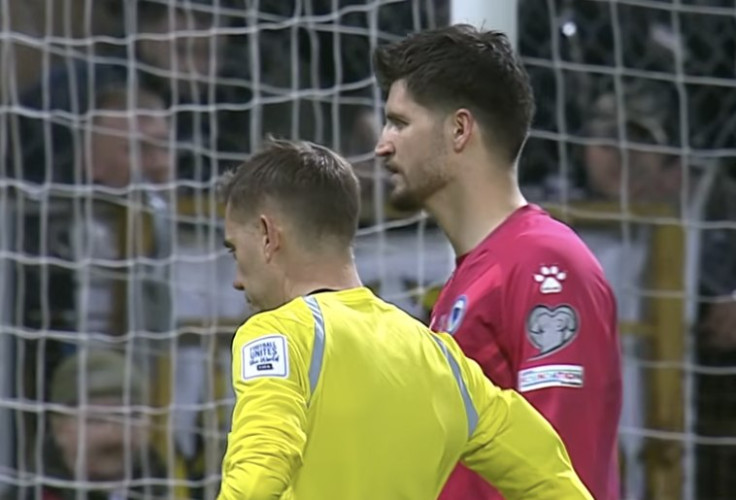
Four-time World Cup champions Italy suffered another humiliating exit Tuesday, missing out on a third consecutive tournament after losing 4-1 to Bosnia and Herzegovina in a penalty shootout following a tense 1-1 draw in the European qualifying playoff final at Bilino Polje Stadium.
The defeat extends Italy's agonizing absence from soccer's biggest stage, with the Azzurri now set to sit out the 2026 World Cup in the United States, Mexico and Canada after failing to qualify for Russia 2018 and Qatar 2022. Bosnia and Herzegovina, ranked 66th in the world, celebrated wildly as they secured their second-ever World Cup appearance, joining co-hosts Canada, Switzerland and Qatar in Group B.
Italy took an early lead through Moise Kean in the 15th minute, capitalizing on a swift counterattack. The visitors looked poised to control the match, but disaster struck in the 42nd minute when defender Alessandro Bastoni was sent off with a red card for a reckless challenge, leaving Italy to play with 10 men for nearly the entire second half and extra time.
Despite the numerical disadvantage, coach Gennaro Gattuso's side defended resolutely and nearly held on for a famous away victory. But Bosnia pushed forward relentlessly in front of a passionate home crowd, equalizing in the 79th minute through Haris Tabakovic, who prodded home from close range after sustained pressure.
Extra time brought no further goals as fatigue and tension mounted. The match headed to penalties, where Italy crumbled. Francesco Pio Esposito and Bryan Cristante missed their spot kicks, while Bosnia converted all four attempts, with Esmir Bajraktarevic sealing the 4-1 triumph and sending the hosts into euphoria.
"Go Bosnia!" chanted thousands of fans as players and staff mobbed goalkeeper who had kept out Italy's efforts. For Italy, the scenes were somber, with players collapsing to the turf in disbelief as the reality of another missed World Cup sank in.
The result marks a new low for a once-dominant footballing nation. Italy last lifted the World Cup in 2006 in Germany, but their golden generation has long faded. Since failing to qualify in 2018 via a shocking aggregate loss to Sweden and again in 2022 after a playoff defeat to North Macedonia, the Azzurri have struggled to rebuild.
Qualifying for 2026 proved torturous. Italy finished second in their group behind stronger sides, forcing them into the playoffs. They dispatched Northern Ireland 2-0 in the semifinal last week, raising hopes of redemption under Gattuso, appointed to inject discipline and passion. Those hopes were dashed in Zenica.
Post-match, Gattuso cut a frustrated figure. "We gave everything, but football can be cruel," he said. "The red card changed everything. We defended well, but penalties are a lottery. No excuses — we must look at ourselves and rebuild Italian football from the ground up."
Players echoed the pain. Captain and goalkeeper Gianluigi Donnarumma, who failed to save any penalties, expressed deep disappointment. "This hurts more than words can say," he told reporters. "We wanted to bring joy back to Italy. The fans deserve better."
The loss has ignited fierce debate in Italy about the state of the national team and domestic league. Critics point to a lack of world-class talent emerging from Serie A, aging stars, tactical rigidity and systemic issues in youth development. Some fans on social media called for a complete overhaul of the Italian Football Federation.
Bosnia's triumph represents a fairy-tale story for a nation still recovering from the scars of war in the 1990s. Coach Sergej Barbarez praised his players' resilience. "We believed until the end," he said. "This is for all of Bosnia-Herzegovina. We showed heart and quality against a giant of football."
The hosts had advanced past Wales on penalties in the semifinal, building momentum and confidence. Their equalizer against Italy came after wave after wave of attacks, exploiting the space created by Italy's red card.
For the 2026 World Cup, expanded to 48 teams, even that larger field could not guarantee Italy a spot. Their absence will be felt keenly in North America, where Italian diaspora communities had hoped to cheer on the Azzurri.
Reactions poured in across Europe. UEFA president Aleksander Ceferin expressed sympathy but noted the competitiveness of qualifying. Former Italy stars like Andrea Pirlo and Francesco Totti voiced concern over the national team's direction.
In Italy, newspapers blared headlines such as "Another Nightmare" and "Azzurri in Crisis." Television pundits dissected every moment, from Bastoni's red card to the penalty misses. Calls grew for investment in grassroots football and attracting top foreign coaches or players of Italian heritage.
Bosnia's qualification adds excitement to Group B, pitting them against co-host Canada, Switzerland and Qatar in what promises to be competitive matches. Their path included gritty defensive displays and clinical finishing in key moments.
Italy's campaign highlighted familiar flaws: vulnerability to set pieces, struggles to break down organized defenses when leading, and fragility in high-pressure situations. The team relied heavily on experienced players, with limited impact from younger talents.
As the dust settles, attention turns to Italy's future. The next UEFA Nations League and European Championship qualifiers will serve as testing grounds for a new era. Many wonder if Gattuso will remain or if a fresh voice is needed.
For Bosnia, the focus shifts to preparation for the summer tournament. Players like Tabakovic and Bajraktarevic become national heroes overnight, their names etched in football folklore.
The match in Zenica will be remembered as another chapter in Italy's modern struggles. Once feared across the globe for their defensive mastery and tactical brilliance — "catenaccio" — the Azzurri now face questions about relevance in a faster, more attacking modern game.
Fans in Rome, Milan and Naples gathered in bars and piazzas, hoping for glory but leaving in silence. Some lit flares in frustration; others simply shook their heads in disbelief.
The 2026 World Cup will proceed without one of its most storied participants. For a country that has given the world icons like Roberto Baggio, Paolo Maldini and Gianluigi Buffon, the void feels especially painful.
Yet football offers second chances. Italy's history is filled with rebirths after dark periods. Whether this latest failure sparks genuine reform or deepens the malaise remains to be seen.
As Bosnia celebrates and prepares for the biggest stage, Italy begins a period of introspection. The road back to World Cup glory starts now — longer and steeper than many imagined.
© Copyright 2026 IBTimes AU. All rights reserved.
- Recommended For You