

Lung Cancer Is Striking People Who Never Smoked, Doctors Warn as Pope Leo's Diagnosis Puts Risk in Spotlight
Doctors say lung cancer is increasingly affecting younger adults and women who never smoked, while current screening guidelines leave many at risk outside the system.
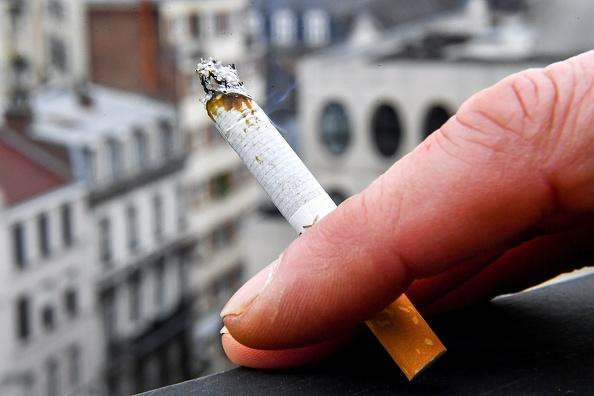
Pope Leo XIV's lung cancer diagnosis has drawn new attention to a fact many Americans don't know: a large and growing share of lung cancer patients never smoked.
Doctors say that group is often missed by current screening rules, is more likely to be diagnosed late, and increasingly includes younger adults and women who never thought of themselves as at risk.
"The face of lung cancer is changing. You keep hearing this. I'm going to tell you that it has changed," Dr. Eric Singhi of the University of Texas MD Anderson Cancer Center told lung specialists this week at CHEST 2026, the annual meeting of the American College of Chest Physicians in Phoenix.
A diagnosis that surprised many
The 71-year-old pope had the lower lobe of his right lung removed on Oct. 13. Tissue from the surgery confirmed lung adenocarcinoma, the most common type of lung cancer and the type most often found in people who have never smoked. Leo is not known to have smoked.
On Wednesday, the Vatican said final tissue and molecular tests showed the cancer had not spread. The pope's surgeon, Dr. Stefano Margaritora, and his personal physician, Dr. Luigi Carbone, said no more treatment would be needed.
"A subsequent oncology assessment confirmed that no further treatment is necessary," the doctors said.
Dr. Stephen Liu, a lung cancer expert at Georgetown's Lombardi Comprehensive Cancer Center who is not involved in the pope's care, said the findings were encouraging.
"The statements suggest that this is a stage I lung cancer for which surgery is highly effective and expected to be curative," Liu said.
The nodule appears to have been an incidental finding, spotted during an exam for something else. Doctors say this is how many early lung cancers in nonsmokers are caught, because the disease often causes no symptoms.
How common it is
Smoking is still the leading cause of lung cancer, and the Centers for Disease Control and Prevention attributes about 80% of lung cancer deaths to it. Still, up to 20% of people diagnosed with lung cancer in the United States have never smoked, according to the CDC.
The share is higher among women. Dr. Lary Robinson, an oncologist at Moffitt Cancer Center in Tampa, Florida, estimated that about 10% of men and 25% of women with lung cancer are never-smokers.
"Smoking is a significant risk factor, but not the only one," said Dr. Matthew Lamb, a general thoracic surgeon at OhioHealth in Columbus, Ohio. "Anyone can get lung cancer."
What drives the risk
Doctors point to several factors beyond a person's own smoking:
- Radon, a colorless, odorless radioactive gas that seeps into basements from the ground. It can be detected with a simple home test kit.
- Secondhand smoke, especially for people who grew up or lived with smokers.
- Workplace and environmental exposures, including asbestos, diesel exhaust and air pollution.
- Prior radiation treatment to the chest.
- Family history and inherited genes.
"Radon is a real risk in central Ohio," Lamb said. "It's the second leading environmental cause of lung cancer outside of smoking."
Genetics is getting closer attention from researchers. A study published in the journal Science found that never-smokers carrying a rare inherited variant in the EGFR gene had about 62 times the odds of developing lung cancer compared with never-smokers who did not carry it.
The pope has a family history of cancer. Both of his parents died of the disease, and his brother is being treated for a blood cancer, though doctors have not linked that history to his diagnosis.
Often found too late
Because lung cancer in nonsmokers often grows without symptoms, many patients are diagnosed only after it has spread.
"Unfortunately, probably over half of the people who are never-smokers with lung cancer come into stage 4 disease," Robinson said. "And that's higher than people who are smokers or former smokers, so they start out at a worse stage in general."
When symptoms do appear, they look the same as in smokers. Common ones are a cough that won't go away and shortness of breath. Weight loss, chest pain and coughing up blood can signal more advanced disease.
"Symptomatically, there's not much difference between how lung cancer appears in smokers and non-smokers," Lamb said. "That's the problem. Lung cancer is largely asymptomatic until it's too late."
A gap in screening
Annual low-dose CT scans can catch lung cancer early, when surgery is most likely to cure it. But federal screening guidelines cover only people ages 50 to 80 with a significant smoking history: at least 20 pack-years, and either still smoking or having quit within the past 15 years.
That leaves out people who never smoked, no matter what other risk factors they have.
"Today's screening criteria defines who we screen, but it does not define who can get lung cancer," Singhi said at the Phoenix meeting.
He cited a Northwestern Medicine analysis published last year in JAMA Network Open. Only 35% of lung cancer patients diagnosed at that institution met current screening criteria. An age-based approach covering adults 40 to 85, similar to how breast and colorectal cancer are screened, would have included nearly 94% of them.
Even among people who do qualify, uptake is low. "Only about 15% of the people who are eligible get screened, unfortunately," Robinson said.
Dr. Brett Bade of the Mayo Clinic urged lung doctors to order scans themselves rather than leave it to someone else. "It may be simplistic, but don't defer that ordering scan to somebody else," he said.
Younger patients, different tumors
Specialists are also seeing more patients younger than 50, a group that is more often female, more likely to have adenocarcinoma and more likely to be diagnosed at stage 4, according to research Singhi presented. MD Anderson alone saw 646 new young-onset lung cancer patients in 2023 and 2024, and it has started one of the country's first programs dedicated to them.
These tumors are more likely to carry genetic changes, such as alterations in the EGFR, ALK and ROS1 genes, that can be treated with targeted drugs instead of traditional chemotherapy. Doctors say that makes fast biomarker testing important.
"Young age, again, should really increase — not decrease — your urgency for getting that biomarker testing done," Singhi said. He also urged clinicians not to dismiss a younger patient's persistent cough because of age: "Please don't let age close the differential."
What patients can do
Until screening rules change, doctors advise people who never smoked to know their own risk factors and raise them with a primary care doctor. That is especially important for people who have a parent or sibling with lung cancer, live in a home with high radon levels, spent years around secondhand smoke, or have a cough or breathing problem that won't go away.
"If you are a non-smoker, you have to be hyper aware of your risks," Lamb said. "You have to talk about that with your primary care physician."
© Copyright 2026 IBTimes AU. All rights reserved.