GameStop (GME) Shares Edge Lower in Quiet Trading as Ryan Cohen Eyes Transformative Acquisition
GameStop Corp. (NYSE: GME) shares closed modestly lower Tuesday, reflecting cautious investor sentiment as the video game retailer navigates a strategic pivot under CEO Ryan Cohen while facing persistent challenges in its core brick-and-mortar business.

GME ended at $23.82, down $0.38 or 1.57% from Monday's close of $24.20. The stock opened at $23.78, traded in a narrow range between $23.45 and $24.17, and saw volume of about 4.1 million shares — near the recent average but below the frenzied levels of past meme-stock surges. After-hours trading showed a slight dip to around $23.74-$23.76.
The decline came amid broader market volatility tied to geopolitical tensions in the Middle East, though GME's moves appeared more company-specific. The retailer has been in the spotlight for Cohen's aggressive transformation efforts, including a massive performance-based compensation package approved in January 2026 and speculation about a blockbuster acquisition using its substantial cash reserves.
Cohen, who became chairman in 2021 and CEO shortly after, received a long-term incentive award potentially worth up to $35 billion, contingent on elevating GameStop's market capitalization to $100 billion and achieving $10 billion in cumulative performance EBITDA. The package is entirely "at-risk," with no base salary, aligning Cohen's interests tightly with shareholders. He has personally invested heavily, including back-to-back purchases of 500,000 shares each in January at around $21 per share, boosting his stake to about 9.2% and signaling confidence in the turnaround.
In a January interview with The Wall Street Journal, Cohen outlined ambitions to grow GameStop from an $11 billion company into one valued over $100 billion through a "very big" acquisition of a publicly traded firm, likely in consumer or retail sectors. Speculation has centered on targets like eBay, though no deal has materialized. Analysts note the move could diversify beyond declining physical game sales, but risks remain high — a misstep could erode the cash hoard built from meme-stock rallies and share offerings.
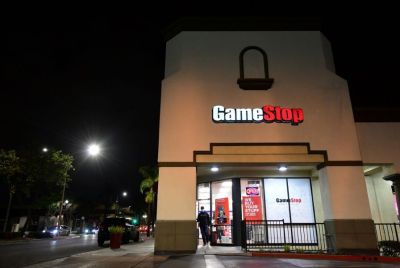
GameStop ended fiscal 2025 with roughly $8.8 billion in cash and equivalents, bolstered by strategic capital raises in prior years. The balance sheet strength provides flexibility, but revenue trends weigh on sentiment. The company has accelerated store closures in 2026, with nearly 500 locations marked for shutdown across dozens of states as digital downloads and streaming erode demand for physical media. Circana projects modest U.S. video game spending growth of 3% to $62.8 billion in 2026, but traditional retail faces headwinds.
Despite challenges, Cohen's vision draws comparisons to activist investors like Warren Buffett, though some critics argue the meme-stock label and volatility disconnect price from fundamentals. Michael Burry, the "Big Short" investor, disclosed a long-term position in January 2026, sparking a brief rally, but momentum faded.
Analyst coverage remains sparse and mixed. Consensus leans toward "hold" or "sell," with average 12-month targets around $13.50 to $26, implying limited near-term upside from current levels. Some forecasts, like Long Forecast's mechanical projection, see potential for $31 by year-end 2026 if trends hold, while others warn of downside to the low $20s amid execution risks.
The stock's 52-week range spans $19.93 to $35.81, with the high hit in May 2025 during a brief resurgence. Year-to-date in 2026, shares are roughly flat to modestly positive after early volatility, trading well below 2021 peaks above $80 (pre-split adjusted). Market capitalization hovers near $10.67 billion, with about 448 million shares outstanding.
GameStop's next earnings report is expected around late March 2026 for the fiscal fourth quarter. Investors will watch for updates on acquisition talks, cash deployment, and progress toward Cohen's ambitious targets. For now, the stock remains a high-risk, high-reward play driven by leadership vision rather than steady retail performance.
As Cohen pursues his consumer megadeal strategy, GameStop continues to straddle its meme-stock past and a potential new chapter as a diversified holding company. Whether the gamble pays off will depend on execution in an evolving gaming landscape.
© Copyright 2026 IBTimes AU. All rights reserved.
- Recommended For You